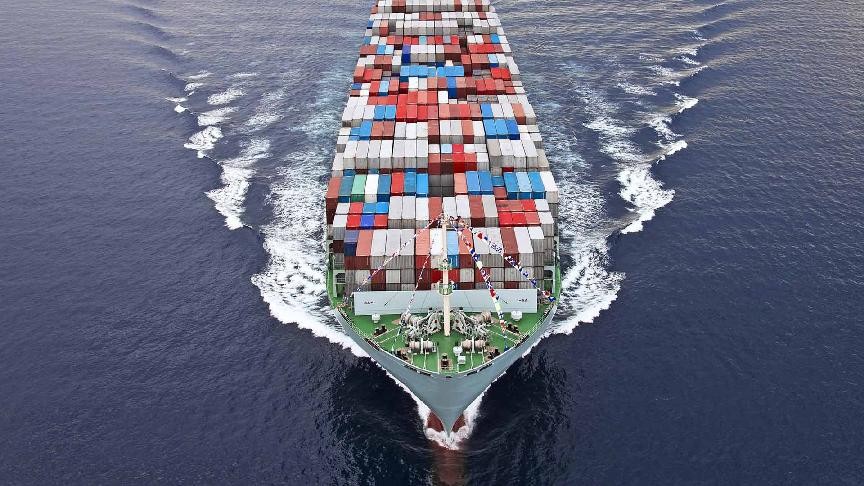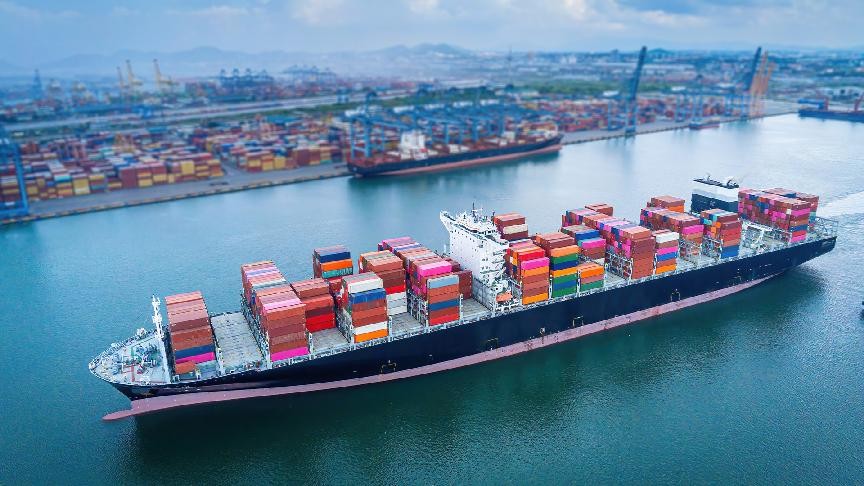

SHIPPING is already bracing for the wave of newbuilding orders set to hit the waters from 2027. But what it may not be prepared for is the readiness of ports to accept the massive orders of ultra-large containerships planned in the years ahead.
Many ports have been looking to boost annual container-handling capacity to complement the projected growth in trade globally. But it remains unclear if terminals have the berth dimensions, water depth, cranes, yard space and operational flexibility to accommodate ULCs and absorb thousands of container moves arriving in a single call.
The concerns were raised at port supply chain conference TOC Asia 2026 in Singapore on Tuesday.
Pacific International Lines general manager of trade development and planning Zhi Lin Liu said that some ports will face challenges in managing newbuilds as 40% of containerships scheduled for delivery in 2027 and 2028 will be vessels above 15,000 teu, with much of that capacity concentrated above 18,000 teu.
“These are the ultra-large vessels that are unable to get into the Global South terminals, so there’s still a limitation to where the ships can go,” he said.
That constraint risks becoming increasingly important as the industry absorbs what speakers at the conference described as a historic expansion of the containership fleet.
Sea-Intelligence chief executive Alan Murphy said about 1.8m teu of new capacity is due for delivery during the third quarter of 2028 alone, equivalent to around 600,000 teu per month, a phenomenon he called “unprecedented”.
This brings on a deployment challenge for carriers as the new capacity will be simply deployed wherever demand emerges given the infrastructural challenges with ULCs.
A cascading infrastructure problem
As newbuilding ULCs displace existing vessels from Asia-Europe services, ships in the 13,000-14,000 teu range are likely to cascade into the Transpacific, Middle East, Latin America and other trades.
“As the ships get released, as most of the Asia-Europe and Mediterranean carriers begin to resume the Suez transit, some of these big ships are supposed to go to the Middle East and now, guess what? They need to go somewhere,” Liu said.
“The mid-size in the 13,000-14,000 teu range, those are the ships that can potentially get everywhere.”
Ports will face two infrastructure tests simultaneously: major gateways must accommodate the next generation of ultra-large ships, while secondary ports increasingly handle the rise in vessels displaced by the ULCs on primary routes.
And this can cascade into more issues.
For ports that will attract ULCs, managing large containerships is not comparable to spreading the same volume of cargo across several smaller vessel calls.
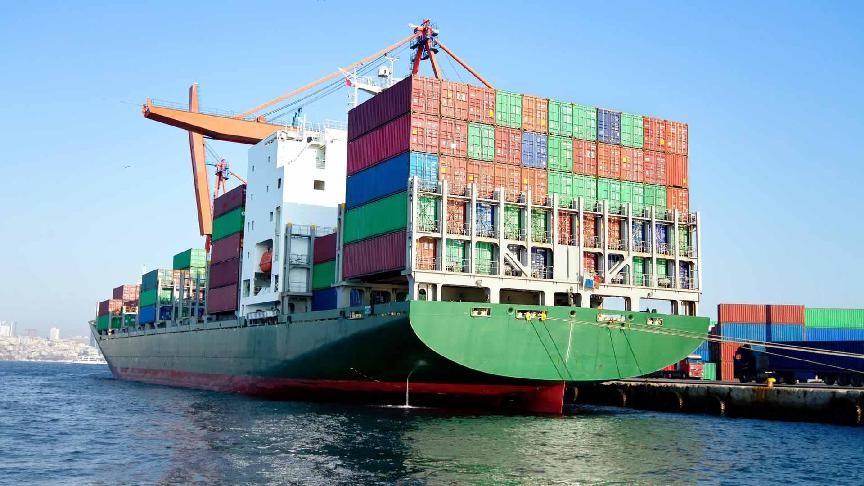
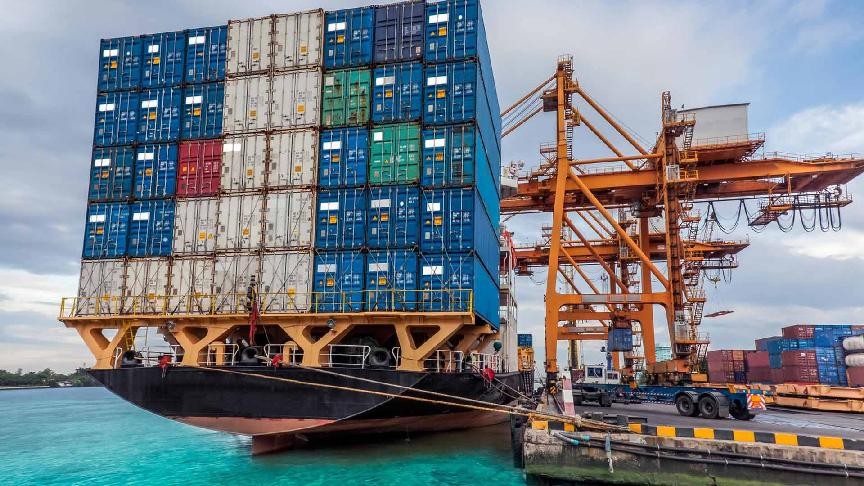
A single mega-ship can concentrate a huge number of moves into one port call. That places simultaneous pressure on quay cranes, berth productivity, yard equipment and storage, and the road, rail and feeder networks needed to evacuate containers from the terminal.
“There’s only so much that the yard can take when carriers start to discharge a lot of containers in one go,” Liu said.
And the consequences can extend well beyond the affected terminal.
If an ULC arrives late and misses its berth window, terminals have fewer options for accommodating it than with a smaller ship. A queue can form, causing delays which are subsequently carried into the vessel’s next ports of call.
Liu described the phenomenon as “burst congestion”.
“The issue is not simply the port size or annual throughput, but really the timing and volatility of the arrivals,” he said.
Opportunities in emerging markets
The infrastructure issue is especially significant because some of the fastest container-trade growth is occurring away from the traditional East-West gateway ports.
Container Trades Statistics chief executive Nigel Pusey expects Sub-Saharan African trade to continue expanding strongly in 2027, while South and Central America could record growth of 15-20%.
That will attract additional ships, including larger tonnage cascaded from the mainline trades.
Pusey posits that these ports can adapt, pointing to the rapid improvement of African terminals and the arrival of vessels once considered too large for those markets.
“Who would have thought Lagos could have dealt with a 17,000 teu ship three years ago? Nobody,” he said.
“Mombasa was a devil of a port three years ago. Now everybody’s going, ‘Wow, what a terminal!’ It can change.”
But the speed of that transformation will become increasingly important if vessel sizes rise faster than port infrastructure can be upgraded.
Red Sea Gateway Terminal managing director Gagan Seksaria said the return of ultra-large vessels was already evident in Jeddah, where such calls increased eightfold between July and October, predominantly from Maersk and CMA CGM.
Ports plan years ahead, but carriers move ships in months
Sea-Intelligence’s Murphy highlighted the tension between carriers' pursuit of economies of scale, and the investment terminals must make to accommodate progressively larger ships.
“The shipping lines keep on building vessels that are far too big and too unruly and bursting everything,” he said.
“Every time the terminal operator says, ‘Okay, we'll build the cranes, we’ll build the yard space, we’ll make way for them,’ and then the shipping lines come around and say, ‘Well, we've got bigger vessels, so it should all be cheaper, right?’”
His comments allude to the disconnect between carriers and ports as terminals and carriers may not necessarily operate on the same planning horizon.
Ports must commit capital years ahead to dredging, longer and stronger quays, ship-to-shore cranes, yard systems and landside infrastructure. Carrier networks can change much faster.
PSA International vice president Zhenhao Lai said increased information sharing would help reduce the information asymmetry between different parts of the container supply chain and give terminals greater confidence when making long-term investments.
“A lot of these plans are long term in horizon,” Lai said. Better information, he added, “gives us confidence in the planning that we're making in the right direction”.
Maersk Southeast Asia managing director Elaine Low similarly highlighted how difficult visibility has become, saying the ability to understand what could happen even over the next 12 months would be valuable.
That gap is likely to matter more as the industry’s vessels grow.
A terminal can theoretically have adequate annual capacity and still become a bottleneck if its infrastructure cannot accommodate the particular ships carriers want to deploy or cannot handle the peaks created when several large vessels arrive outside their scheduled windows.
For Liu, the consequence is likely to be recurring congestion rather than a one-off capacity crunch.
“Burst congestion will happen again and again, and ship cascading within the network will also cause those berth windows to be missed, and it's just this vicious cycle,” he said.
His prescription for ports was straightforward. “What I would suggest we do is to start preparing for it.”