THE race towards ever larger containerships may not be over.
After a decade in which the industry’s largest vessels appeared to have plateaued at around 24,000 teu, Alphaliner believes some carriers could soon begin considering a new generation of ships exceeding 27,000 teu.
Rising fuel prices, growing environmental compliance costs and an impending replacement cycle for ageing ultra large vessels could all strengthen the business case for another leap in scale.
For much of the past decade, the 24,000 teu “megamax” class has been viewed as the practical limit of containership design. Successive rounds of upsizing delivered diminishing economic returns while increasing pressure on ports, terminals and hinterland infrastructure.
However, Alphaliner believes the economics of long-haul east-west trades may increasingly favour larger ships.
“Factors like the increasing price of fuel and the introduction of carbon emissions taxes will give bigger ships a competitive edge in the long run,” it said.
The industry’s growth has already changed the equation. Global containership capacity has expanded from 23.2m teu at the start of 2020 to 34.1m teu today, up almost 47%, leaving several major carriers with fleets large enough to support dedicated strings of next-generation ultra large vessels.
Alphaliner’s concept centres on an LNG-powered “gigamax-25” design with a nominal capacity of 27,140 teu. Advances in hull design, stowage arrangements and fuel-tank integration mean such a vessel would require only modest increases in dimensions compared with today’s largest ships.
The analyst estimates that a highly optimised vessel measuring about 414 m long and 63 m wide could deliver significantly improved slot economics, particularly at lower speeds. Much of the additional capacity could be carried with only a modest rise in fuel consumption compared with today’s 24,000 teu-class vessels.
While such large containerships have yet to make it off the drawing board, China State Shipbuilding Corporation’s design division Shanghai Ship Research and Design Institute unveiled a concept design for a 27,500 teu LNG dual-fuel boxship two years ago.
The so-called Green Sealion 27500 has already obtained in-principle approval from DNV classification society.
The prospect for such large vessels becomes more relevant as the first generation of 400 m-long boxship giants approach retirement in the next decade.
According to Alphaliner, Maersk is the most obvious candidate to take the next step.
Its eight Emma Maersk-class vessels will begin reaching replacement age from 2031, while its flagship fleet remains the 31-vessel Triple-E class of roughly 19,000-20,500 teu. Unlike MSC, CMA CGM, Cosco and Hapag-Lloyd, Maersk never ordered 24,000 teu vessels, meaning a move directly to ships above 27,000 teu could deliver a proportionally greater efficiency gain.
Alphaliner estimates the proposed design would offer around 40% more capacity than Maersk’s current flagship vessels.
Network design could also support larger ships. Alphaliner argues that the hub-and-spoke structure underpinning the Gemini Cooperation between Maersk and Hapag-Lloyd is particularly well suited to accommodating larger tonnage.
With fewer direct calls and greater reliance on transhipment hubs, the network places less emphasis on point-to-point coverage than many competing services. Several Gemini loops already deploy 24,000 teu-class vessels and call at major hubs, including Rotterdam, Antwerp, Hamburg, Tanger Med, Singapore and Tanjung Pelepas.
Many of these facilities are expanding capacity, potentially enabling them to accommodate a larger vessel class by the time any new designs are delivered.
The broader industry backdrop also points to continued faith in scale. As of September, the global containership orderbook stood at a record 14.7m teu across 1,795 vessels, with around 10m teu concentrated in ships above 10,000 teu.
Yet relatively few orders have been placed for the largest vessel classes. Instead, much of the recent ordering activity has focused on a new generation of 17,000-22,000 teu dual-fuel ships powered by LNG or methanol, reflecting uncertainty over whether further upsizing can outweigh operational challenges.
Those challenges remain substantial.
Speaking during SMM at Lloyd’s Register’s Containership Forum, Diamond Line managing director Huang Chuangxiong argued that ships larger than today’s biggest containerships are unlikely to become reality, despite their theoretical economic advantages.
He pointed to mounting pressure on terminal infrastructure, warning that ports are already struggling to keep pace with vessel growth.
“[Terminal] upgrading is very limited, cautious and time consuming,” he said.
His concerns reflect a wider challenge facing ports. Deployment of vessels above 21,000 teu on deepsea trades has more than doubled over the past five years, while larger ships continue to cascade into north-south and regional trades. Each new megaship introduced on east-west routes effectively pushes existing tonnage onto secondary services, increasing demands on berths, cranes, yards and hinterland infrastructure.
With containership deliveries expected to peak in 2027 and 2028, ports face a race to expand infrastructure that can take years to complete, even as carriers can redesign networks far more quickly.
Huang also questioned the practicality of vessels exceeding 400 m in length, arguing that safety and structural risks become increasingly significant as ship sizes grow.
“Carriers are focused on slot costs from the perspective of economics, but safety is a must,” he said.
The debate echoes arguments heard throughout the history of containership development. Previous generations of ultra large vessels were often dismissed as impractical before becoming mainstream.
Whether the next chapter takes the industry significantly beyond today’s 24,000 teu-plus class remains uncertain. Even Alphaliner acknowledges the challenges. But with shipyards reportedly discussing larger vessel concepts with multiple carriers, questions over the industry’s true size limits are once again moving to the forefront.
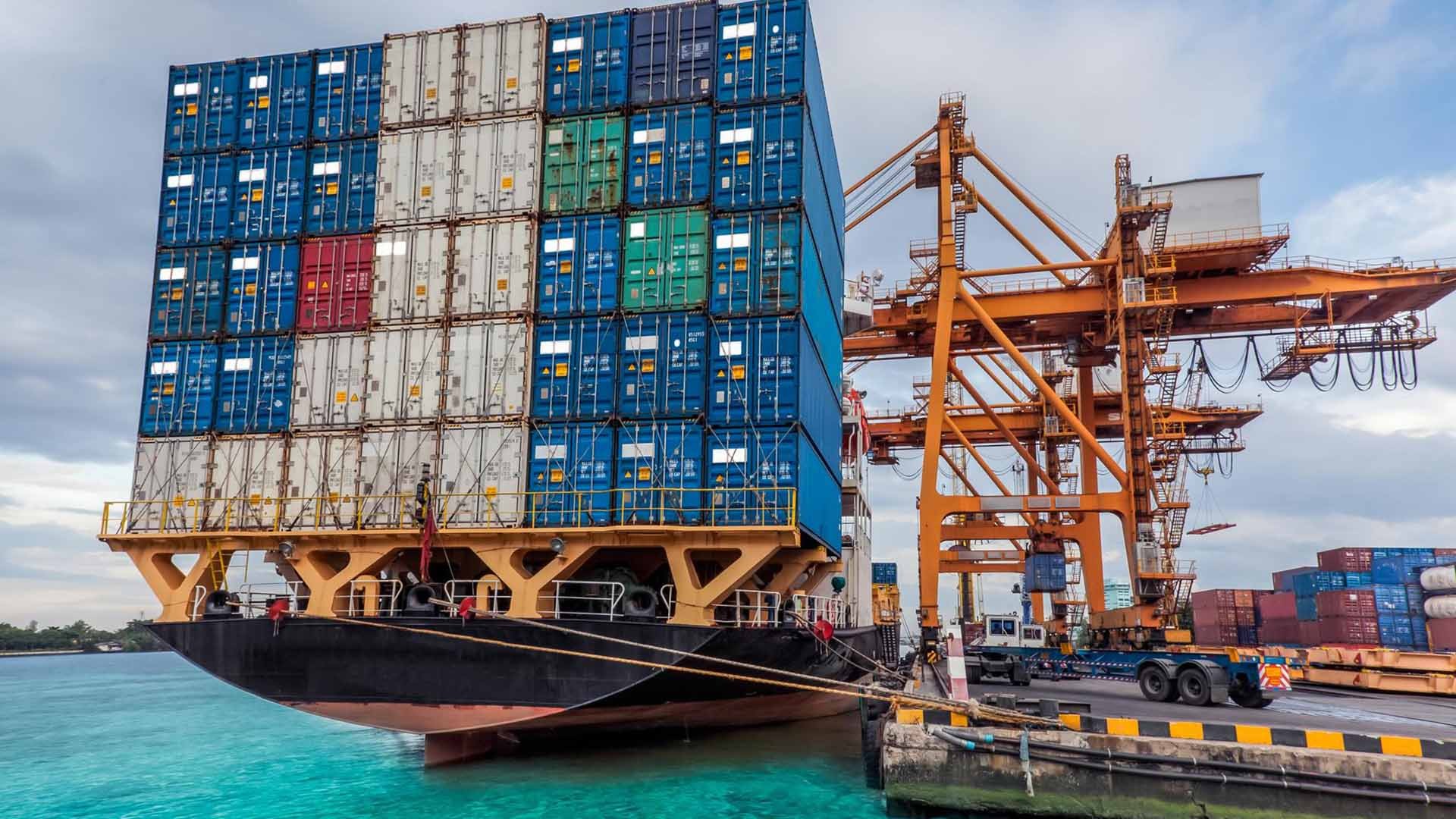
Race to bigger boxships could resume as carriers weigh plus 27,000 teu giants
Ships of 27,000-plus teu back on the agenda as Alphaliner argues changing economics could revive containership upsizing

Source: Lloyd's List

Related articles
Sea newsSuez recovery gathers pace, but sector split points to limits ahead
Sea newsPort delays remove 3m teu of containership capacity
Sea newsMega hub era wanes as carriers disperse global connectivity
Sea newsFears mount on ship fuel availability as Hormuz closure drags on

Sea newsContainer shipping forecast adrift for 2025 with multiple variables in play

Sea newsTop 10 box port operators 2024