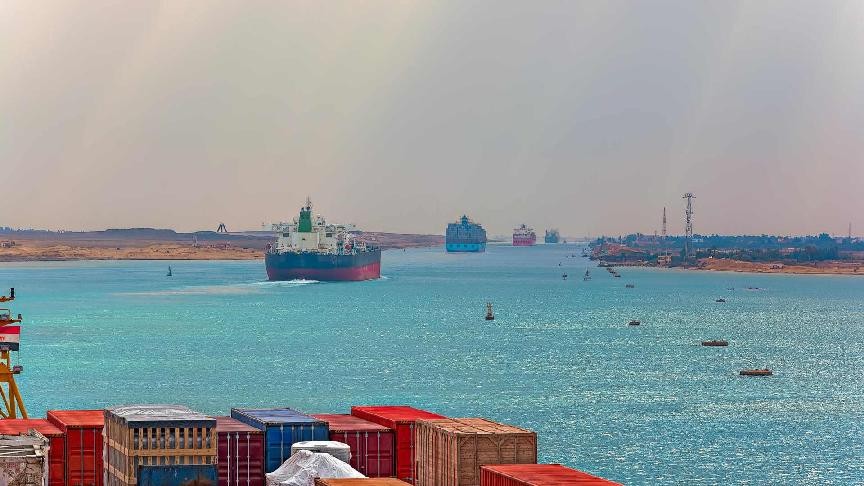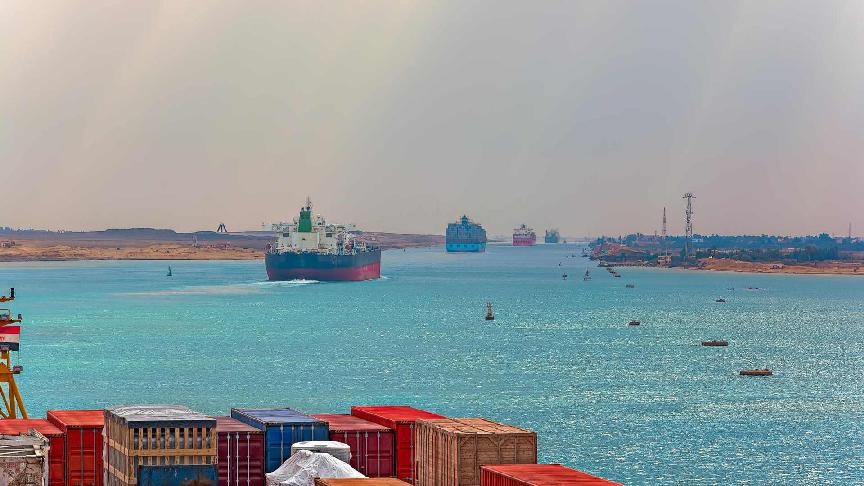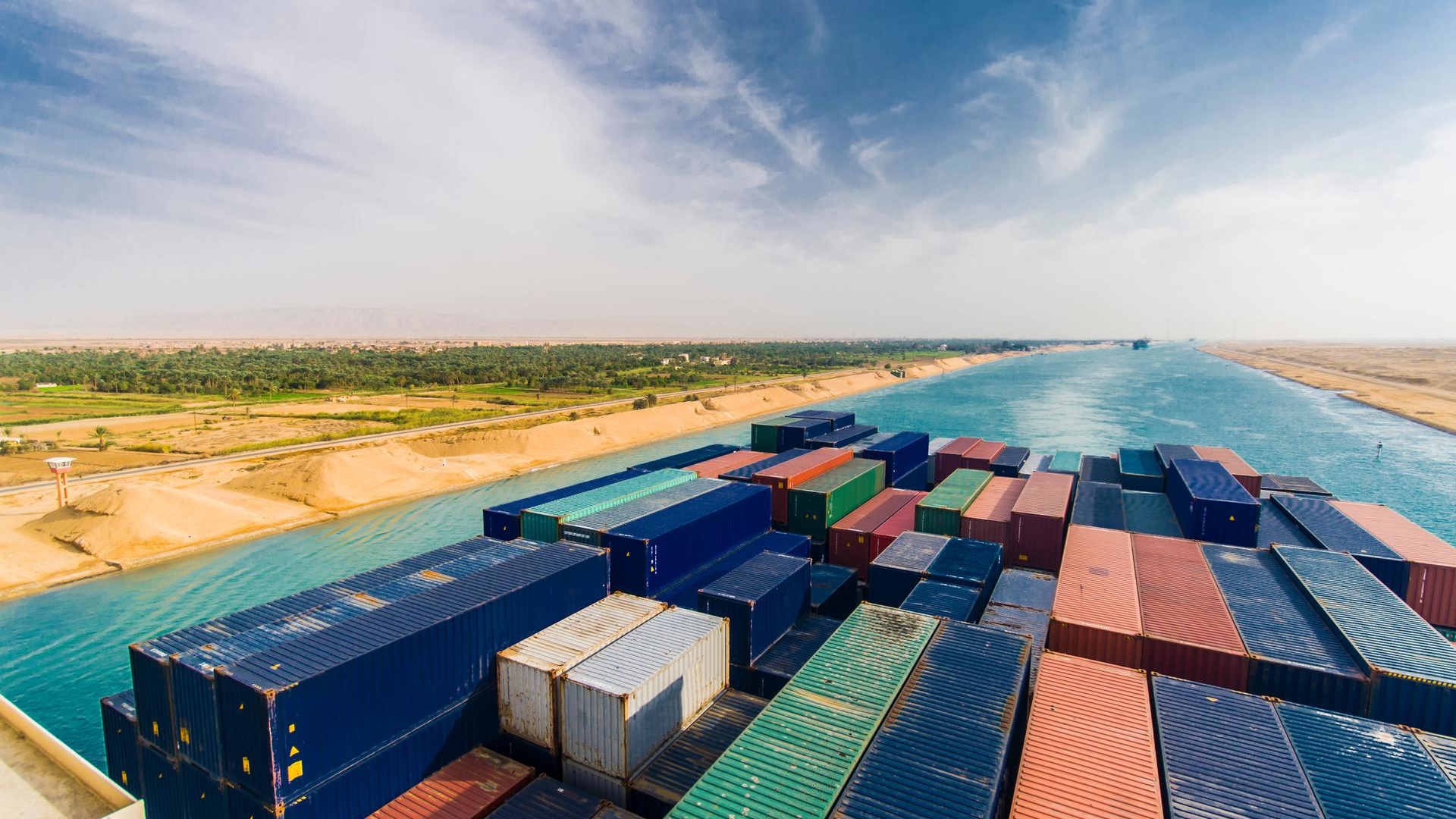

SUEZ Canal traffic continued to recover in September, reaching its highest level since December 2023. But while volumes are rising, the recovery remains uneven and the canal is still a long way from regaining the record traffic levels seen before Houthi attacks reshaped global shipping patterns.
Total deadweight tonnage rose 3% month on month to 106.3m dwt, marking a second consecutive month above 100m dwt, according to research from the Maritime Intelligence Unit at Lloyd’s List Intelligence.
Transit numbers were broadly flat at 1,228 vessels, slightly below August despite the increase in cargo volumes.
The gains were driven largely by containerships. While LPG carrier tonnage surged 32% to 806,000 dwt and crude tanker tonnage edged up 2% to 40.5m dwt. Elsewhere, traffic moved in the opposite direction. Vehicle carrier tonnage fell 18%, LNG carriers and chemical tankers each declined 11%, bulk carriers dropped 10% and product tanker volumes sank by 4%.
The figures underline an increasingly fragmented recovery shaped as much by shifting trade flows as by vessels returning to the Red Sea. They also raise a larger question: how much further can Suez realistically recover?
The benchmark remains formidable. A record 24,063 vessels transited the canal in 2023, while September 2023 alone saw 2,018 transits, 65% more than last month’s figure.
Closing that gap will depend heavily on a fuller return of containerships and bulk carriers. More than two thirds of Asia-Europe container capacity was still avoiding the Red Sea in September, even as growing numbers of ultra-large vessels returned to the corridor.
Large containerships lead the comeback
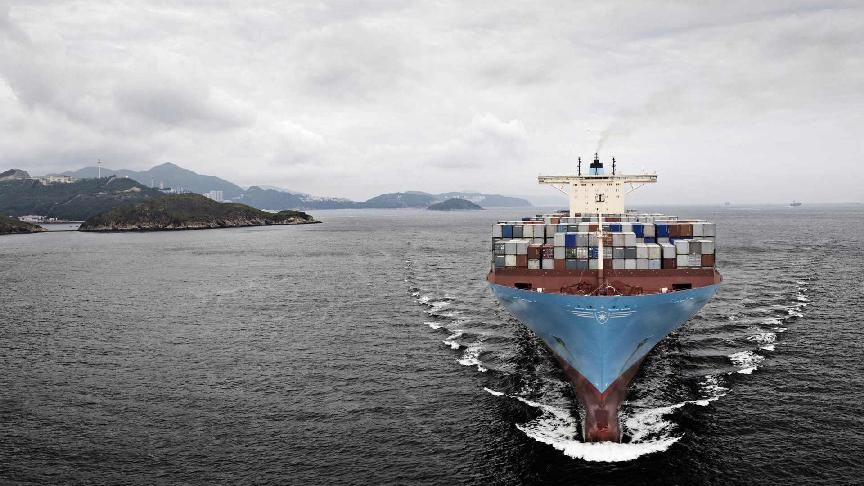
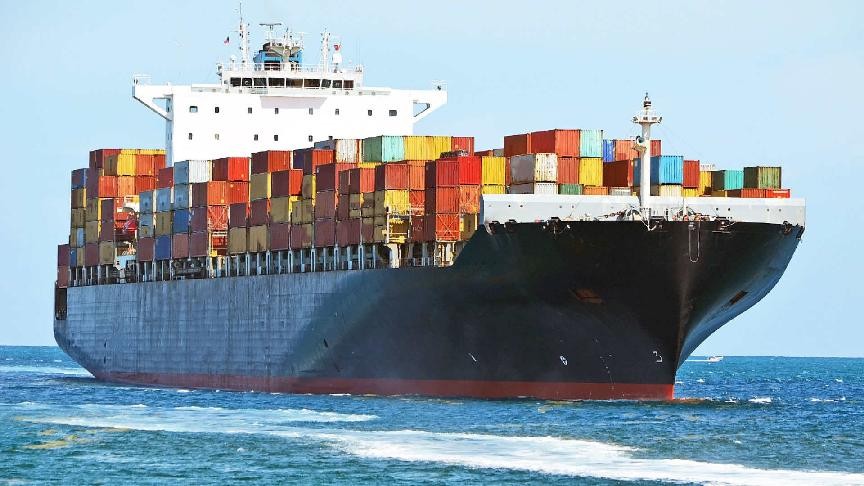
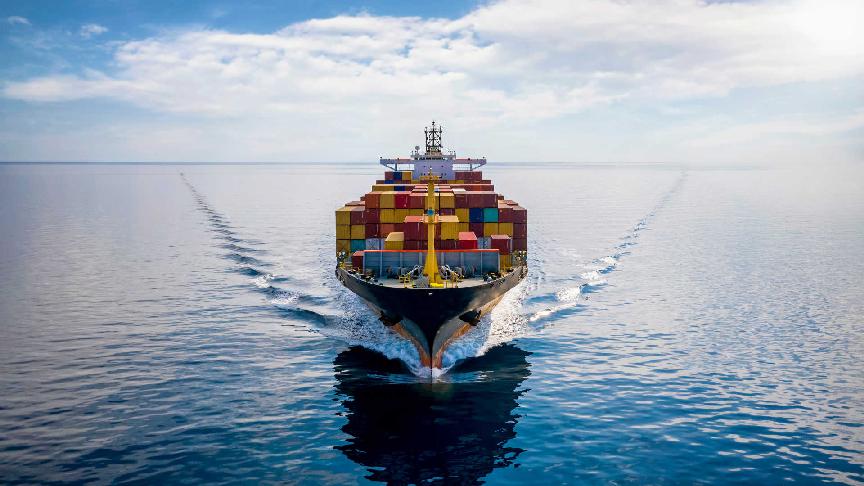
Containership traffic reached 2.19m teu in September, up almost 40% month on month and 264% year on year as carriers continued to bring larger vessels back into service via Suez. Growth was seen in both directions, although southbound volumes rose faster.
During the week of September 28-October 4 alone, 71 containerships transited the canal, including 45 vessels of at least 7,000 teu.
More than 140 containerships representing over 2m teu of capacity have reportedly returned to Suez routings since May, with MSC, Maersk, Hapag-Lloyd, Cosco and Ocean Network Express selectively restoring services. CMA CGM has maintained some Red Sea transits throughout the disruption.
The significance increasingly lies in vessel size rather than vessel numbers. Lloyd’s List Intelligence recorded 44 Bab el Mandeb crossings by containerships above 18,000 teu in 2026, with 39 of them since July. By comparison, only one such sailing was recorded during the whole of 2025.
Preliminary data from the Maritime Intelligence Unit suggests container traffic remained elevated in the first half of October.
BIMCO, citing Clarksons Research data, said liner capacity transiting Suez averaged 753,000 teu during the first two weeks of October, compared with just under 1.5m teu before the Red Sea crisis. According to BIMCO chief shipping analyst Niels Rasmussen, this marked the first time traffic had exceeded 50% of pre-disruption levels.
Even so, the recovery remains far from complete.
Crude flows reflect rerouted trade
Crude tanker tonnage rose just 2% in September, but at 40.5m dwt it reached its highest level since December 2023 and stood 36% above year-earlier levels.
The modest increase masks a significant reconfiguration of regional crude trade, particularly around Saudi Arabia’s Red Sea export hub at Yanbu.
Loadings began recovering in late September after the shutdown of the East-West Pipeline reduced exports to a trickle for nearly three weeks. As operations partially resumed, several VLCCs returned to the port.
At the same time, renewed Houthi threats against Saudi shipping have redirected more Yanbu crude north through Suez rather than south through Bab el Mandeb.
Some VLCCs are transiting Suez partially laden before topping up at Sidi Kerir, while other volumes move through Ain Sukhna and the SuMed Pipeline. The result is a circuitous route in which Saudi crude moves north through Suez before ultimately heading south around the Cape of Good Hope.
Russian crude has increasingly flowed in the opposite direction. Lloyd’s List Intelligence analysts identified at least 50 India-bound tankers carrying Russian crude through Suez between September 10 and 30.
As such, rising crude volumes reflect changing trade patterns as much as a return to pre-crisis routing.
Other sectors lag behind
The recovery is far less pronounced elsewhere.
Bulk carrier traffic remains roughly half pre-crisis levels. Just over 300 bulk carriers transited Suez in September, down 8% year on year. Activity was concentrated in the panamax/kamsarmax and supramax/ultramax segments, which accounted for 92 and 140 transits respectively.
Three years on, some bulk trades have adapted more permanently to routes that avoid the Red Sea, while the situation in the Black Sea puts a further cap on potential recovery.
“We were seeing meaningful and sustained growth in bulker traffic from April to July this year, but this trend has since reversed,” said Bridget Diakun, maritime intelligence and research director at Lloyd’s List Intelligence.
“The rapid decline in the security situation in the Black Sea over the summer has significantly reduced bulk exports from Ukraine and Russia, which were often transported to markets in the east via the Red Sea.”
LNG carrier traffic fell 11% to 3.3m dwt, while chemical tanker tonnage declined to 671,000 dwt. General cargo shipping recorded one of the steepest declines, falling 21% to 2.17m dwt.
Vehicle carriers also remain notable absentees. Most European, Japanese and South Korean operators serving Europe, Asia and Australasia have avoided the Red Sea since late 2023, preferring Cape routings.
Many still use Suez for calls at Jeddah before returning north through the Mediterranean. However, a small group of operators, particularly those supporting strong Chinese vehicle exports, have continued to transit Bab el Mandeb throughout the crisis.
Cosco, China Merchants Group and SAIC Motor have consistently routed owned vessels through Suez on Asia-Europe services. As their fleets expanded, the three companies helped drive a doubling in vehicle carrier transits through the canal since January, most via Bab el Mandeb.
Ro-ro cargo shipping bucked the broader trend, with volumes rising 62% from a low base, largely due to US-flag sealift vessels.
Plenty of room left to run
September looks less like the final stage of the recovery than the start of a new phase.
Crude and product tanker flows had already returned close to pre-Houthi levels by August, with crude volumes exceeding those recorded in August 2023. Containerships and bulk carriers remain the biggest source of upside.
Sea-Intelligence estimates Asia-Europe capacity was only 27% normalised in September, comprising 18% of headhaul capacity and 38% of backhaul capacity.
That leaves significant room for growth if major liner operators continue returning to the Red Sea. Security remains the key constraint. Demand for naval escorts is increasing, while Operation Aspides remains short of the assets needed to meet all requests.
There is also an economic trade-off. Returning to Suez shortens voyages and improves vessel productivity, but it simultaneously releases capacity that has been absorbed by longer Cape routings into an Asia-Europe market already struggling with freight rate pressure.
Traffic has recovered well beyond the lows of the Red Sea crisis, but a return to record volumes will depend largely on whether the containership recovery proves durable.
Even then, matching 2023 traffic levels would not mean a return to the old Suez market. Nearly three years of disruption have reshaped tanker, bulker and gas trades while permanently altering elements of liner network design.
Suez still has substantial room to recover. Whether it can return to its pre-Houthi peak increasingly depends on the next phase of the containership comeback and the eventual return and normalisation of key bulker trades.