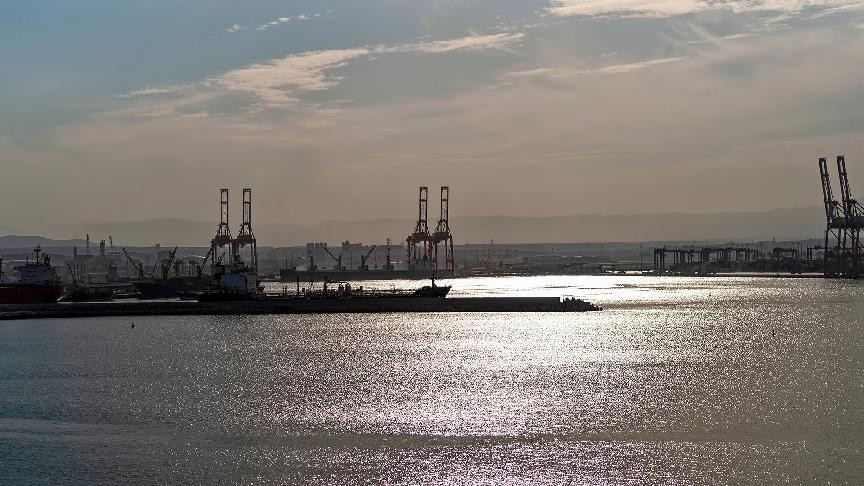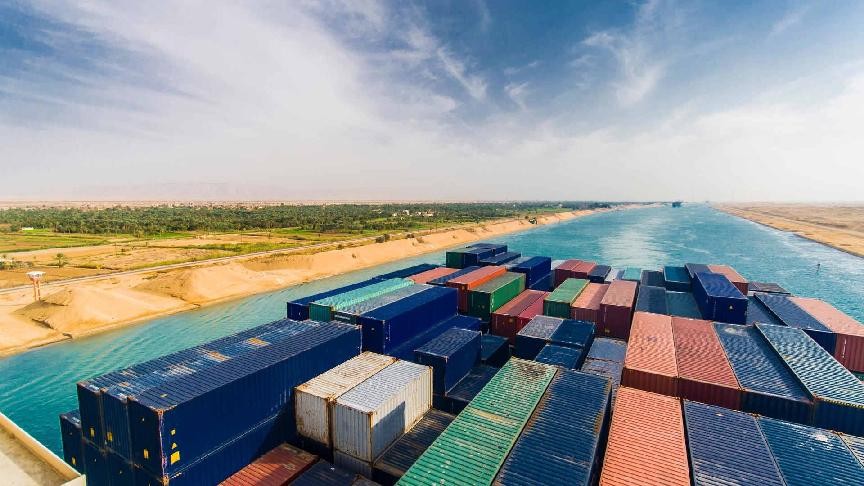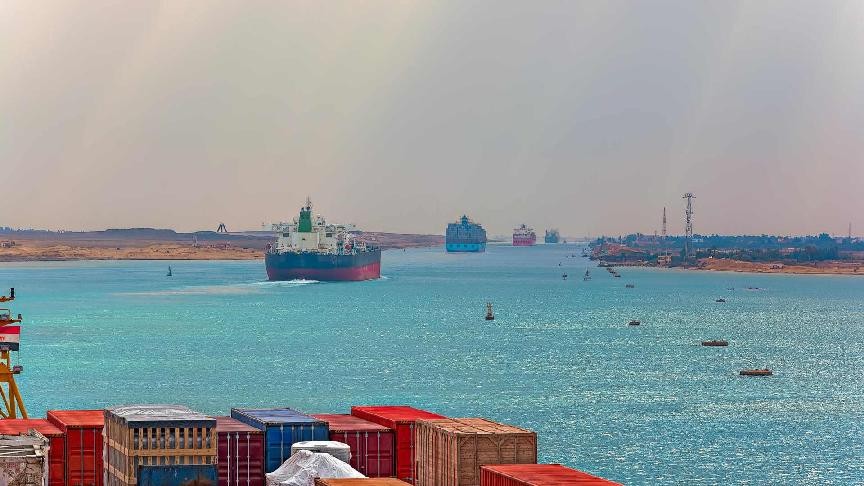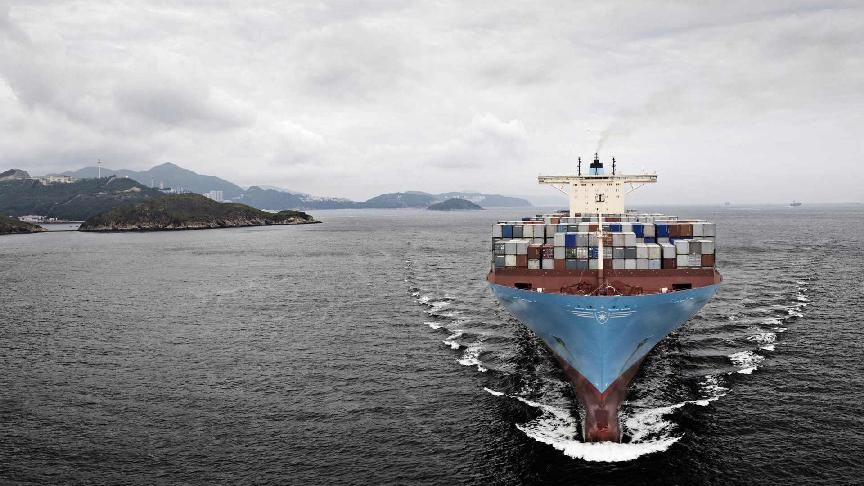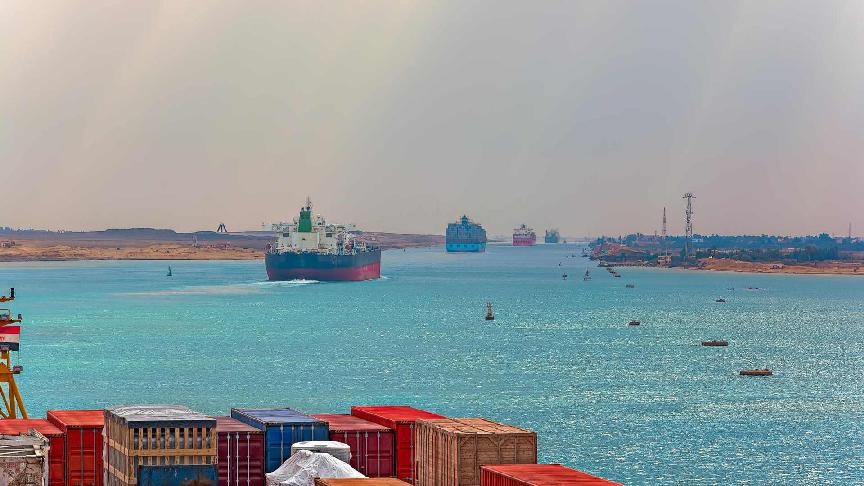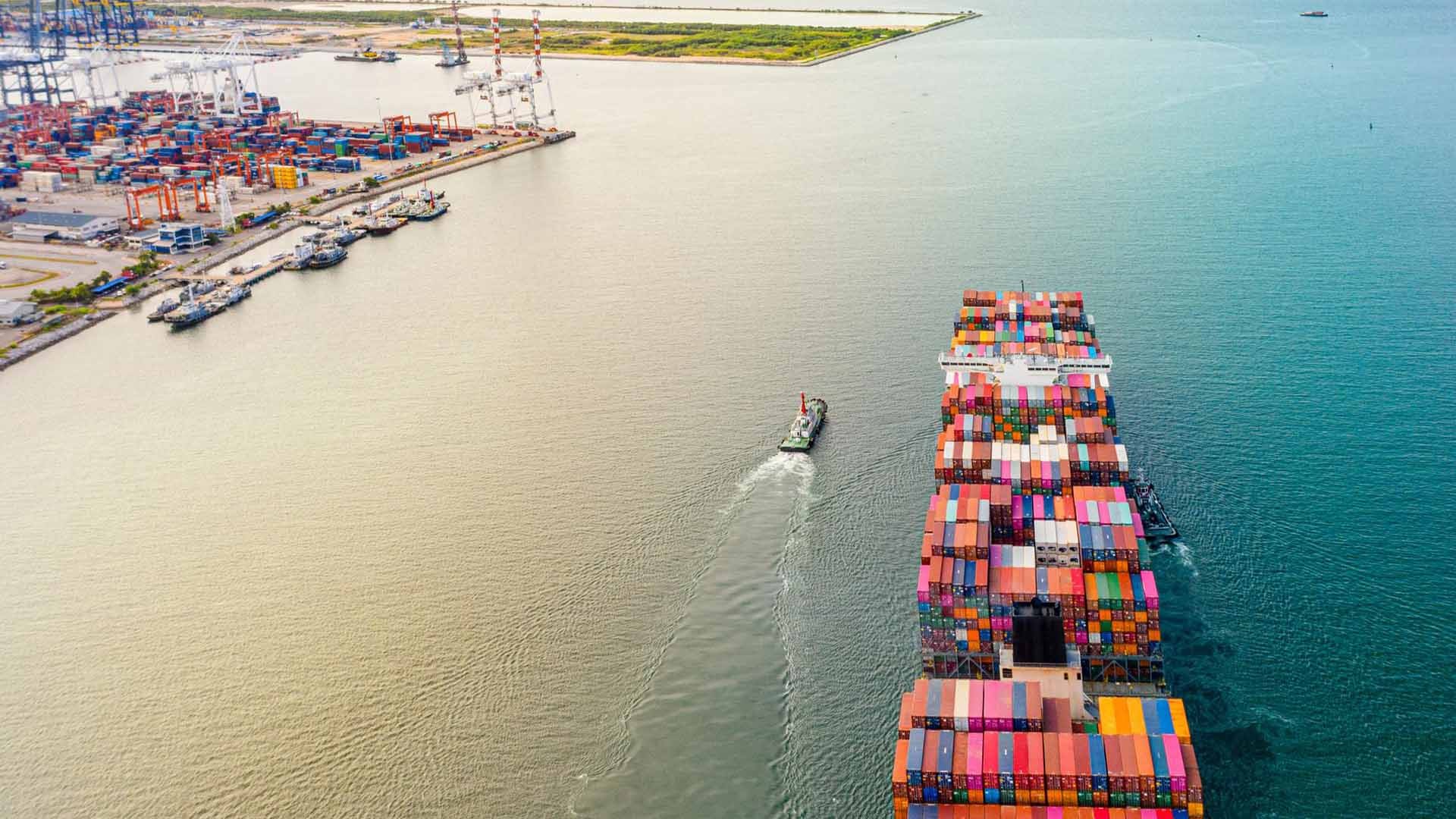

ULTRA-LARGE and megamax containerships are returning to the Red Sea in increasing numbers, with October recording their highest number of Suez Canal transits since the shipping crisis began in late 2023.
Lloyd’s List Intelligence data shows that more than 100 containerships of 16,000+ teu have transited the canal since the beginning of September, exceeding the 99 recorded during the whole of 2025 and the first eight months of 2026 combined.
Just eight ultra-large containerships transited Suez during 2025. That figure has risen to 192 so far in 2026 as major carriers progressively restore services to the shorter Asia-Europe route.
The changing vessel mix has become particularly apparent in October. Ultra large and megamax boxships accounted for around half of all containership capacity passing through Suez in the first 20 days of the month, according to LLI data. In October 2025, no ships in the 16,000+ teu category transited the canal.
So far this month, or through to October 20, 15 megamax containerships — or those with more than 20,000 teu — had transited the Suez Canal. The latest included the 24,232 teu CMA CGM Pantheon (IMO: 1028047), 20,119 teu COSCO Shipping Virgo (IMO: 9783461) and 24,232 teu MSC Irina (IMO: 9929429), according to Lloyd’s List Intelligence vessel tracking.
The return of the largest containerships marks a significant milestone in the recovery of Suez traffic, which until recently had been driven largely by smaller tonnage and selected carrier services. However, the recovery remains incomplete.
Containership capacity passing through Suez reached around 2.2m teu in September, compared with about 6m teu before the Red Sea crisis, leaving volumes more than one third below former levels.
Carriers rebuild Suez networks
The increase in ultra large and megamax transits reflects a much broader restoration of carrier networks through the Red Sea.
Alphaliner estimated this week that 63% of capacity deployed on direct Asia-Europe services is now assigned to loops using the Red Sea.
Its survey of the 10 largest carriers between September 15 and October 15 found Red Sea transits on 24 of 46 direct Asia-Europe services.
In capacity terms, services routed through the Red Sea accounted for 70% of Asia-Mediterranean tonnage and 58% between Asia and northern Europe.
Overall, some 5.5m teu, or 63% of the 8.7m teu deployed on the wider Asia-Europe trade, was assigned to loops on which vessels were using the Red Sea.
That does not mean all ships assigned to those services are making a full round voyage through Suez. Carriers have adopted a cautious, incremental approach to restoring their networks, with some services transiting the Bab el Mandeb westbound but continuing to return to Asia around the Cape of Good Hope.
Five of the 10 largest carriers had resumed Red Sea transits during Alphaliner’s survey period, with that number set to rise to eight following the Premier Alliance partners’ announcement that they would restore Suez routings on two Asia-northern Europe services.
Evergreen and Zim remain the only two of the top 10 carriers yet to make the move.
CMA CGM has maintained the greatest exposure to the Red Sea, having never completely stopped transiting the route during the crisis.
Alphaliner said the French carrier operated eight services through the waterway between mid-September and mid-October, representing almost 1.3m teu of deployed capacity. Four mainline Ocean Alliance services accounted for about 910,000 teu of that total.
Ocean Alliance partners Cosco and OOCL have followed, returning ships to Suez on six services with combined deployed capacity of 1.27m teu.
Maersk began restoring Suez transits in July through the Asia-east Mediterranean AE15/SE3 service operated as part of the Gemini Cooperation.
Maersk and Hapag-Lloyd subsequently had nine alliance services using the Red Sea, representing 1.76m teu of deployed capacity. Maersk has also returned its standalone India-Middle East-US east coast MECL service.
Mediterranean Shipping Co followed in August and had 11 loops transiting the waterway during the survey period, with deployed capacity approaching 2.2m teu.
Cape diversions fall
Separate Linerlytica data also points to the steady unwinding of the Cape of Good Hope diversions that have reshaped liner networks since late 2023.
The number of containerships diverted around the Cape has fallen to 180, its lowest level since January 2024 and around half the average of 350 ships recorded over the previous two years.
Of the services monitored by Linerlytica, 30 of 52 westbound loops and 32 of 57 eastbound loops had already returned to Suez. Another two services in each direction were scheduled to switch back in November.
The commercial incentive remains substantial. Returning to Suez can remove roughly two weeks from an Asia-Europe voyage while reducing fuel consumption, an increasingly important consideration as bunker prices remain elevated.
The fuel cost for a typical 20,000 teu containership operating at around 18 knots is around $165,000 per day for scrubber-fitted vessels burning high sulphur fuel oil. For vessels using LNG that cost rises to $252,000 per day, at prevailing prices.
But the scale of the return should not be mistaken for a return to pre-crisis normality.
The security situation remains unstable, while the use of one-way Suez routings and continued Cape diversions shows that carriers are still managing their exposure cautiously rather than uniformly restoring pre-2023 networks.
Nevertheless, the return of ultra-large and megamax tonnage represents a significant change. The world’s largest containerships, which effectively disappeared from Suez during the height of the crisis, are once again becoming a major component of traffic through the waterway.