
Shipping activity through the Strait of Hormuz is showing signs of recovery, although available data present differing views on the extent of the increase.
This week, US Energy Secretary Chris Wright stated that traffic through the strait is rising and expected to continue increasing.
He described the trend as “rising very meaningfully” and said it is “a fair statement” to characterise volumes as growing.
However, other datasets indicate that overall activity remains subdued.
An official familiar with the US Central Command operations told Bloomberg that nearly 1,000 commercial vessels transited the strait in the two months following the ceasefire between the United States and Iran on 8 April.
This figure is reportedly derived from continuous surveillance across air, sea and space.
On the other hand, ship-tracking data based primarily on transponders recorded just over 650 transits during the same period, including 402 outbound and approximately 260 inbound movements.
The difference between these figures may partly reflect vessels travelling without active transponders, referred to as “dark transits”, which are not consistently captured by private tracking systems.
Despite the upward movement indicated by US officials, traffic levels remain significantly lower than before the conflict, when more than 100 ships passed through the strait each day.
Since the beginning of the crisis, the number of vessels that managed to exit the waterway has been limited.
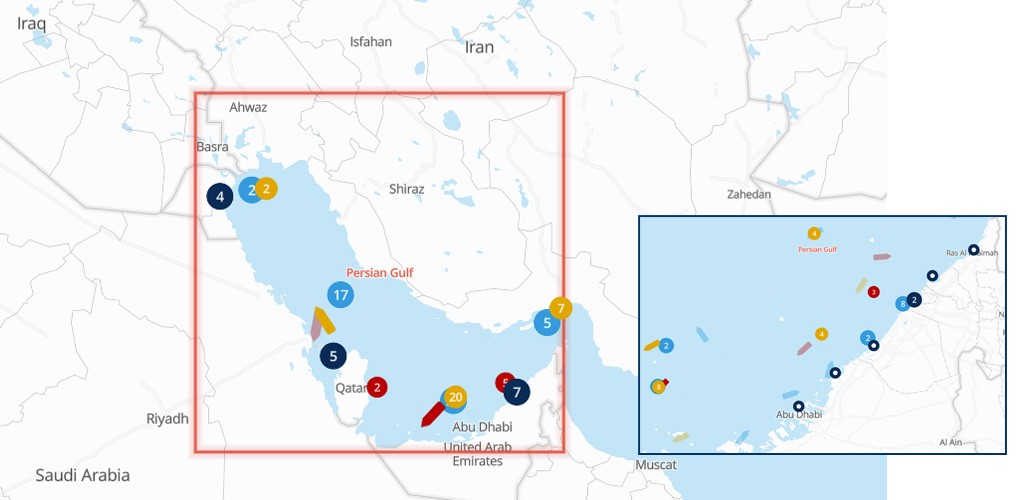
Seaexplorer data shows that around 130 container vessels were held in the region at the beginning of the conflict. Currently, the total stands at 96 vessels with a total capacity of 324,301 TEU.
As of 10 June, seaexplorer shows the container vessels are positioned across the Persian Gulf, with traffic distributed across several distinct clusters.
The highest concentration appears along the eastern side near the United Arab Emirates and the Strait of Hormuz, where multiple grouped markers indicate larger vessel counts in close proximity.