
Senior executives from the world's leading shipping companies met WTO Director-General Ngozi Okonjo-Iweala on 28 May to present a stark assessment of deteriorating conditions across global maritime trade networks.
Participants included senior representatives from MSC, CMA CGM, COSCO Shipping, Hapag-Lloyd, Ocean Network Express, Evergreen Marine Corp., Yang Ming and China Merchants Energy Shipping, alongside the heads of the International Chamber of Shipping, the World Shipping Council and FIATA.
Executives told the Director-General that disruptions at key maritime chokepoints, particularly in the Gulf region, are compelling operators to seek alternative routes and ports.
However, many of those alternatives are already operating at or near capacity, and diverting cargo away from established sea lanes carries significant cost implications for shippers and end consumers alike.
Operational complications are compounding the strain
Customs clearance difficulties, particularly those arising from multimodal logistics and the use of alternative corridors, were identified as a material bottleneck.
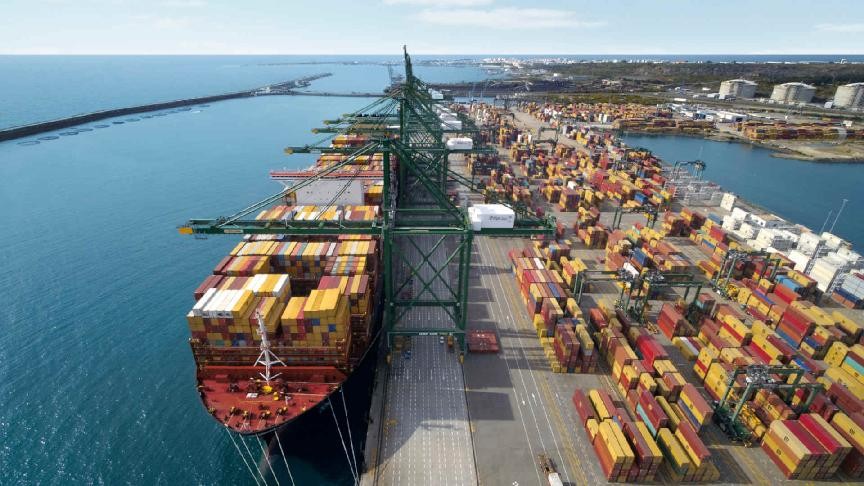
One executive illustrated the disparity in scale by noting that approximately 70 freight trains are required to replicate the carrying capacity of a single container ship.
Industry representatives called for full respect of freedom of navigation under the UN Convention on the Law of the Sea, and underlined the need for investment in port and logistics infrastructure to support predictable trade flows.
The broader picture was reinforced by the container throughput index produced by research institutes RWI and ISL. Following a marked decline in March, the index fell further in April, reversing what had been described as a "noticeable revival" earlier in the year.
Both Chinese and European ports registered reduced activity, with the institutes attributing the deterioration to supply chain disruptions and weakening demand. Their assessment offered little cause for optimism: "A trend reversal is not in sight."
Director-General Okonjo-Iweala called for greater government and private-sector cooperation, urging full implementation of the WTO Trade Facilitation Agreement and measures, including customs digitalisation and timely information-sharing, to underpin supply chain stability.