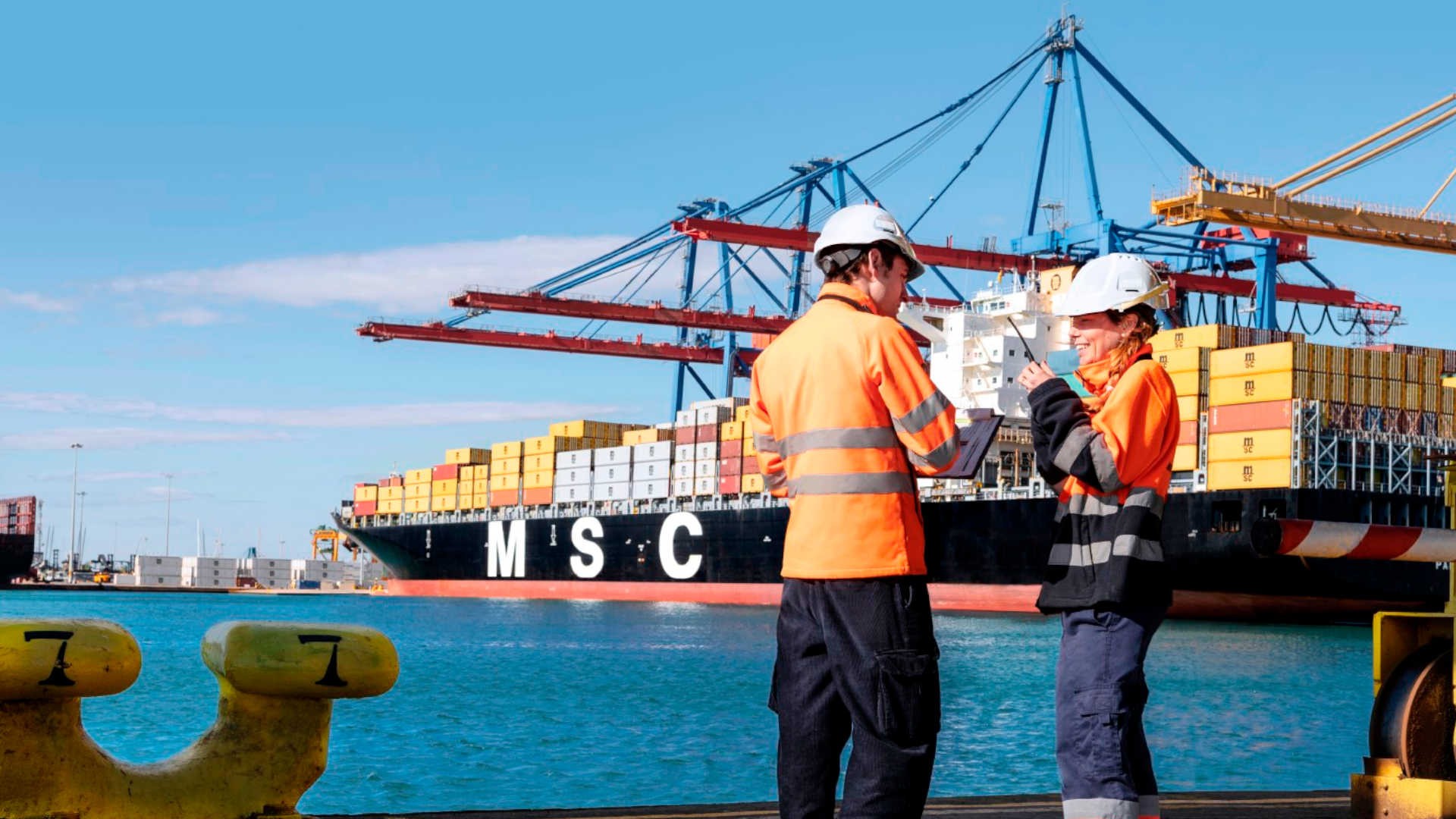

Newly published data reveal that the Swiss-Italian container liner MSC has surpassed the highest capacity level ever held by an ocean carrier.
The largest shipping company in the world achieved a 21.5% share of total global container capacity in May, surpassing the previous benchmark of 19.3% recorded by Maersk in 2018.
According to Alphaliner data, the company has actually pushed that to 21.6% by 9 June with its 7.329 million TEU fleet.
In addition, the company’s market share has doubled since 2010, reinforcing its position as the leading container shipping line.
Analysts have compared MSC's achievement with that of its former alliance partner, Maersk. In contrast, Maersk's share declined to 13.7% in May, marking its lowest level in two decades.
Nevertheless, Maersk remains a top carrier holding the second position globally, with a total capacity of 4.695 million TEU and a 13.8% share.
The expansion that MSC saw in the past decade has been driven by sustained fleet growth.
According to Splash247, the company initiated a series of secondhand vessel acquisitions in August 2020, accumulating 461 ships by November 2025.
In parallel, its newbuilding programme delivered 54 vessels totalling 695,185 TEU in 2025, contributing to annual capacity additions of 831,400 TEU and fleet growth of 11.7%, compared with 7.3% across the top 12 carriers.
Strategic developments have supported this growth. Following the announcement in January 2023 that the 2M alliance with Maersk would end in February 2025, MSC introduced a standalone east-west network in September 2024, comprising 34 loops across five trades.
French carrier CMA CGM has also been seeing significant growth among container lines. In addition to capacity growth, the company has pursued a broad expansion strategy focused on terminals, logistics, and fleet-related investments.
CMA CGM currently holds the third position globally among container shipping lines by fleet capacity, ranking behind MSC and Maersk with an estimated market share of around 12.7% based on Alphaliner data.
Across the sector, concentration remains high. The ten largest carriers accounted for 84.7% of global capacity at the end of May, following the delivery of nearly 500,000 TEU of new tonnage between December and April.