
LESS than 5% of International Maritime Organization member states submitted reporting data on container inspections last year, the latest findings have revealed.
The World Shipping Council, which has taken on the mantle of collecting and publishing this data from the IMO, revealed that just seven out of the 176 IMO member states submitted data, or 4%.
WSC chief executive and president Joe Kramek said he didn’t know why more member states did not submit their data, especially those with large volumes of containerised trade who are certainly conducting container inspections.
“Do we have a reporting gap, or do we have an inspection gap?” Kramek asked, speculating that the former is more likely to be true.
He told Lloyd’s List that his organisation wanted the IMO to reach out to non-member states and ask them to meet their obligations to report their data, “because it will give us a better look at the system”.
What the system shows is a consistent level of deficiency. Of the 93,079 containers inspected, 9,645 were deficient, or just over 10%. While the sample size is still small, reporting nations included the US and Germany, who inspected 55,857 and 23,848 units respectively.
That percentage is broadly consistent over the past few years. Since 2023, when the rate jumped to 11% from 7.84% in 2022, it has hovered around the 10%-11% mark.
By far the biggest deficiency is incorrect “placarding or marking”, which could mean the goods inside a container have been declared but have not been marked accurately, or that the cargo has not been declared at all.
Containership fires
Misdeclared cargo is an issue the WSC has been grappling with for some time. It is a significant source of containership fires, which remain at elevated levels.
Just this week, CMA CGM has declared General Average for the fire onboard France-flagged, 2024-built, 86,715 teu CMA CGM Petra (IMO: 9977701), which suffered a fire in the Strait of Malacca on August 23.
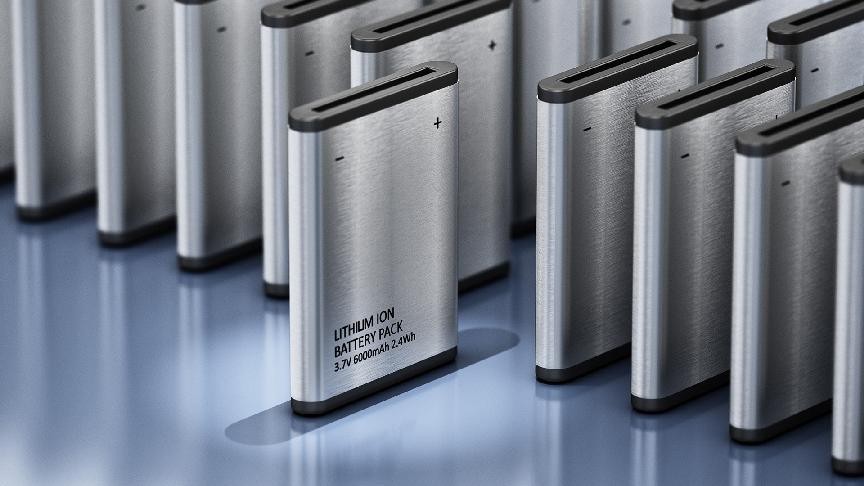
The cause of that particular incident is not yet clear, but Kramek said the main culprit generally in such cases had been misdeclared cargo, specifically lithium-ion batteries.
The WSC, along with several other states and shipping bodies, is attempting to amend an exemption that allows sometimes thousands of batteries to be shipped in a container without the vessel or carrier’s knowledge.
Under the International Maritime Dangerous Goods Code, there is currently no limit on the number of batteries that can be shipped under Special Provision 188. Batteries below specified watt-hour thresholds that meet testing and packaging requirements are exempt from IMDG declaration requirements.
A hypothetical example laid out by the submission to the IMO by WSC and those states and bodies suggests it could be possible for a 40 ft container to be loaded with 4,200 laptops, each with a 99-watt-hour battery. Each battery qualifies under SP188, but in total that container would be carrying the equivalent power of three to four electric vehicles.
Kramek said the submission had been received well at the IMO’s Sub-Committee on Carriage of Cargoes and Containers (CCC), but that any amendment to the exemption would need to go through multiple bodies and could take until 2030 to secure.
The WSC’s board members, comprised of leaders from multiple shipping companies and carriers, told Kramek he needed to move faster.
Instead, an interim voluntary scheme was put forward and accepted at the most recent meeting of the CCC, he explained, in the form of a circular which would be circulated by IMO in the near future.
He was confident shippers would adhere to this voluntary scheme to rectify SP188.
He pointed to WSC’s Cargo Safety Programme, which screens bookings in advance and suggests where misdeclared cargo is most likely.
That has been endorsed by shippers and insurers alike, not “because they welcome more scrutiny”, but because “the best and biggest shippers out there know that their cargo is being put in jeopardy by a few unscrupulous shippers”.
Containership fires benefit nobody. The danger to vessels and seafarers notwithstanding, General Average on CMA CGM Petra will mean shippers whose cargo was not damage by the fire will still be on the hook (or their insurers will).
Another case, involving Maersk vessel Maersk Seoul, has only just been settled through the courts 11 years after the incident took place. In that instance, the vessel suffered an explosion as a result of poor packing of calcium hypochlorite, the Commercial Court has ruled.
Inappropriate or dangerous packing was responsible for 5% of deficiencies last year, the data collected by WSC shows.
The reality of container shipping, Kramek told Lloyd’s List, was moving boxes from port to port while rarely seeing what’s inside, unless there is an obvious problem or authorities ask to see inside.
“So, we rely on shippers to comply with the law, which is both the packaging requirements and the and the declarations. I don’t think it’s a regulatory gap, I think it's a compliance gap,” said Kramek.