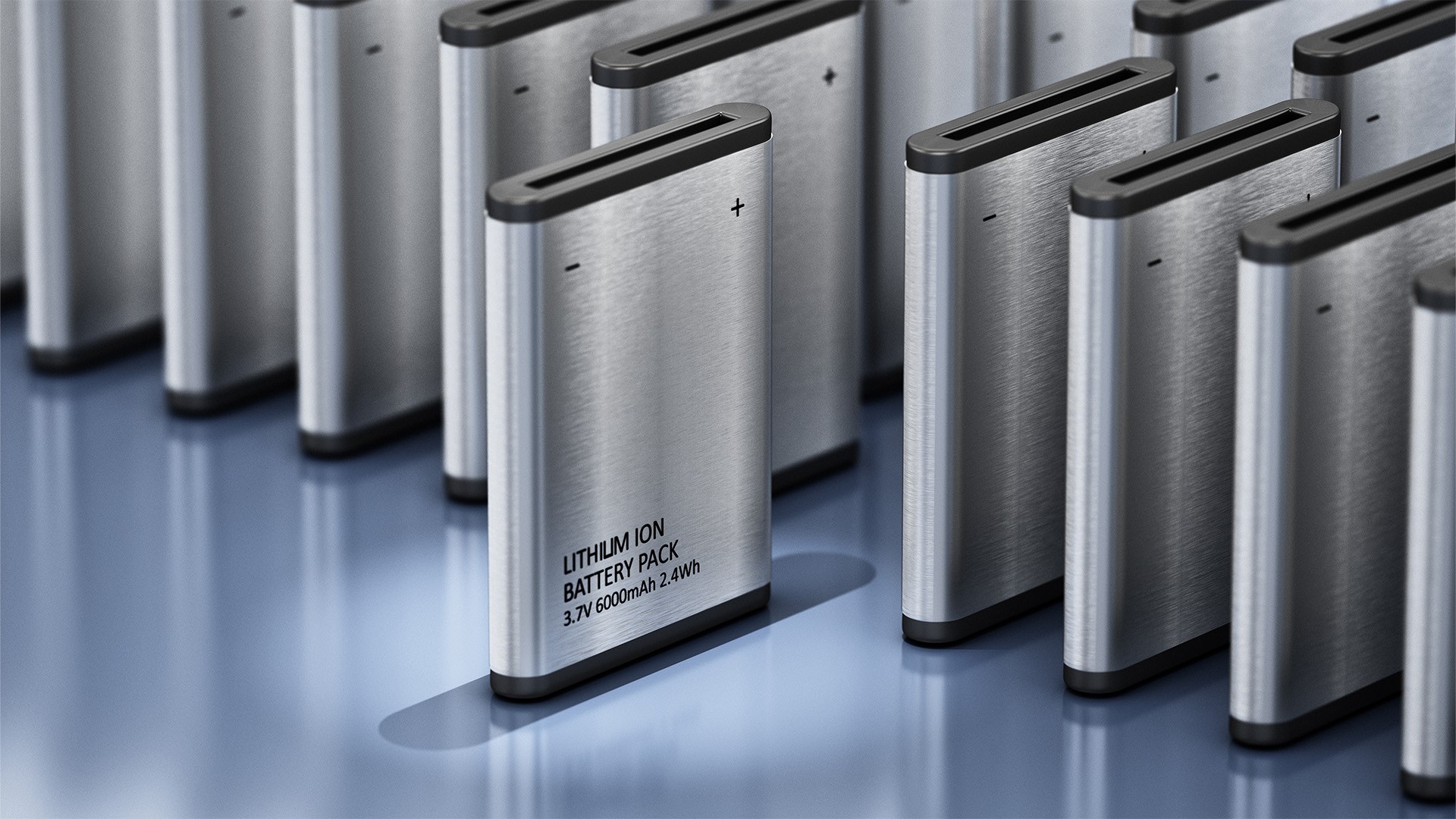

SEVERAL governments and shipping industry bodies are urging the International Maritime Organization to close a regulatory loophole that allows thousands of lithium-ion batteries to be shipped in a single container without being declared to the carrier.
Germany, the Marshall Islands, the Netherlands, Singapore, Thailand, the International Bureau of Containers, BIMCO, the International Chamber of Shipping, the International Cargo Handling Coordination Association, the ITF, the World Shipping Council, P&I clubs and insurance associations have jointly submitted a proposal to the IMO’s Sub-Committee on Carriage of Cargoes and Containers.
Under the International Maritime Dangerous Goods Code, there is currently no limit on the number of batteries that can be shipped under Special Provision 188. Batteries below specified watt-hour thresholds that meet testing and packaging requirements are exempt from IMDG declaration requirements.
SP188 was introduced in the 1990s to facilitate trade in small batteries while limiting transport risks. However, battery demand has surged since then.
The International Energy Agency estimates global lithium-ion battery deployment in 2025 was six times higher than in 2020 and forecasts demand will double again by 2030.
As a result, containers carrying hundreds or even thousands of lithium-ion batteries are routinely loaded aboard vessels without crews knowing they are on board.
World Shipping Council president and chief executive Joe Kramek, whose organisation authored the submission, said the rules were no longer operating as intended.
“We know what can happen when that hazard is invisible,” he said.
“Batteries shipped under the exemption have caused serious container fires, putting people, ports, ships and the marine environment at risk.
“As battery shipments continue to grow, we need a better solution that makes these cargoes visible and allows the risks to be properly managed.”
Practical consequences
The submission cites a hypothetical example of a 40 ft container loaded with 4,200 laptops, each containing a 99 watt-hour battery. While each laptop would qualify for the SP188 exemption, the container would carry battery capacity equivalent to three or four electric vehicles, with no requirement for the cargo to be declared.
BIMCO regulatory manager Katerina Elikonida Maroudi said the lack of declaration leaves carriers and crews “without the information needed to assess the cumulative fire risk, choose appropriate stowage or prepare an effective emergency response”.
The danger is not merely theoretical.
In September 2020, the Malta-flagged X-Press Godavari (IMO: 9353735) suffered a container fire while anchored in the Bay of Bengal. The master and chief officer spotted smoke coming from a container on deck and raised the alarm. Despite firefighting efforts, the container continued burning for days after being discharged.
An investigation found the container held 500 cartons containing more than seven tonnes of lithium-ion batteries. Because the shipment qualified under SP188, it had not been declared.
According to the accident report, the crew did not know they were dealing with a lithium-ion battery fire for around 90 minutes until the charterers confirmed the cargo’s contents by email.
The submission notes the vessel was fortunate to be close to shore and that the fire was detected quickly.
At sea, however, “where a lithium-ion battery fire can be extremely difficult to control and shore assistance may be far away, that lack of visibility is a serious safety gap that should be addressed through a practical and proportionate solution”, Maroudi said.
Recent casualties aboard Wan Hai 503 and Maersk Frankfurt, both of which resulted in fatalities, underscore the consequences such fires can have.
“Lithium-ion battery fires escalate rapidly,” ICS senior marine adviser for cargo Lional Roy Sharon told Lloyd's List.
“By the time smoke is visible, thermal runaway is often already well advanced, leaving little opportunity for effective intervention and putting seafarers, ships, other cargo and the marine environment at risk.”
The proposal suggests adapting SP936, which imposes weight limits on button cell and nickel-metal hydride batteries that can be moved in a cargo transport unit without declaration.
A similar threshold could be introduced for lithium-ion batteries, requiring shipments above a certain weight to be declared as dangerous goods even if individual batteries remain exempt under SP188.
“Our proposal simply seeks to open a formal discussion at the IMO on whether the current SP188 provisions adequately address the risks posed by high concentrations of exempt batteries in a single container,” Sharon said.
“We look forward to a constructive discussion at CCC 12 with member states, particularly those with significant battery manufacturing and export interests, to identify a practical way forward.”
CCC 12 is scheduled to take place from September 14-18, 2026.