CONTAINER lines are cancelling more sailings than before the pandemic, embedding a higher level of capacity withdrawals into their operating models despite tonnage growth.
Carriers removed 10%-14% of scheduled capacity across four significant east-west trades in the first half of 2026, up from 6%-8% during the same period in 2019, Sea-Intelligence said in a report.
The figures point to a structural shift in how carriers manage capacity. Blank sailings are no longer just a short-term response to disruption but have become a regular tool for controlling available supply.
“While the extreme volatility and massive withdrawal spikes of the pandemic-era have concluded, the pre-2020 expectation of minimal, single-digit capacity withdrawal is structurally obsolete,” Sea-Intelligence said.
During the first six months, the Asia-North America east coast trade recorded the highest withdrawal rate, with carriers blanking 14% of scheduled capacity. Withdrawals stood at 11% on both Asia-North America west coast and Asia-north Europe, and 10% on Asia-Mediterranean, according to Sea-Intelligence.
Notably, the increase in blanked capacity has far outpaced the growth in overall scheduled capacity since 2019.
On Asia-North America east coast services, first-half capacity grew 46% between 2019 and 2026 to more than 6.09m teu. But withdrawn capacity more than tripled, from 273,725 teu to 863,396 teu.
The pattern was repeated across the other trade lanes. Asia-Med capacity grew 56%, while withdrawn capacity increased 159%. Asia-north Europe recorded capacity growth of 20% against an 83% rise in withdrawals, while Asia-North America west coast capacity increased 16% and withdrawals rose 62%.
Sea-Intelligence said the addition of new tonnage has not translated linearly into available space for the market.
“Instead, capacity injections have been met with disproportionately higher rates of tactical withdrawals to control active supply,” it said.
Unlike the sharp, reactive cancellations seen during the pandemic, blank sailings were now being applied more consistently, leading to a tighter but more predictable market.
While this higher baseline is likely to persist, near-term cancellations are expected to ease as carriers restore services and deploy additional tonnage, according to Drewry.
Drewry expects 39 blank sailings across the main east-west trades between July 20 and August 23, equal to 5% of scheduled departures. The eastbound transpacific would account for 51% of the cancellations.
Drewry forecast blank sailings would fall from 54 in June to 42 in July and 36 in August with container rates over 75% higher than a year ago.
The “significant profit opportunities” are propelling carriers to add extra loaders, with some even switching to Suez routes to mount additional sailings, said Tan Hua Joo, co-founder of Linerlytica.
Blank sailings don’t “make sense” anymore when rates were so high, Tan said.
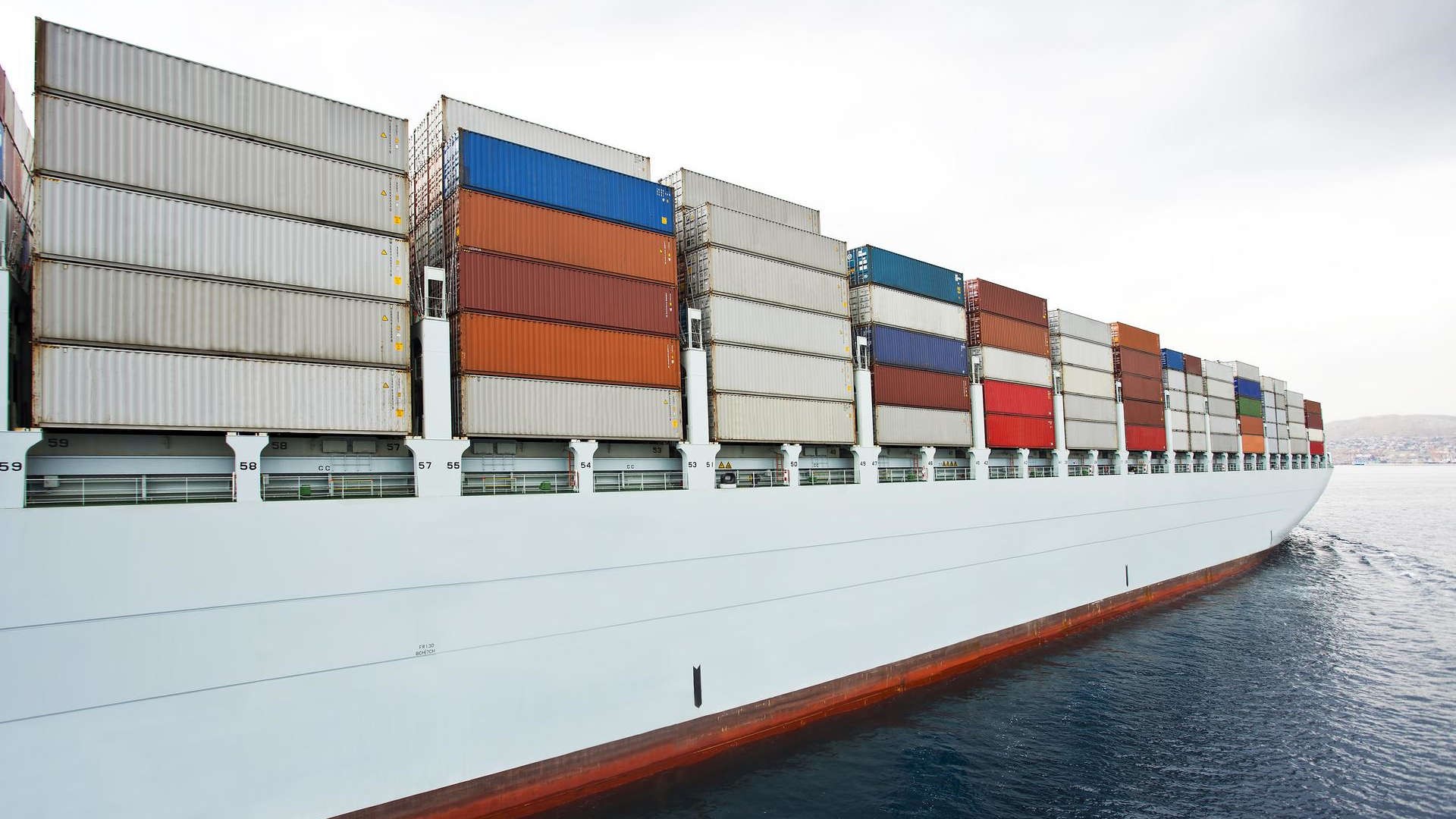
Blank sailings settle at higher baseline in 1H26
Container lines blanked 10%-14% of scheduled capacity across four key east-west trades in the first half of 2026, far above the 6%-8% recorded in the same period in 2019

Source: Lloyd's List

Related articles
Sea newsContainership owners warn of overcapacity as orderbook hits post-2009 high
Sea newsPort delays remove 3m teu of containership capacity
Company newsKuehne+Nagel significantly improves profitability in third quarter of 2026

Sea newsseaexplorer Schedule Reliability Report – September 2026
Sea newsCarrier service update (25 Sep - 10 Oct 2026)
Sea newsUNCTAD warns energy shocks and fragmented trade are reshaping shipping’s future despite resilient car...