
WIND propulsion has spent much of shipping’s decarbonisation era proving that a centuries-old technology still has a place in the industry’s future. At SMM Hamburg this week, however, the debate appeared to have shifted from whether it works to how quickly it can scale.
That shift was underscored by Maersk’s decision to install a 35 m rotor sail supplied by UK-based Anemoi Marine Technologies on an 8,700 teu Lima-class containership. The installation, scheduled for mid-2027, will mark the first deployment of wind-assisted propulsion technology on a containership and will be tested on the vessel’s regular service between northern Europe and South America.
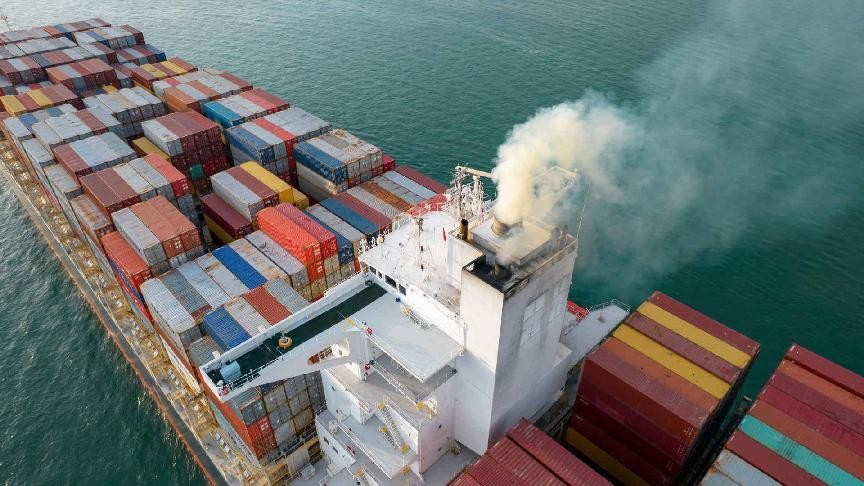
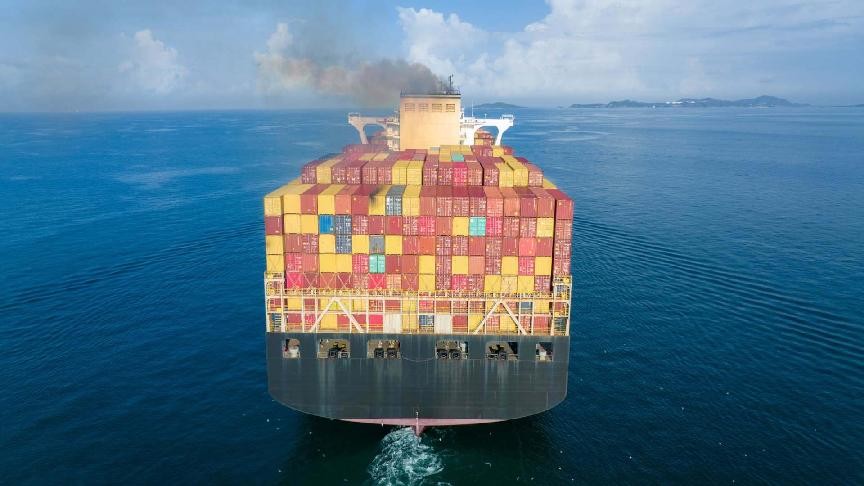
The significance extends well beyond a single vessel. Wind propulsion has gained traction primarily among tanker, bulker and ro-ro operators, where deck space makes installation relatively straightforward. Containerships, with container stacks covering much of the deck and more complex operating profiles, have long been viewed as one of the most difficult sectors for wind-assisted propulsion.
That is precisely why the Maersk announcement resonated so strongly across SMM.
Speaking to Lloyd’s List shortly after the announcement, International Windship Association secretary general Gavin Allwright said the industry had moved beyond debating whether wind propulsion works and was now focused on scaling deployment.
According to IWSA data, 116 vessels above 400 gt now operate with wind-assisted propulsion systems, representing roughly 250 installations and around 6m dwt of shipping capacity. A further dozen vessels have been built “wind-ready”, while about 80 ships are on order, under construction or contracted for installation. The number of installations has effectively doubled over the past three years.
“All the foundational work has been done,” said Allwright, noting that the global fleet numbered about 40 wind-assisted vessels at the time of the previous SMM in 2024.
Attention is now turning to transparency and performance validation. Enough vessels have accumulated operational experience to generate meaningful datasets, allowing owners to compare technologies and assess commercial performance with greater confidence, he argued. Wider adoption will depend on sharing both the benefits and the limitations of early deployments.
The market has also broadened significantly. Exhibitors at SMM showcased technologies ranging from rotor sails and suction sails to rigid wings, soft sails and high-altitude kite systems. While their designs differ, all seek to reduce engine load by converting wind energy into supplementary propulsion.
From technology demonstration to fleet deployment
The challenge facing the sector is no longer proving the technology works, but demonstrating a repeatable commercial case.
That theme was repeated throughout SMM’s conference programme.
Jan Opedal, manager of projects at Odfjell, whose company has spent the past 18 months operating Bound4blue suction sails aboard the 49,000 dwt Bow Olympus (IMO: 9818527), said the industry had already answered the fundamental question.
“The technology works,” he said. “It may not be a big surprise that sails work when you’re operating in wind, but it still has to be documented.”
The next challenge, he added, is determining how the technology can be scaled across larger fleets.
For many owners, that means moving beyond pilot projects. Daniel Mann, chief commercial officer at Bound4blue, said the market has spent the past year gathering operational data before committing to broader rollouts. Owners want proof not only of fuel savings, but also of reliability, crew acceptance and operational practicality.
Odfjell’s decision this week to install suction sails on Bow Olympus’ sister vessel Bow Optima (IMO: 9818541) is among the clearest indications that confidence is growing.
After evaluating fuel savings, weather-routing integration, crew training and vessel performance for 18 months, the Norwegian chemical tanker operator has committed to a second installation and is considering additional deployments as ships cycle through drydockings.
“They wanted to know that it’s reliable in rough seas and that the savings are what we promised they would be,” said Mann. “Now they’ve gone through that rigorous process of validation, they ordered the second ship.”
IWSA’s Allwright described the sector as following a familiar technology-adoption curve, with early adopters now generating the evidence required for broader market acceptance. The next priority is establishing transparent and standardised ways of communicating real-world performance and economics.
Data and standards become critical
Performance verification remains one of the industry’s biggest challenges, according to SINTEF Ocean research manager Anders Alterskjaer.
Unlike conventional energy-saving technologies, wind propulsion delivers different results depending on weather conditions, vessel design, routing and operational behaviour. Demonstrating savings therefore requires a combination of aerodynamic modelling, hydrodynamic analysis and operational data gathered across thousands of voyages.
As a result, standardisation has become a major priority. Several speakers argued that wider adoption will depend on common approaches to benchmarking, verification and regulatory recognition. Work is already under way through the IMO and industry groups to develop methodologies for measuring and crediting wind-derived energy savings consistently.
Data is increasingly viewed as the critical enabler.
Mikko Vartiainen, NAPA’s wind-assisted vessel optimisation lead, said future wind-assisted ships will rely heavily on route optimisation, weather analysis and performance analytics to maximise savings.
“Data is the key,” he said.
That emphasis on optimisation is one reason developers increasingly reject the notion of wind propulsion as a standalone technology. Instead, it is being positioned as one component of a wider energy-management strategy alongside alternative fuels, voyage optimisation and other efficiency measures.
Vincent Seguin, chief executive of French naval architecture company MAURIC, argued that shipowners should think less about installing sails and more about designing vessels as integrated energy systems.
“We have to optimise the use of the wind when we have it and try to optimise the other energy consumption on board,” he said.
Regulation broadens the opportunity
FuelEU Maritime and future carbon-pricing measures are also strengthening the commercial case.
Mann of Bound4blue said compliance costs are becoming an increasingly important factor in investment decisions as emissions regulations tighten. Some owners are choosing to begin now so they can build operational experience before regulatory pressures intensify further.
Those pressures are also helping bring wind propulsion into sectors that have so far remained on the sidelines.
The Maersk pilot represents a breakthrough for container shipping, a segment long regarded as one of the technology’s most difficult applications because container stacks can interfere with airflow and restrict installation options.
Mann said discussions with major container operators, particularly in Europe, have increased markedly in recent years. Allwright likewise described container shipping as one of the final major frontiers for wind propulsion.
Interest among liner operators has been building steadily, he said, and the Maersk-Anemoi project could become an important reference case for the wider sector. Other carriers, including MSC and Hapag-Lloyd, have already explored wind-assist concepts, suggesting that successful container applications could unlock a substantially larger market.
Anemoi views the Maersk installation as more than a standalone trial. Business development manager Vincenzo Severino described it as the start of a broader partnership aimed at understanding how rotor sails perform in container operations and whether deployment can be expanded if the pilot succeeds.
If the installation delivers meaningful fuel savings without compromising operations, it could provide exactly the validation many liner operators have been waiting for.
For years, the question was whether shipping was ready for wind propulsion. As operational data accumulates, regulations tighten and major operators begin testing applications once considered impractical, the more pressing question may be whether shipping can afford to ignore it.