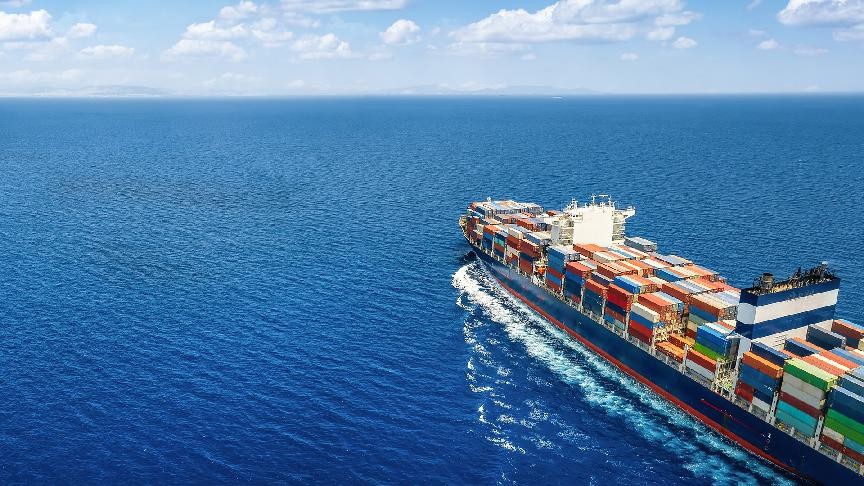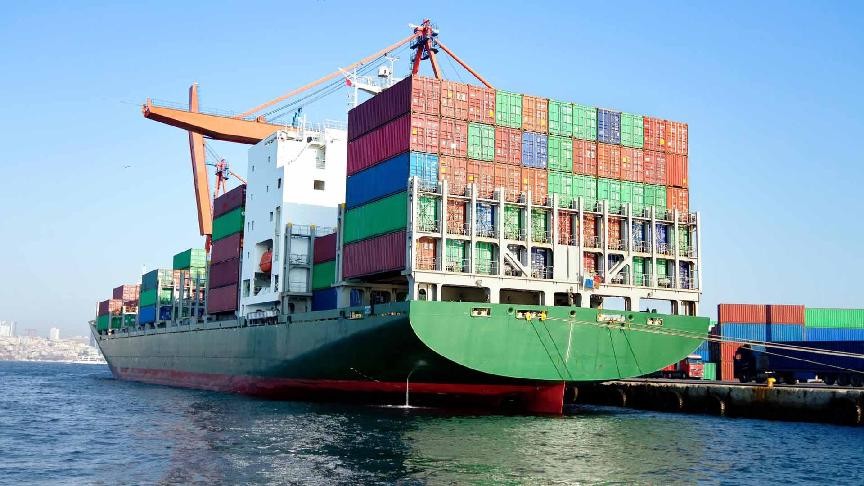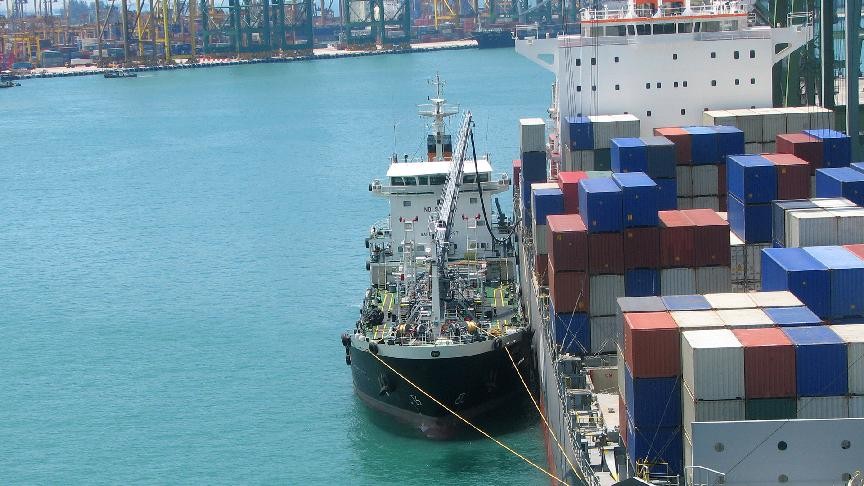

THE prospect of nuclear-powered commercial shipping has moved a step closer with the launch of a UK-US project designed to examine whether a transatlantic container corridor could safely accommodate merchant vessels powered by advanced nuclear technology.
UK-based classification society Lloyd’s Register, Danish liner giant Maersk, the English port of Felixstowe and the US port of Charleston have joined forces to establish a so-called “Pink Corridor”, an initiative aimed at identifying the regulatory, security and operational requirements that would underpin a future nuclear-powered container service between the UK and US.
The project takes its name from the energy sector’s use of pink to denote nuclear power. It does not involve plans to build or deploy a nuclear-powered containership, instead focusing on the technology’s barriers to commercial deployment.
The project is part of the US-UK Technology Prosperity Deal, which has the two governments explore civil maritime nuclear applications and the potential development of a nuclear-enabled shipping corridor between their two countries.
Interest in nuclear propulsion has grown rapidly during the past two years as enthusiasm for decarbonisation options made from green hydrogen has dampened.
Proponents argue that advanced reactor technologies could provide near-zero emission propulsion, with little need for refuelling or slow steaming.
Small modular reactor technology is still nascent, with the industry yet to settle on one of the many reactor designs in circulation, and no advanced SMRs yet in commercial operation.
Pressurised water reactors, the kind used on US aircraft carriers, have long been ruled out for commercial ships on grounds of cost, except for Russia’s nuclear icebreakers.
Besides this, regulation, public acceptance, liability frameworks and port readiness are among the most significant barriers to commercial adoption.
Lloyd’s Register global containership director Nick Gross said public perception would remain one of the most significant challenges facing any future deployment of maritime nuclear technology.
“Perception is one of a variety of barriers to implementation, and it’s a very valid one,” he told Lloyd's List.
“One of the benefits of using a corridor approach is that it allows us to focus on a real-world route between two ports and begin stress-testing those issues in a practical operating environment.”
Moving beyond technology
Speaking at the launch of the project during Lloyd’s Register’s Containership Forum at SMM Hamburg, Lloyd’s Register director of nuclear technology Jez Sims said concerns around energy security, supply chain resilience and decarbonisation were driving renewed interest in nuclear.
“Meeting these challenges requires more than incremental change,” he said.
“It requires us to think differently about the technologies that could power the next generation of global trade, and that is why maritime nuclear is once again attracting serious attention.”
Sims pointed to the International Maritime Organization’s review of nuclear shipping regulations and the International Atomic Energy Agency’s recently launched Atlas project as evidence of momentum.
According to Sims, the debate is now shifting from technological feasibility towards operational integration.
“The question is no longer can we develop a nuclear-powered commercial ship,” he said.
“The real question is, can it be commissioned and operated successfully within a global maritime system?”
Sims said technology alone would not create acceptance nor commercial viability.
“The next challenge for the industry is how we manage that integration. How do ships, ports, regulators, operators, governments and insurers come together within a framework that works?”
Ports enter the conversation
The inclusion of Felixstowe and Charleston broadens the discussion beyond shipowners, reactor developers and classification societies.
Any future nuclear-powered merchant fleet would require ports willing and able to accommodate such vessels, creating new demands around security protocols, emergency preparedness and regulatory compliance.
“As the UK’s largest and busiest container port, the port of Felixstowe is well positioned to support the Pink Corridor and contribute practical insight to this important early stage work,” said Felixstowe commercial director Adam Ramsey.
South Carolina Ports director of vessel operations and carrier sales Tom Boyle said the initiative would allow stakeholders to assess the feasibility of a nuclear-powered maritime corridor while exploring potentially cost-effective and sustainable freight solutions.
The project builds on earlier collaboration between Lloyd’s Register, British nuclear start-up Core Power, and Maersk.
In 2024, LR and Core Power completed a regulatory assessment examining the framework required for advanced nuclear propulsion in container shipping. Maersk later joined a joint development programme exploring the safety, regulatory and operational implications of applying nuclear technology to commercial container vessels.
The Pink Corridor represents the next phase of that work, shifting the focus from vessel-level considerations to the infrastructure, governance and operational environment required to support nuclear-powered trade.
The initial phase is expected to generate recommendations that could inform a longer-term second stage, including further work on engineering requirements, legislative changes, regulatory alignment and safeguards frameworks, according to Lloyd’s Register.
For now, the project remains firmly conceptual. No vessel designs have been selected and no deployment timeline has been proposed.
The announcement follows news in August, that Core Power would work on similar issues with the US Maritime Administration and the port of Corpus Christi, Texas.
Core Power has said it hopes to start construction of a nuclear powered ship from 2028.