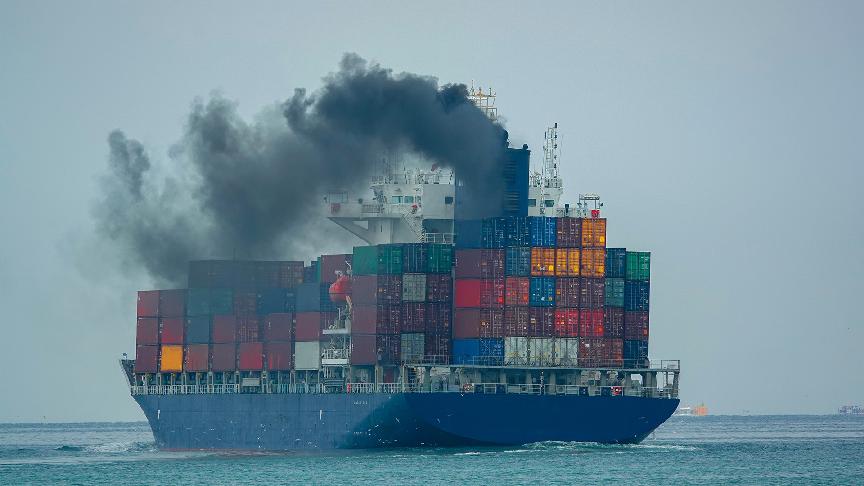
CONTAINERSHIP emissions on EU-linked trade lanes fell in 2025 despite higher cargo volumes, but the sector’s carbon recovery remains vulnerable to renewed disruption in the Red Sea.
Total reported CO₂ emissions from boxships sailing to, from and within Europe declined 2.5% year on year in 2025, while carbon intensity per teu fell 6.7%, according to a Sea-Intelligence report published on Sunday. Despite the improvement, both measures remain well above pre-crisis levels.
The reduction came as container volumes continued to grow and partly reversed the sharp deterioration seen in 2024. Sea-Intelligence said the more than 45% increase in emissions per teu between 2023 and 2024 was “entirely driven by” the Red Sea crisis, which forced carriers to reroute Asia-Europe services around the Cape of Good Hope.
“This clearly means that despite the challenges over the past couple of years, the container lines have indeed managed to continue to reduce carbon emissions,” the consultancy said.
The contrast with other shipping sectors was stark. Emissions from non-container vessels trading in Europe rose 5.9% in 2024 and increased by a further 3.4% in 2025, according to data reported under the EU’s MRV Maritime Regulation.
“Perhaps somewhat polemically, one could say that this is the environmental ‘fee’ imposed on the EU by the Houthis in Yemen,” Sea-Intelligence said.
The findings come as commercial shipping cautiously expands its return to the Red Sea, although security risks remain.
On Sunday, the UK Maritime Trade Operations agency reported that a bulk carrier was attacked by “unknown armed assailants” about 30 nautical miles southwest of Hodeidah, the Houthi-controlled Yemeni port city. The vessel’s armed security team returned fire and both ship and crew were reported safe. No group had claimed responsibility at the time of writing.
Iran-backed Houthi forces began targeting merchant shipping in late 2023 in response to Israel’s war in Gaza. Last month, the group announced a “complete and total ban” on Israeli ships in the Red Sea, describing them as “legitimate military targets”.
Despite the continued rhetoric, UKMTO said on Sunday that conditions in the Bab el Mandeb remained stable, with no operational indicators of imminent targeting. Suez Canal transits also continued normally during the previous 72 hours.
Some carriers are beginning to respond to the improved security outlook. Maersk announced on Monday that one of its Gemini Cooperation services with Hapag-Lloyd linking Asia, the Mediterranean and Europe would return to the Suez Canal, replacing the longer Cape routing.
The Danish carrier said the change would provide customers with “more efficient” transit times, while noting that any further service adjustments would depend on continued stability in the Red Sea and the broader regional security environment.
Traffic data suggest a gradual recovery is under way.
According to Lloyd’s List Intelligence vessel-tracking data, cargo vessel transits through Bab el Mandeb reached their highest level in two-and-a-half years during June. Preliminary figures show 1,338 transits by cargo-carrying ships above 10,000 dwt, up 39% year on year, although still 41% below pre-Houthi attack levels.
Containership transits increased 8% year on year to 229 vessels. More notably, containership tonnage climbed 52% to 12.6m dwt, the highest monthly total since January 2024, indicating that larger vessels are increasingly returning to the route.
A similar trend is visible in the Suez Canal. While containership transits fell 5% year on year to 132 vessels in June and remained 73% below pre-crisis levels, boxship tonnage rose 59% to 11.47m dwt, suggesting the limited recovery is being led by larger ships rather than higher vessel numbers.
Even so, the Cape of Good Hope remains the dominant Asia-Europe route, according to Drewry, underlining how fragile the Red Sea recovery remains.
EU boxship emissions fall, but Red Sea risk keeps carbon gains hostage
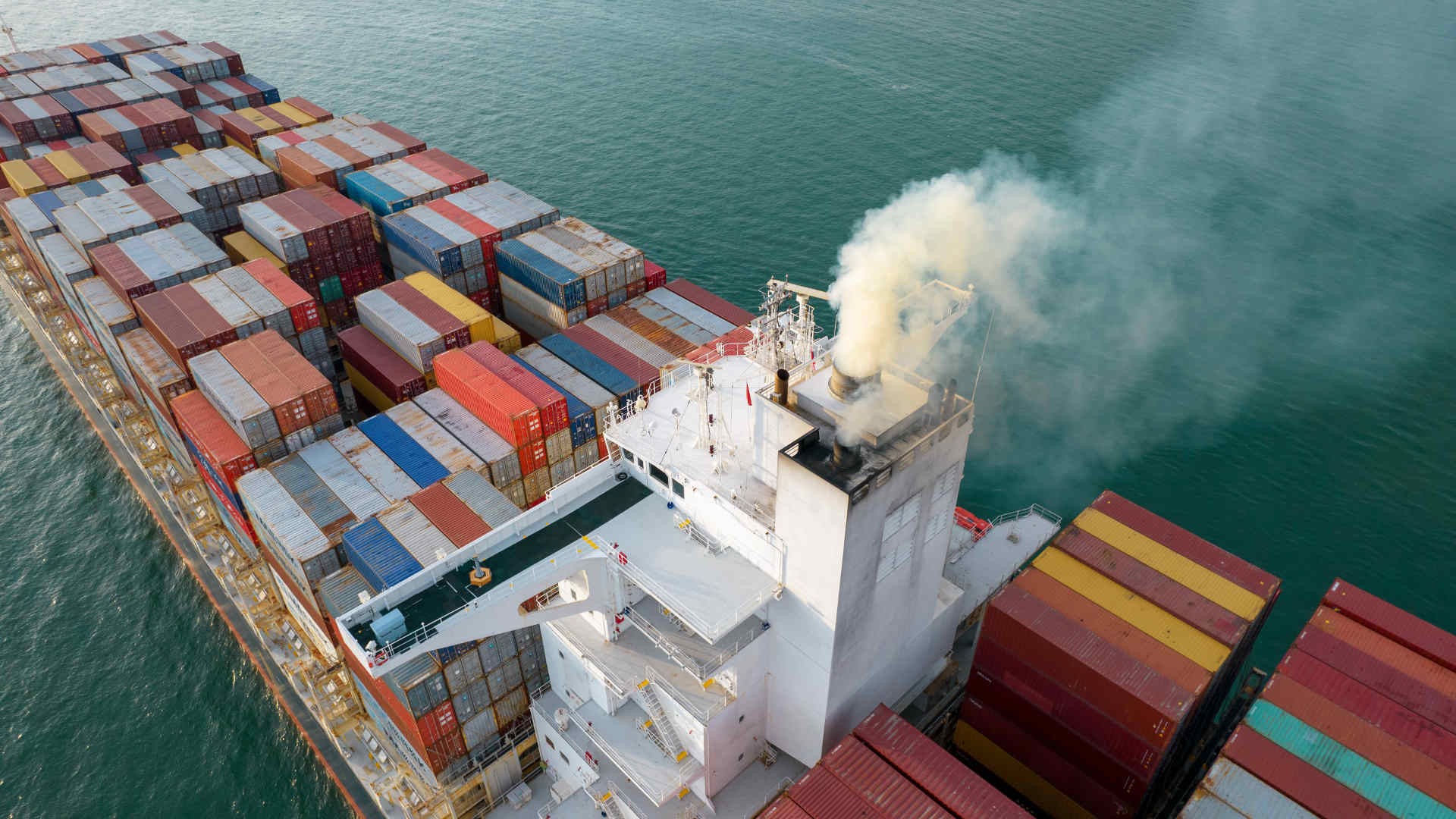
EU-linked boxship CO₂ fell in 2025 despite higher volumes

Source: Lloyd's List

Related articles
Sea newsWind propulsion reaches shipping’s scaling moment as Maersk backs container trial

Sea newsWhy Europe’s shortsea fleet just keeps getting older
Sea newsEuropean shipping risks a decline without investment in clean fuels
Sea newsGreece and Saudi Arabia to team up against IMO carbon price
Sea newsEU ship emissions hit record high in 2024

Sea newsEU stands firm on IMO Net‑Zero plan as US threatens retaliation