
SeaNews Unboxed is a series of interviews featuring exclusive conversations with experts, bringing you closer to the people behind the world of logistics.
Interview Highlights
- Project Logistics goes far beyond standard container movements — it is the strategic orchestration of complex, oversized, and high-value cargo, requiring commercial knowledge, engineering expertise, multimodal planning, and meticulous risk and compliance management.
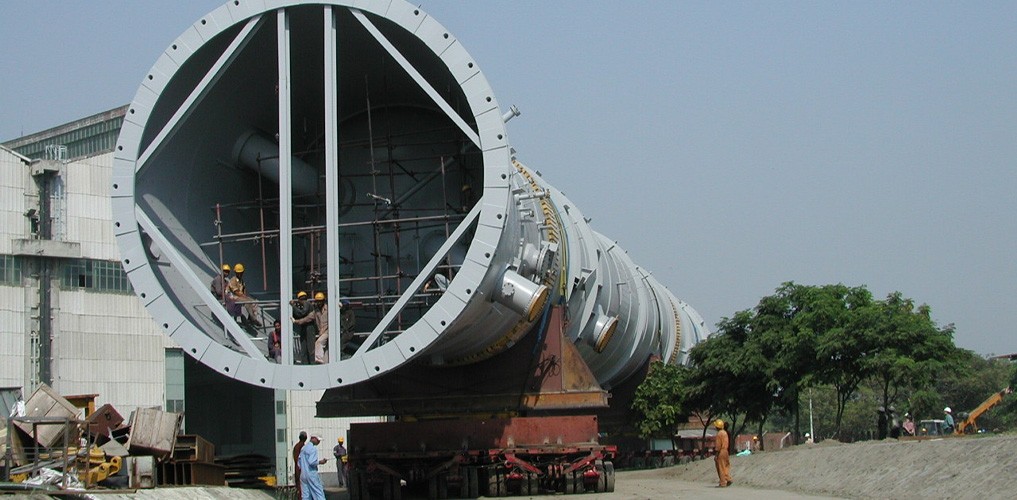
- Safely moving oversized cargo demands specialised equipment, custom-engineered lifting solutions, route surveys, and strict permitting processes, all coordinated to ensure safe, timely, and seamless execution.
- The industry faces rising challenges, including talent shortages, increasing digitalisation demands, political risks, and the need for real-time visibility, making continuous learning and strong team structures essential.
- Michael describes Project Logistics as both orchestration and adventure — a field where curiosity, resilience, and teamwork drive success amid unpredictable conditions and global operations.
Full interview
Q: In simple terms, how would you define Project Logistics for someone outside the industry?
Michael Doerpinghaus: OK. Let’s try to explain something complex in simple terms. Project logistics is the planning and transporting of large, complex, or key components with high value, often for industrial or infrastructure construction projects. This is usually done from different manufacturing origins to a project site. It can be applied to virtually any industry.
I’ve been in the industry for over 35 years and have had the pleasure of working in Germany, New York, Toronto, Perth, Brisbane, Singapore and Houston before returning home after almost 30 years to Germany.
For me, project logistics is not just about moving cargo; it’s about strategically managing complexity. It combines commercial planning, engineering, logistics, compliance, and risk management to deliver critical components safely and efficiently, often under challenging conditions.
Q: What makes Project Logistics unique compared to standard container shipping or FCL operations?
Michael Doerpinghaus: Great question. Project logistics stands apart from standard FCL (Full Container Load) operations due to the complexity, scale, and specificity of the cargo and the processes involved. Our Teams are operating in all BU’s – i.e., Air, Road and also Contract Logistics are part of Operations for the required in Project Logistics.
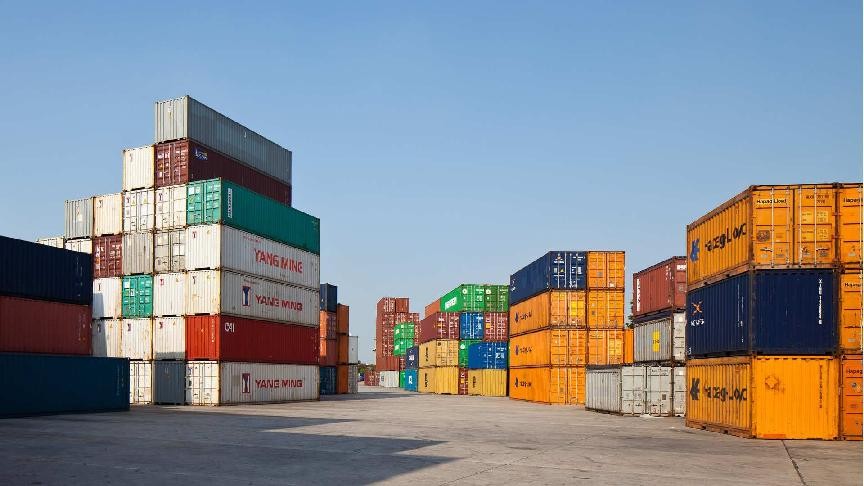
While FCL operations deal with containerised cargo that follows standardised procedures, project logistics also involves transporting cargo that does not fit into a container. Examples are turbines and generators. In addition, Project Logistics uses all modes of transport.
But it's important to note that FCL Container movements are also an important part of our scope in Project Logistics. The fundamental difference drives a range of unique requirements in terms of equipment, planning, and execution.
Q: What is something only the Project Logistics unit can do?
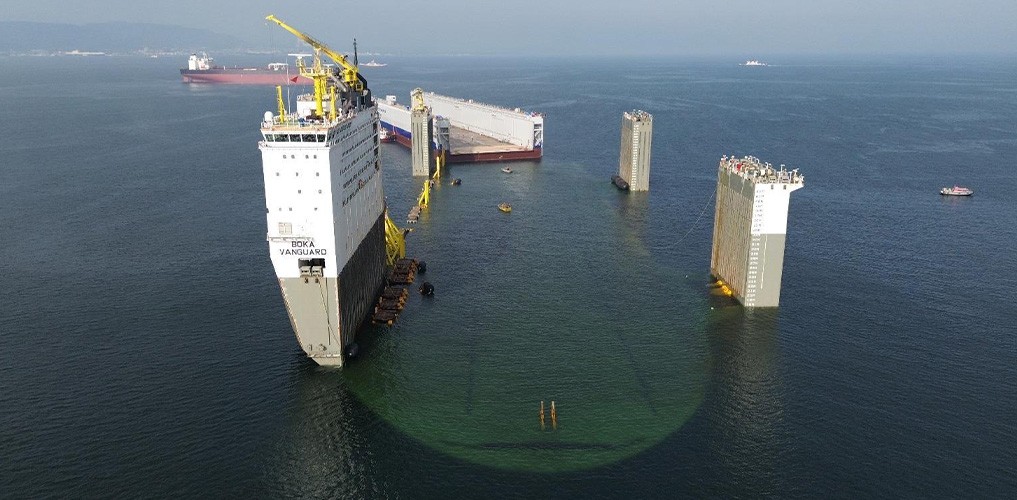
Michael Doerpinghaus: Our Team has the ability to charter vessels with their own cranes, barges or deck carriers for heavy equipment. This is done through our Global in-house Chartering Team. The unit also handles multimodal transportation, and we coordinate multiple transport modes and routes.
A key part of our work is also handling special permits, escorts, and customs. Because we handle larger projects, we also provide extra attention to managing risks, timelines, contracts and budgets, while keeping a very strong focus on health and safety.
So, it’s not just shipping. It’s strategic coordination to make sure everything arrives safely, commercially viable, on time, and within the client's scope.
Q: How do you make sure that oversize cargo is transported safely?
Michael Doerpinghaus: Because cargo characteristics are often larger, you need specialised equipment to move this equipment. We have to arrange for multi-axle trailers, heavy lift vessels, cranes, barges and rigging gear. Often, lifting and securing methods must be engineered specifically for each cargo item, involving structural calculations and bespoke lifting frames. Hence, our in-house Transport Engineering Team plays an important part in being able to manage subcontractors and offer unique solutions in a very competitive market environment.
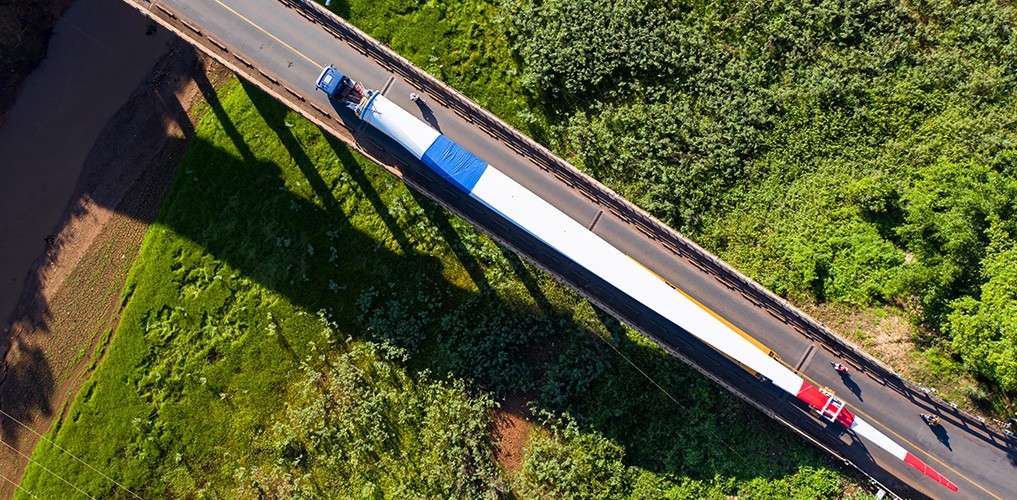
Our team’s detailed planning assesses infrastructure limitations (e.g. bridge capacities, road widths, turning radius), coordination of permits, police escorts, and sometimes temporary infrastructure modifications. Handling plans are tailored to each site and cargo, often involving ground pressure assessments and weather contingency planning.
And Projects need to be planned in terms of commercial budgets, risk and compliance. The planning profile in project logistics is significantly higher and long-term due to value and project schedules. Compliance is paramount as we are working with complex contracts and remote countries.
Q: Tell us one story you vividly recall about a shipment?
Michael Doerpinghaus: Oh, there are many interesting ones I recall. When I started in the field in the early 90s, cargo between 100 and let’s say 300 metric tonnes was a challenge and required a lot of experience. I recall a project of 100 mining locomotives from Erie in the United States to Santos in Brazil with US Flag requirements. No US-flagged ships were available to lift 125 MT at the time, so we used hopper barges and pushed them to Brazil with tugs.
It took forever! And then we needed a mobile crane for discharge, which we had to find in Santos. Finally, the barge arrived, and the endless customs clearance was done. We go into discharge with the crane, only to find that when the weight is on the hook, and the boom is extended, the back of the crane lifts, ready to fall towards the water. It turned out that the crane certificates were forged.
After many technical discussions and with more counterweights, we were able to unload the cargoes. The lesson in project logistics is always to check, double-check and prepare, but also have backup plans available in mind.
Today we move modules that weigh over 2500 MT, which we carried out in Houston, USA. You can imagine how much preparation was involved from the Engineering, Chartering, HSE and operational teams and sites to handle these weights between different modes of transportation.
Working with project logistics also requires a lot of travel. I have visited probably over 70 countries, mainly to visit clients and prepare logistics studies for new projects.
The industry is small but evolving and very competitive, and technical borders are continuously challenged and pushed by KNPL and our competitors.
Q: That clearly shows the large scale of work the unit handles. What are the biggest challenges the sector faces?
Michael Doerpinghaus: We have a few challenges that we are facing. First and foremost, there is a talent shortage and skill gaps. Building a high-performing project logistics team requires targeted recruitment, continuous training, and mentorship.
Competitors are hunting for talent, and it is important to offer Team stability and Management support.
At Kuehne+Nagel, we invest in developing the skills of the team through internal academies and partnerships with engineering and logistics institutions. But it takes time, commitment, and an open mind for continuous learning and gaining experience. We also have to embrace and push the boundaries of digitalisation and visibility.
Clients increasingly expect real-time cargo visibility, predictive analytics, and digital documentation. Kuehne+Nagel collaborates with tech partners to continuously evolve our digital capabilities. So overall, we face multiple challenges, and our success depends heavily on having the right team structure, one that blends technical expertise, operational excellence, and advanced digital products.
Q: What is the most recent project the team is working on?
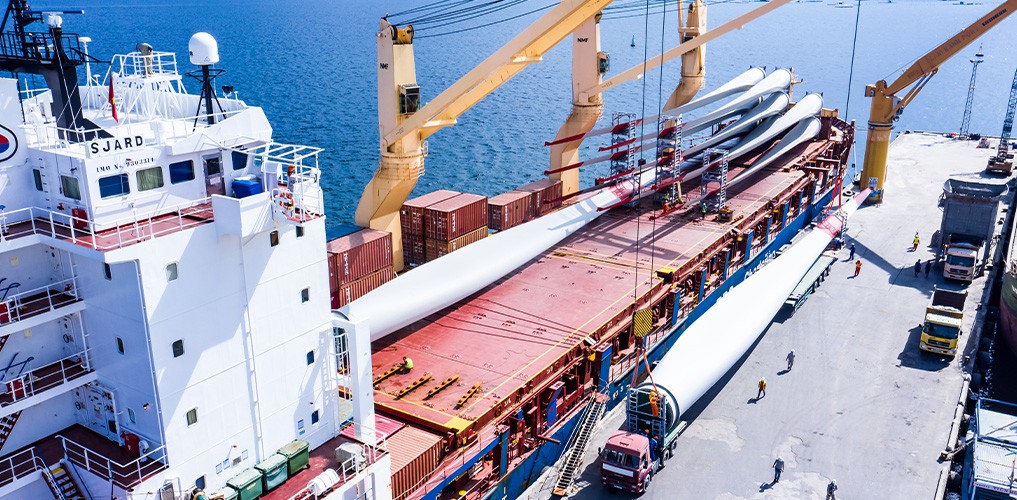
Michael Doerpinghaus: Leveraging our global project logistics expertise, we are now supporting the highly complex Tangguh UCC development for our clients BP and JGC in remote Western Papua, where the project expands existing LNG infrastructure and integrates advanced solutions such as carbon capture, utilisation, and storage.
Operating in such an isolated environment, where access routes and local infrastructure are extremely limited, demands meticulous planning and tailored transport strategies to keep materials moving safely and on schedule. Our role is to ensure that critical components reach this challenging site reliably to support one of Indonesia’s most significant energy expansion and carbon capture projects.
And as if the logistics challenge were not adventurous enough, our teams even share the site with the occasional cassowary, a bird so fearless it seems to believe it is the project manager.
Q: If you had to describe Project Logistics in one word, what would it be and why?
Michael Doerpinghaus: I thought about two words: orchestration and adventure. I will explain.
Project Logistics is like conducting a symphony; multiple stakeholders, transport modes, timelines, and regulations must work in harmony. The ability to synchronise all these moving parts is what makes projects successful. That’s why the word orchestration describes our work to a great extent.
Why adventure? Every project feels like a journey into the unknown: new routes, unique cargo, and unexpected challenges. It’s exciting, dynamic, and often takes you to places (literally and figuratively) you’ve never been before.
Q: These words paint a beautiful and precise picture. What’s the one personality trait or skill that every successful team member in Project Logistics must have?
Michael Doerpinghaus: If I had to choose just one, I’d say resilience, because project logistics is full of unexpected challenges. Things change quickly: weather, permits, equipment availability, client needs, customs tariffs, ocean rates. You need to stay calm, adapt fast, and keep moving forward without losing focus. Resilience is what helps you lead through uncertainty and deliver under pressure.
But if I may add two more that I believe are just as essential: curiosity and teamwork.
Curiosity drives you to ask the right questions, explore better solutions, and understand the technical and operational details that make a difference. In project logistics, no two projects are the same, and being curious helps you learn, grow, and innovate with every new challenge.
And teamwork is the glue that holds everything together. These projects are too complex to manage alone. Success depends on how well you collaborate across functions, cultures, and time zones. I’ve seen firsthand how strong teamwork turns difficult situations into success stories. Together, these traits (resilience, curiosity, and teamwork) form the foundation of what it takes to thrive in project logistics.
Q: Is there a project that stands out as a personal favourite or proud moment for you and the team?
Michael Doerpinghaus: Ambatovy in Madagascar. I was stationed in Canada in the early 2000s, and it took a lot of time and coordination to win the work and execute the project in a remote place that had no experience with heavy lift movements.
The client wanted to build the mine site, a slurry pipeline, and a processing plant in Madagascar, close to the port of Tamatave. Many people doubted that we would be able to execute the project and deliver the Project, but it was done without any accidents.
The equipment that needed to be transported in a country weighed max 850 MT, so all the needed shipments had to be imported on time in order not to delay the construction schedule. Overall, it was a good 5 years of planning, bidding and handling the job that went into commissioning with only a slight delay.
Handling this complexity in 2005, in a time and cost-pressured environment, led to friendships that last until today – about 20 years after the project.
Last year, we had a reunion in the summer in Mauritius that brought together team members who all worked on the project. Forming lifelong global friendships is certainly a bonus of working in Project Logistics.
This project is still active and operational to this day, and it certainly stays in my memory!
Thank you for sharing this story and for your time.
Michael Doerpinghaus: I hope I explained what Project Logistics is all about. I also hope to interest young talent to have the appetite to join our team.