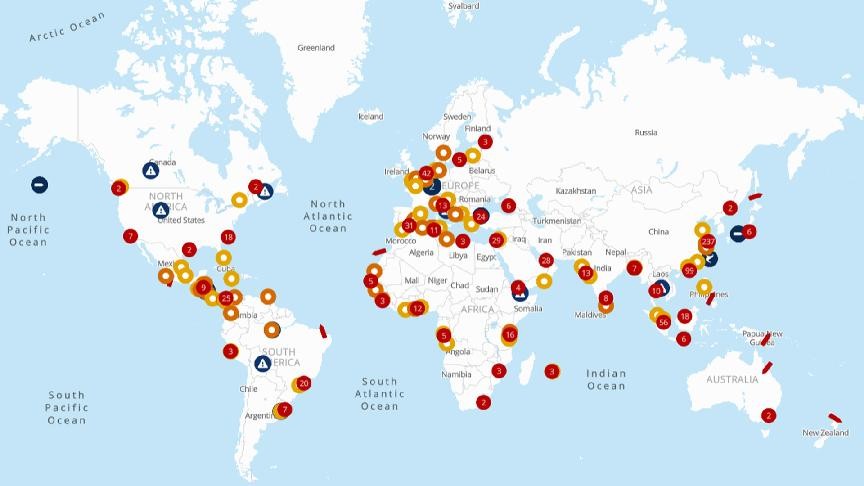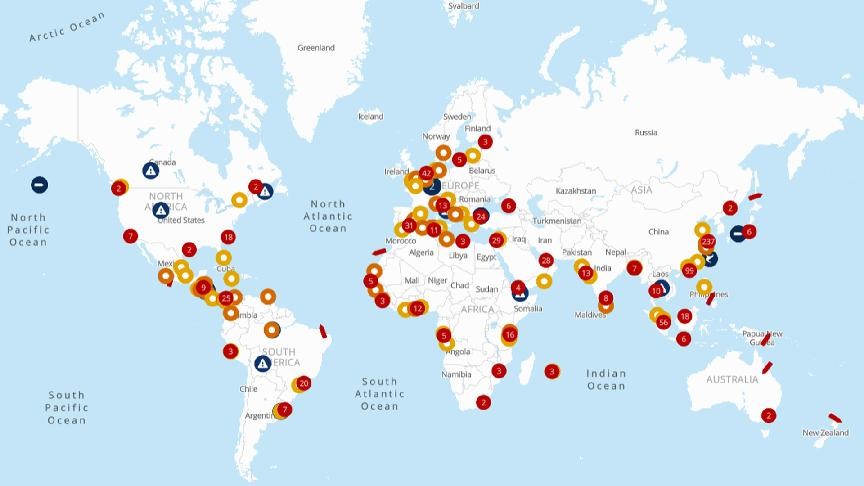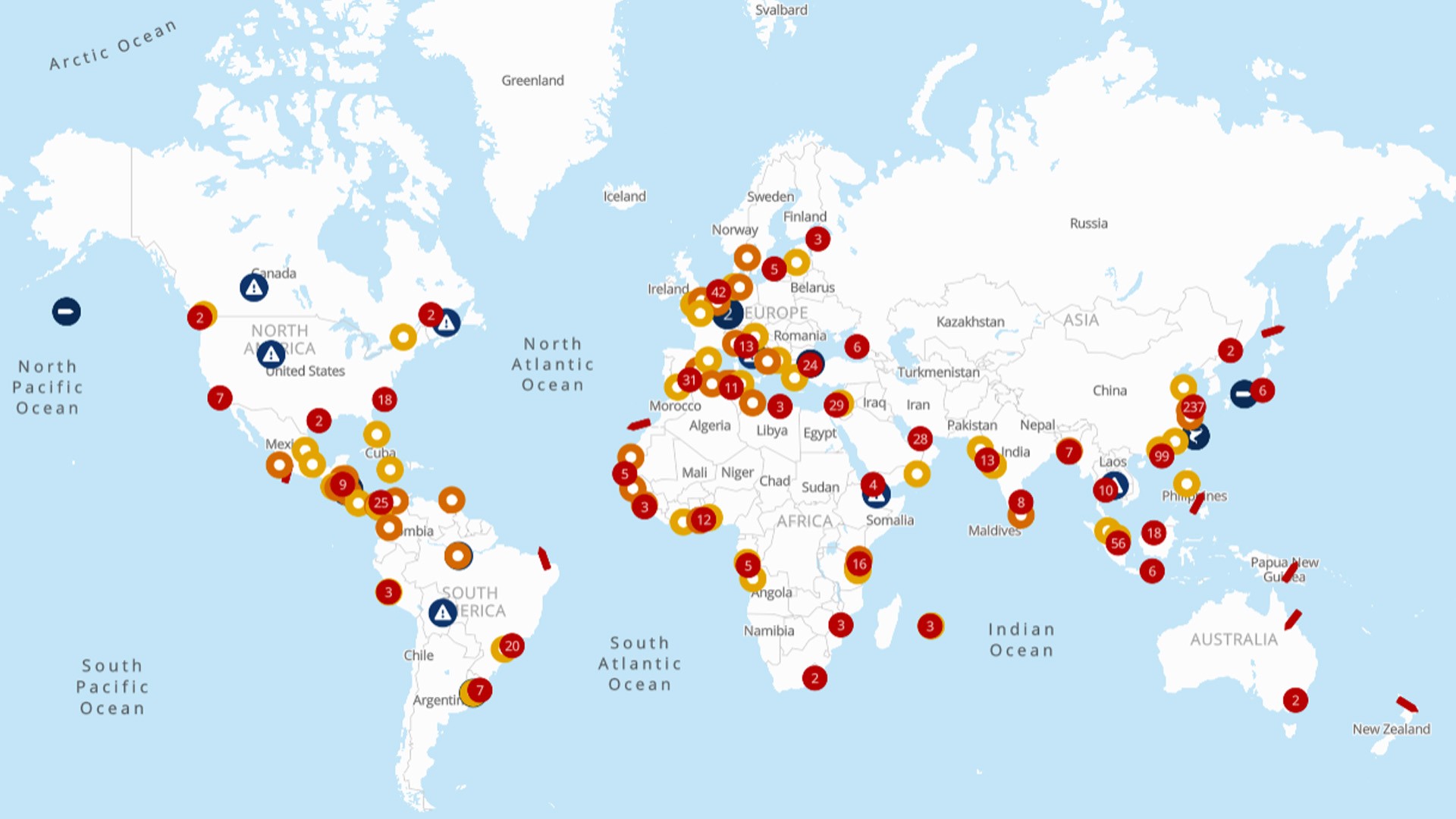

Stay ahead of supply chain disruptions and port congestion with Kuehne+Nagel’s weekly port operational update.
- Find out the latest vessel waiting times and status of ports in Africa, Asia Oceania, Europe, Middle East-Indian Subcontinent, North America, and South and Central America.
Africa
Ghana
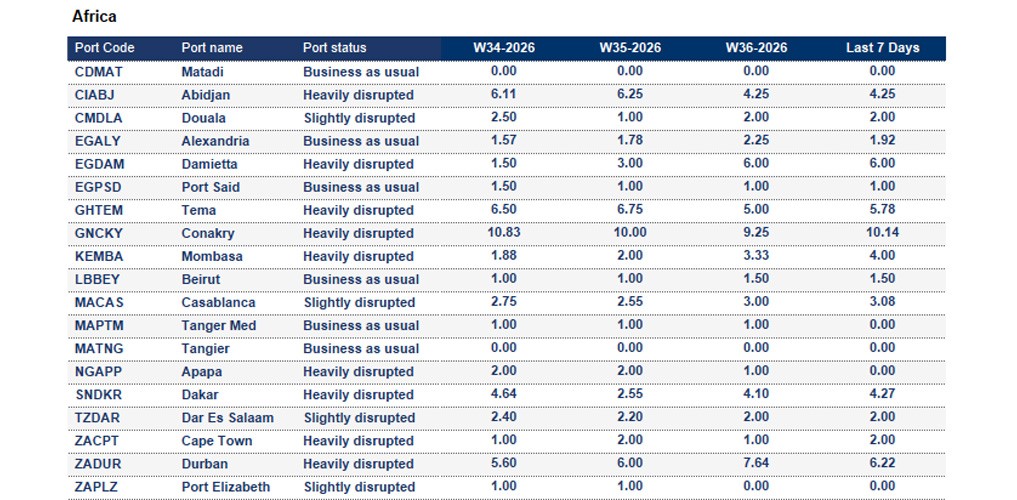
Tema: The 7-day average vessel waiting time is around 5.78 days. The terminal is facing a reefer yard issue, plug utilisation 100%. Shorter delays may apply to vessels with lower reefer discharge volumes. Out-of-window (OOW) vessels remain subject to berth availability.
Ivory Coast
Abidjan: The 7-day average vessel waiting time is around 4.25 days. The yard is heavily congested, and current berth delays for window vessels are up to 8 days. The terminal recovery plan is active and requires up to 6-7 weeks to improve.
Kenya
Mombasa: The 7-day average vessel waiting time is around 4.0 days. Berthing delays for liner services are experiencing average waiting times of more than six days. The terminal continues to face long-term congestion, driven by slow productivity resulting from equipment shortages and high transhipment volumes. Berth delays have been further exacerbated by a concentration of vessels arriving outside their allocated berthing windows.
Nigeria
Apapa: Operations are experiencing slowdowns due to heavy rainfall and yard congestion. Current operational delays are reported at up to 24 hours.
Tincan/Lagos: The 7-day average vessel waiting time is around 2.0 days. Delays continue amid ongoing inland logistics and congestion challenges.
Republic of the Congo
Pointe Noire: The 7-day average vessel waiting time is around 3.4 days. Yard congestion remains severe, with utilisation exceeding 100% and vessel delays currently reaching up to five days. Fixed berthing windows and FIFO berthing arrangements have been suspended, with priority now being given to vessels carrying high load volumes in an effort to reduce yard congestion. Feeder vessels are experiencing extended waiting times for berths, particularly those handling connections from mainline services.
Asia Oceania
China
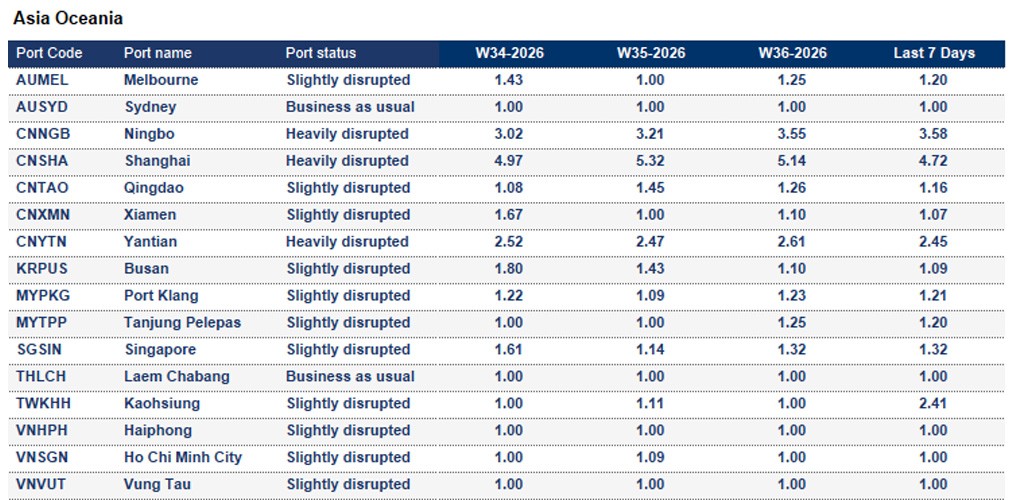
Nansha: The 7-day average vessel waiting time is around 1.16 days.
Ningbo: The 7-day average vessel waiting time is around 3.58 days. The port closed for 78 hrs in the past 7 days due to Typhoon "SAUDEL". Yard density for all NGB terminals is running at a high level, and MSICT is over 90%.
Qingdao: The 7-day average vessel waiting time is around 1.16 days. The port was closed for four hours on 1 September. Berth dredging at QQCTU has been underway since 19 August and is expected to be completed by around 10 September. QQCTN is scheduled to begin berth dredging thereafter, with works expected to continue until the end of the year.
Shanghai: The 7-day average vessel waiting time is around 4.72 days. Terminals YS and WGQ closed for 54 and 48 hours, respectively, due to typhoon Saudel. Port waiting times exceed 9 days at WGQ2 and WGQ5, and 7 days at YS12. Barge resources are very tight, so some vessel berthing in WGQ would be deprioritised.
Shantou: Shantou port closed for 27 hrs on 02-03/Sep due to storm "SAUDEL".
Shekou: The 7-day average vessel waiting time is around 1.09 days. Laden export containers are currently being accepted at the CY gatehouse based on an estimated vessel berthing time (ETB) of up to seven days. Vessels with large discharge volumes may be deprioritised.
Xiamen: The 7-day average vessel waiting time is around 1.07 days. The port closed for 4 hrs on 28/Aug and 6.6 hrs on 3/Sep due to Typhoon "SAUDEL".
Yantian: The 7-day average vessel waiting time is around 2.45 days. Average waiting time for vessels with an LOA of less than 330 metres is 3 to 4 days, while vessels exceeding 330 metres are experiencing waiting times of 4 to 5 days. Conditions are expected to improve following the Golden Week holiday period.
Hong Kong
Hong Kong: The 7-day average vessel waiting time is around 1.34 days. Port congestion started to stabilise this week when more backlog vessels & cargos are being cleared. The entire HIT is still busy with a wait of 1.5-2 days, generally for all carriers. The yard is also congested with utilisation>85%, which impacted overall terminal efficiency.
Indonesia
Belawan, Sumatra: The 7-day average vessel waiting time is around 1.75 days. Berth congestion remains with waiting and delay generally for those off-window vessels planned to berth on their window.
Jakarta: The 7-day average vessel waiting time is around 1.68 days. Berth congestion waiting times are reported across all shipping lines. Berth is allocated on a first-come-first-serve basis. System outage last week caused the additional delays to this week's lineup.
Japan
Tokyo: The 7-day average vessel waiting time is around 1 day. Yard utilisation remains high at 90% to 95%, while reefer (RF) plug availability continues to be tight, placing additional pressure on terminal operations.
Yokohama: The 7-day average vessel waiting time is around 1.5 days. High yard utilisation of 90-95% and typhoon-related vessel delays continue to affect operations. Additional vessel calls are expected in the coming week.
Malaysia
Port Klang: The 7-day average vessel waiting time is around 1.21 days. At Westports (WSP), yard utilisation remains high at approximately 90% to 95%. Emergency maintenance dredging is scheduled from 7 to 27 September, with works at Berth B23 taking place from 7 to 16 September, followed by Berth B22 from 16 to 27 September. During the dredging period, one deep-water berth will be unavailable, reducing berth availability for mega-sized vessels.
New Zealand
Tauranga: The 7-day average vessel waiting time is around 3.6 days.
Philippines
Manila: The 7-day average vessel waiting time is around 2.68 days. The overall situation will be dynamic and complicated in the coming days when incoming vessels are progressively returning to Manila from previous ports. Manila South has an average wait of 2-3 days.
Singapore
Singapore: The 7-day average vessel waiting time is around 1.32 days. Overall conditions across PSA terminals remained stable this week as berth demand eased.
South Korea
Busan: The 7-day average vessel waiting time is around 1.09 days. At BNCT, laden yard utilisation reached approximately 100% on 3 September. Reefer plug availability is expected to remain tight due to a high volume of reefer container discharges scheduled for next week. Berth congestion continues through Weeks 36 and 37. The overall operational situation remains highly dynamic and complex.
Taiwan
Kaohsiung: The 7-day average vessel waiting time is around 2.41 days. Port operations were suspended for 19 hours between 2 and 3 September due to the combined impact of storm Sandel and high waves.
Vietnam
Haiphong: The 7-day average vessel waiting time is around 1 day. Operations at both HICT and HHIT remain stable, with no significant congestion reported. Yard utilisation remained at healthy levels during Week 36, averaging between 60% and 70% across both terminals.
Ho Chi Minh City: The 7-day average vessel waiting time is around 1 day. At Cat Lai Terminal, congestion persisted during Week 36. Yard utilisation remains high at approximately 85%, contributing to ongoing terminal congestion.
Vung Tau: The 7-day average vessel waiting time is around 1 day. Congestion at GML stabilised during Week 36. However, yard utilisation increased to 85% to 90%, impacting overall terminal operating efficiency.
Europe
Belgium
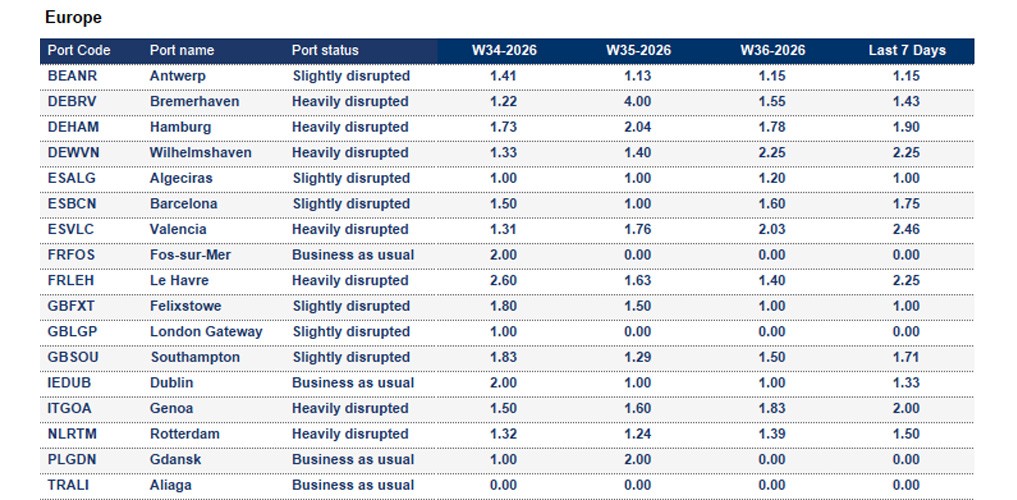
Antwerp: The 7-day average vessel waiting time is around 1.15 days. Yard occupancy at Q869 stands at 76%, with reefer occupancy at 50%, empty containers at 56%, and ASC utilisation at 32%. At Q913, yard occupancy has reached 90%, with reefer occupancy at 55% and empty container occupancy at 80%. Truck turnaround times remain efficient at 23 to 35 minutes. One quay crane is scheduled for maintenance from Monday through Friday, while road resurfacing works along the front quay are expected to be completed by Friday afternoon. Labour availability has improved following the reopening of schools. However, vessel line-ups continue to be affected by ongoing disruptions resulting from strikes at German and Dutch ports.
France
Le Havre: The 7-day average vessel waiting time is around 2.25 days. Yard occupancy remains moderate at approximately 50%, with reefer occupancy also at around 50%. Most vessel arrivals this week are proceeding as planned, with the exception of the WWA service, which is currently running two days behind schedule, although berth availability remains sufficient. Some disruption to next week's vessel line-up is anticipated as delays from the German port strikes begin to impact schedules. Labour availability may also be affected by school holidays, which continue into early September.
Germany
Bremerhaven: The 7-day average vessel waiting time is around 1.43 days. Yard occupancy has reached 88%, with capacity becoming increasingly constrained, particularly for IMO and out-of-gauge (OOG) cargo. Measures to advance vessel loading and accelerate container pickups would help alleviate yard pressure. The vessel line-up continues to be affected by the 48-hour German port workers' strike last week, with capacity already reduced earlier in the week to mitigate the impact.
Hamburg: The 7-day average vessel waiting time is around 1.9 days.
- CTA: Yard occupancy currently stands at 78%. Recovery will depend on operational performance over the upcoming weekend, with normalisation potentially not achieved until the end of next week. Further strike action remains possible until an agreement is reached with the union.
- CTH: Yard occupancy remains at a normal level of approximately 83%. Operations started the week as planned; however, the 48-hour strike significantly impacted vessel activities. Recovery of the current backlog will depend largely on labour availability, although there is a good chance of restoring normal operations by the end of next week.
Wilhelmshaven: The 7-day average vessel waiting time is around 2.25 days. Yard utilisation remains manageable at approximately 65%. However, terminal operations are being significantly affected by the latest 48-hour strike by German port workers. As this period coincides with CTW’s highest labour availability, the terminal is expected to lose more than 30% of its weekly capacity.
Netherlands
Rotterdam: The 7-day average vessel waiting time is around 1.5 days. A strike affecting container terminals, tug operators and bunker storage providers took place on 4 September from 11:00 to 19:00, affecting all terminals.
- ECT (NLRTM): Yard occupancy remains under control at approximately 83%, although reefer plug availability is limited. Labour gang availability continues to be reduced due to the summer holiday period, while barge and feeder delays remain in the range of 24 to 72 hours.
- MVII (NLRTM): Yard occupancy remains high at approximately 90% and is expected to stay elevated due to the strike.
- Delta II (NLRTM): Yard occupancy remains low at approximately 28%, with barge, feeder and deep-sea operations running under control.
United Kingdom
London Gateway Port: Yard occupancy stands at 76% for dry cargo and 70% for reefer cargo, with yard density becoming an increasing concern due to high import volumes. The combination of the UK's four-day working week and an unexpected seven-hour IT outage on 28 August, ahead of the public holiday weekend, has added pressure to terminal operations. As a result, London Gateway has reduced its export receiving window to seven days with immediate effect. Civil works in the crane backreach area at Berth 3 are reducing productivity and requiring careful operational planning. These works are expected to be completed by 12 September. During the final week of September, two new quay cranes are scheduled for delivery to Berth 5, resulting in Berth 4 being unavailable for approximately one week.
Southampton: The 7-day average vessel waiting time is around 1.71 days. Operations on the quayside are facing challenges following adverse weather over the weekend and an incident involving a vessel striking a quay crane at SCT4, with the crane currently out of service pending assessment. Yard occupancy stands at 79% for dry cargo and 78% for reefer cargo, with elevated yard density driven by the UK's four-day working week. Berth planning is becoming increasingly challenging as congestion builds due to the weekend weather disruption, a high number of cruise vessel calls and the crane incident at Berth 4. Preparations are underway for the arrival of a new batch of cranes in Weeks 40 and 41, although confirmation is still pending on the duration of the planned closure of SCT5. Labour availability remains constrained by sickness and the final phase of summer holidays, but staffing levels are expected to improve next week.
Indian Subcontinent and the Middle East
Bangladesh
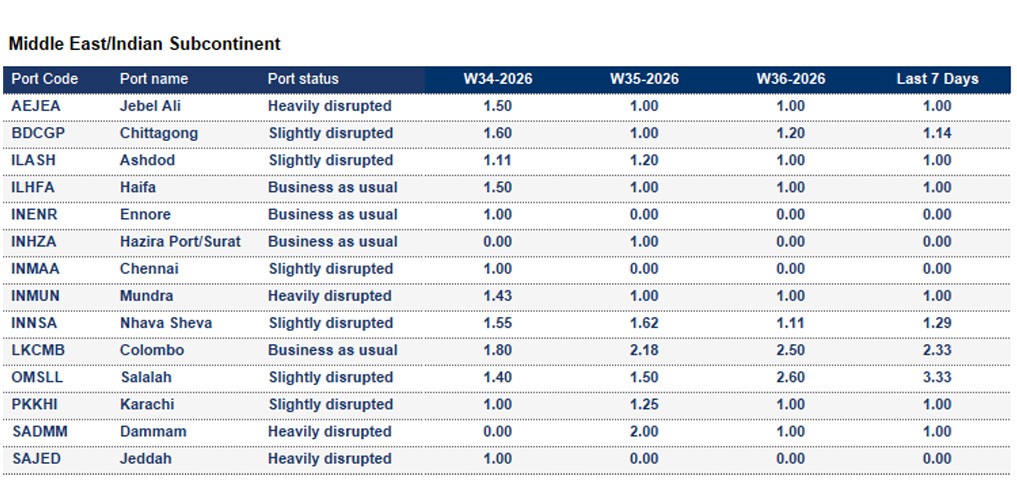
Chittagong (Chattogram): The 7-day average vessel waiting time is around 1.14 days. Yard utilisation remains around 70%, with berth waiting times of 1-2 days for both geared and gearless vessels.
Sri Lanka
Colombo: The 7-day average vessel waiting time is around 2.33 days.
North America
Canada
Average import rail dwell time for Canadian cargo (Vessel arrival to departure rail ramp):
- Halifax: 5 days
- Montreal: 8 days
- Prince Rupert: 6 days
- Saint John: 13 days
- Vancouver: 5 days
Central and South America
Brazil
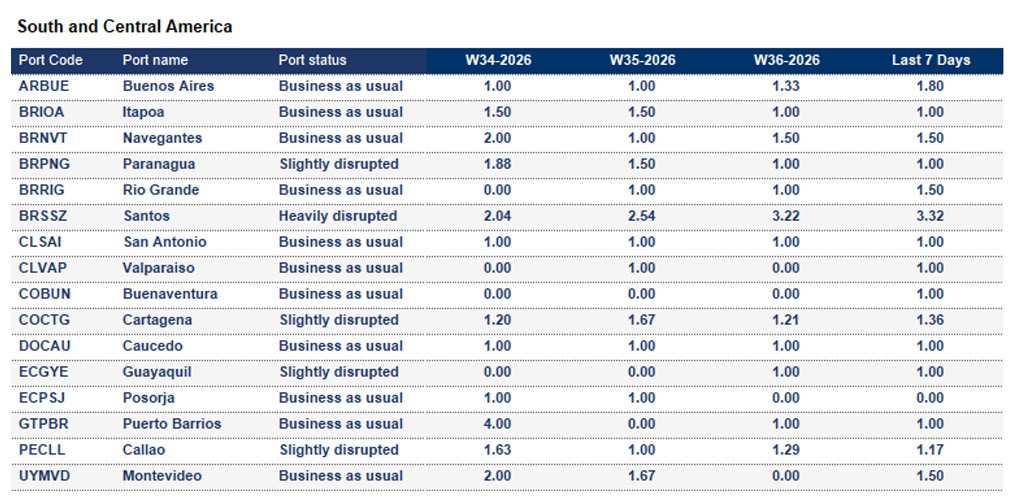
Itajai: The 7-day average vessel waiting time is around 2.0 days. Operations at Berth 1 (JBS) are being impacted by adverse weather conditions. Berth productivity remains at a critical level despite average dwell times staying below target. Productivity declined by 5.4% week-on-week, with overall performance continuing to show a strong downward trend.
How Kuehne+Nagel estimates port disruption statuses
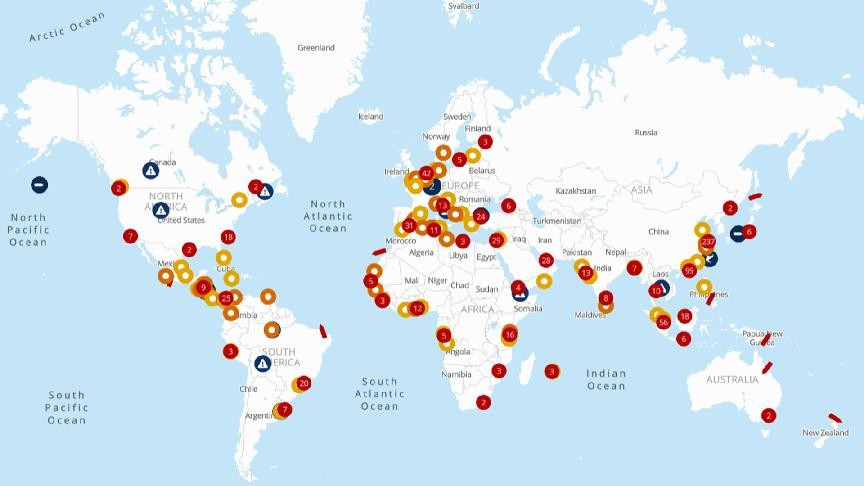
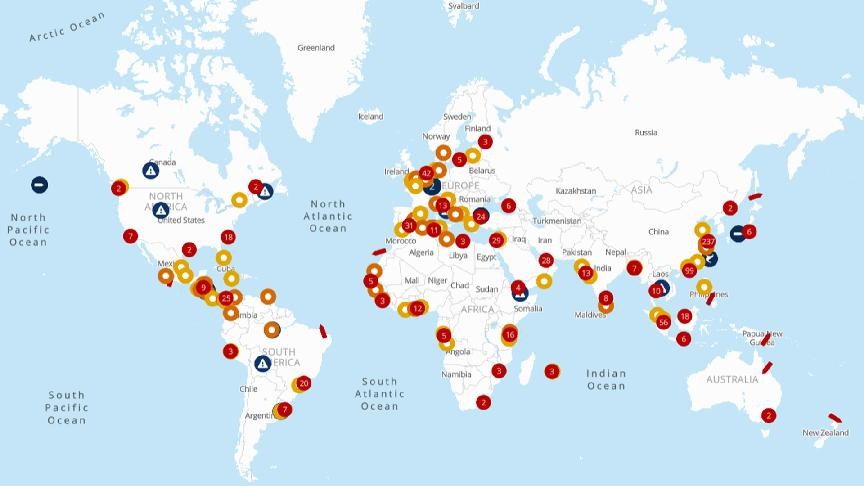
Seaexplorer has four port statuses that are estimated based mainly on the 7-day average vessel waiting time. Other factors include yard congestion, labour strikes, natural disasters or intermodal disruptions. Slightly different rules are applied to major ports, or ports that are hubs in their region, as they are typically more efficient.
- Business as usual means the port is currently operating without any significant disruption.
- Slightly disrupted is used if the 7-day average vessel waiting time exceeds 2 days.
- Heavily disrupted is used if the 7-day average vessel waiting time exceeds 4 days.
- Port closed is used when the port suspends operations due to a major disruptive event.
Stay Ahead, Stay Informed: Register for seaexplorer for the latest disruptions and vessel waiting times at global container ports.