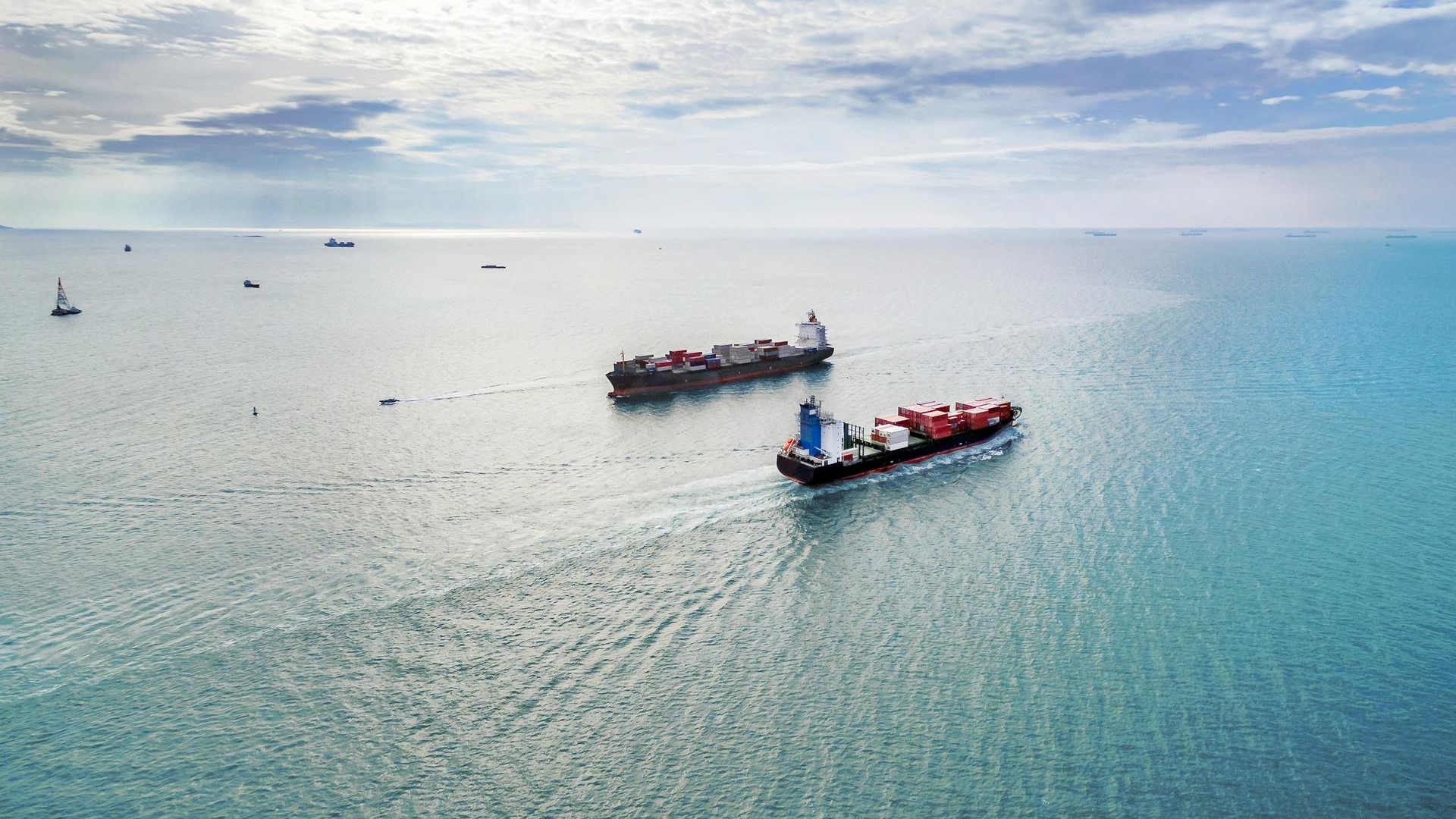

THE FULL impact of the Gulf crisis on the container shipping sector is expected to peak in the coming two to three weeks, as diverted vessels reach alternative ports, stranded cargo accumulates and inland transport networks strain under the weight of emergency rerouting.
While the disruption will remain largely regional, the scale of the immediate dislocation, from mass cargo dumping to rising port congestion across Asia, will shape container flows well into May.
Vespucci Maritime chief executive Lars Jensen expects the pattern to mirror the early Red Sea crisis: a sharp, short‑term shock as vessels that have spent days circling or idling finally discharge en masse. He argues that the most intense phase of disruption will unfold over the next one to two weeks, but the clearing of displaced cargo will take far longer, particularly given the sudden loss of Jebel Ali’s transhipment role for East Africa and the Indian subcontinent.
Jensen calculates that rerouting 1m teu annually away from the Gulf adds just 1% to global teu‑miles. This will benefit the Asia-Europe trade, which will feel a firmer tightening at around 5% — in terms off teu mileage, but nowhere near pandemic‑era disruption, he explained.
The regional consequences, however, are profound. Data from Container Statistics shows that under normal circumstances more than 700,000 teu moves in and out of the Gulf each month, two‑thirds of its imports. The sudden loss of access has left carriers scrambling for alternatives and shippers being notified that their cargo has been discharged thousands of miles from its intended destination. Some cargo may perish before ever reaching its market.
The stakes are particularly high for the MEG, where food security is directly tied to maritime access.
As Antonella Teodoro of MDS Transmodal told Lloyd’s List, recent trade data “highlights the critical role of food imports in the Arabian Gulf,” with food and live animals accounting for roughly 22% of total imports in 2025, making it the single-largest category alongside manufactured goods. This reliance on inbound food supplies leaves Gulf economies acutely exposed when shipping routes are disrupted.
Teodoro noted that fruit and vegetables make up 20% of food imports, highlighting the Gulf’s reliance on fresh produce shipped from abroad. Animal feed and sugar each add another 8%–9%. This import profile is heavily weighted towards categories most vulnerable to delays, spoilage and price volatility.
“This reliance on imported food exposes both regions to supply chain disruptions, price volatility, and geopolitical risks,” Teodoro said, warning that any shock to maritime routes, whether from diversions, export restrictions or simple congestion, can quickly affect food security, especially for perishable goods and staple cereals.
Regional congestion mounts as stranded containers flood alternative ports
Nearly two weeks after US and Israeli strikes on Iran began, most carriers have halted bookings into and out of the Gulf.
Cargo already in transit is being discharged at contingency ports from India to Southeast Asia as carriers abandon Gulf transits amid escalating attacks.
Xeneta chief analyst Peter Sand said displaced cargo is already piling up across India, Pakistan and Southeast Asia, noting that carriers cannot afford to leave vessels idle.
Effectively, as much as 200,000 teu of cargo has been left in limbo he explained either stuck in transit, forced to find alternative routings, or simply waiting.
“In situations like this, our priority over anything else is always the safety of our people,” said Maersk chief commercial officer Karsten Kildahl.
“We are monitoring safety conditions, airspace availability, port and ocean operations, and inland cargo flows across the region. Our focus is on stability and delivering workable solutions in an unpredictable environment.”
With the carrier handling around 20,000 containers a week in and out of the Gulf, Kildahl said Maersk is now “prioritising cargo bound for the affected countries,” giving precedence to food, medicine and other essential goods as inland corridors tighten.
The knock‑on effects of cargo displacement are already visible across Asia’s major hubs. As diverted vessels arrive simultaneously, congestion is rising across the region.
There are also signs that congestion is building in the West Mediterranean and at the northern entrance to the Suez Canal, as shippers look to ferry cargoes in from the east of the Gulf overland. One Egyptian logistics provider told Lloyd’s List that demand for its services has reached “unprecedented levels” as shippers continue to explore access to the MEG wherever possible.
On the morning of March 13, Lloyd’s List Intelligence Seasearcher platform showed as many as 21 vessels anchored outside Singapore, and more than 12 outside the Malaysian hubs of Tanjung Pelepas and Port Klang. In Colombo eight ships were awaiting berthing clearance while off Mumbai, Mundra, and Karachi, ship queues totalled eight, seven and three respectively.
Sand expects congestion to peak in about 10 days, with ripples continuing to extend back to Tanjung Pelepas and Singapore, as carriers offload containers simply to keep vessels moving.
“If you look at transit times for cargo, we know half of the cargo going into the MEG is coming from the Far East. If we estimate a good 20 days on average transit times, then that should translate into a peak in around 10 days from now,” said Sand.
Terminals are bracing for overflow. For example, APM Terminals Pipavav on the west coast of Gujarat, India, has already handled 8,400 teu of diverted cargo and is preparing to scale further.
Managing director Girish Aggarwal told Lloyd’s List that the port had proactively reached out to affected shipping lines to offer safe staging capacity and was working with customs and Container Freight Station operators to expand space if required.
The static fleet
Inside the Gulf, the situation is static and increasingly precarious. Up to140 ships remain trapped north of the Strait of Hormuz with no safe exit route.
For the thousands of seafarers aboard these vessels, the standoff has become an open‑ended ordeal. Crews are effectively stranded, unable to sail to safety and increasingly anxious as attacks edge closer to anchorage areas once considered low risk. With no clear timeline for a safe corridor to reopen, many are now facing prolonged isolation, mounting fatigue and the psychological strain of working under the constant threat of missile or drone strikes.
Lloyd’s List spoke to one carrier who said the welfare of crews was understandably the overriding priority. The company confirmed that vessels had been moved to safer locations where possible and that crew rotations were being arranged for those wishing to disembark.
Seafarers who requested to leave have been supported with the necessary arrangements to bring them home. The carrier added that it remains in close contact with all crew members multiple times a day to ensure vessels are properly resupplied and that morale is maintained as far as possible under the circumstances.
Since the start of March boxship passings through the Strait of Hormuz have understandably slowed to a trickle.
Aside from Iranian-affiliated containerships only two have crossed the strait this month, namely the SLS Topaz (IMO: 9263320), on charter to Maersk, and the SSF Leo (IMO: 9363390), owned by Abu Dhabi Ports Co’s Global Feeder Systems, vessel tracking data from Lloyd’s List Intelligence shows.
GFS attempted a second passing with the Safeen Prestige (IMO: 9593517) later the same day, which was then hit by two missiles. No non-Iranian containerships have attempted the journey since.
The risk in the MEG factor has only increased this week after attacks accelerated, including, significantly, on vessels at anchor. The 6,700 teu One Majesty (IMO: 9424912) was one of the vessels impacted by an attack while at anchor off Ras al Khaimah in UAE waters. Container operations in Salalah, Oman, were also halted on Wednesday (March 11) after oil storage facilities were set ablaze by an Iranian drone attack. With the threat envelope widening, the prospect of boxships entering or exiting the Gulf has become increasingly remote.
“What I think is the important part is that two of the vessels that were hit [on March 11] were not trying to cross the Strait of Hormuz, they were on anchorage outside of either Dubai or Ras Al Khaimah. That basically means every ship in the Gulf is now at risk, especially if you’re perceived as being linked to the US or Israel,” Jensen warned.
New corridors emerge as Gulf access collapses
With the Strait of Hormuz effectively closed to commercial traffic, carriers have been forced to discharge at alternative gateways and rely on overland solutions to bridge the gap.
In response, carriers across the region are hastily reconfiguring networks, working with governments and port operators to establish new inland and coastal corridors capable of maintaining cargo coverage into the Gulf as hostilities continue.
Since the crisis began, secondary ports on the UAE’s east coast and in Oman have been thrust into a far larger role than usual, despite their more limited capacity. Cargo is being pushed toward Khor Fakkan, Fujairah, Sohar and Salalah, helped in part by Sharjah’s decision to ease trucking restrictions to keep inland flows moving. Vessels have begun queuing outside these ports, yet volumes have so far remained within manageable limits.
That balance is becoming more fragile, however, as the latest attacks, including those reaching as far south as Salalah, raise the prospect that carriers may look even farther afield to gain Gulf entry if the security situation deteriorates.
Deepsea carriers have rapidly shifted their operations as the Gulf becomes inaccessible. Major lines are stitching together new multimodal corridors to keep cargo flowing.
Mediterranean Shipping Co has outlined the most extensive alternatives, routing Iraq-bound cargo via Türkiye using its Tiger and Phoenix services into Iskenderun and Mersin, while also funnelling cargo through the Saudi ports of King Abdullah Port and Jeddah in the Red Sea with onward trucking to Gulf states.
Meanwhile, Maersk and Hapag-Lloyd, under the Gemini Cooperation, have suspended several Middle East services, including east-west loops and regional shuttles services entirely, while also launching a new Asia-Mediterranean-Red Sea loop (SE4/AE19) via the Cape of Good Hope.
CMA CGM, which initially halted all bookings, has though reopened imports into Gulf states, introducing bonded land-bridge and feedering options via Jeddah, Khor Fakkan, Fujairah and Sohar.
Saudi Arabia has positioned itself as the main alternative gateway, now the least‑congested and most accessible route into the Gulf for major carriers.
Suliman Al‑Mazroua, president of the Saudi Ports Authority (Mawani), told Lloyd’s List that the country’s west coast has ample capacity to absorb Gulf‑bound cargo. While Saudi has invested heavily in future‑proofing its port infrastructure, the sharp drop in traffic at the expense of the secondary Red Sea crisis has led to a dearth in tonnage traversing the region and left its ports underutilised.
Jeddah alone can handle 10.2m teu, more than total Saudi annual throughput in 2025, while in the case of King Abdullah Port, it handled 500,000 teu last year, but has 3.5m teu of available capacity. The west coast as a whole has more than 18m teu of capacity, expandable to 20m teu with minimal investment, leaving “plenty of room” to absorb diverted flows, according to Al‑Mazroua.
“We can handle the whole Gulf, and also Iraq and Jordan,” Al‑Mazroua said, citing two years of infrastructure development.
Rerouted traffic off the back of the Iran crisis is already arriving at Jeddah and KAP, with volumes expected to build steadily. “We imagine the peak will hit by the end of April,” Al‑Mazroua said, noting that more than 80,000 teu of additional Saudi bound boxes from Asia has been announced in recent days as carriers divert Gulf cargoes on Asia-Europe legs. Al Mazroua said several carriers have contacted Saudi ports in recent days to check berthing availability.
But while berth capacity is ample, the real test lies inland.
As Jensen cautioned, “I would be concerned about the port infrastructure. I would be concerned about whether there’s enough trucks to actually move the cargo.”
Jeddah and KAP may have substantial excess capacity, he said, but the bottleneck will be on the roads: “You don’t have 1,000 trucks standing idle, doing nothing… it’s more difficult to suddenly see a few thousand additional trucks.”
Maersk’s Kildahl offered a stark illustration of the challenge. He noted that it can easily bring cargo into Saudi Arabia via the Suez Canal and discharge at Jeddah, but it must then move it “roughly 1,500km across the desert”. The company is now securing hundreds of trucks for that haul, he said, but capacity is finite, making strict prioritisation unavoidable.
Al‑Mazroua insisted, however, that Saudi Arabia is up for the challenge, outlining a three‑tier trucking system that has now been activated: large authorised transport companies, major shippers’ own fleets, and more than 100,000 independent truck owners. Gulf Cooperation Council (GCC) trucking networks and agreements with Jordan can also be mobilised if required.
“Based on the numbers we are seeing, we have more than enough to handle the situation,” he said.
All of this comes at a cost. Logistical rerouting, extended inland hauls and longer ocean transits are coinciding with sharply higher fuel prices as oil supply tightens.
Since the start of the year, heavy fuel oil (HFO) and very low sulphur fuel oil (VLSFO) in Rotterdam have almost doubled to $697 and $746 per tonne, while in Singapore VLSFO has pushed beyond $1,000 per tonne. Some ports, including Salalah, are already facing shortages, forcing carriers to bunker elsewhere and adding further strain to already stretched schedules.
While the global container system can absorb longer routings and higher bunker bills, the Gulf itself cannot as easily withstand the loss of direct access or the mounting strain on improvised corridors.
As the container shipping industry scrambles to keep essential goods moving, the coming weeks will determine whether these temporary fixes can hold. What is already clear is that the disruption will reverberate far beyond the immediate shock, reshaping regional logistics and challenging the resilience of Gulf trade long after vessels begin to move.



