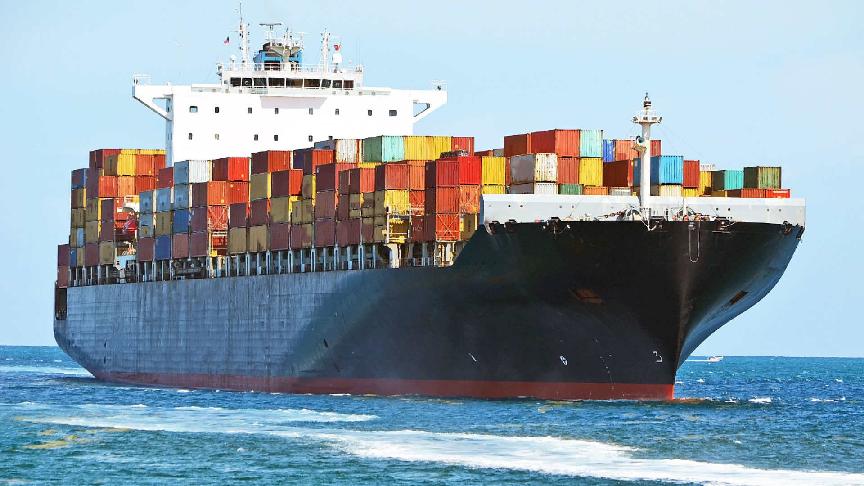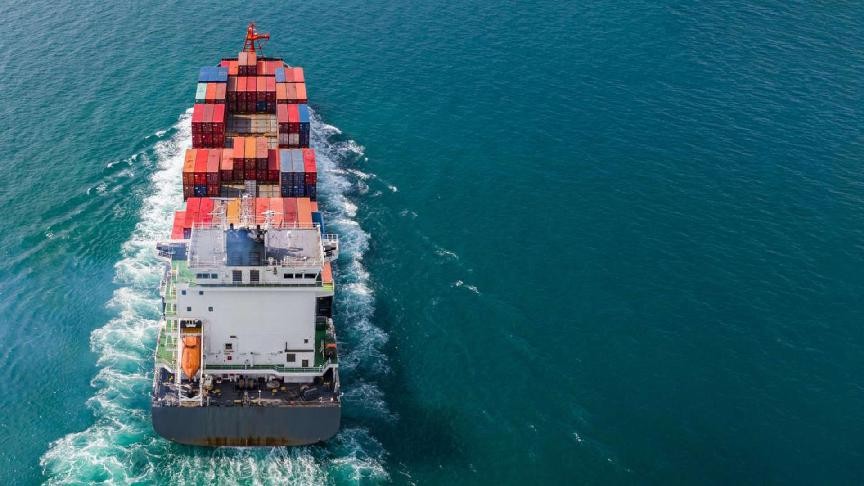

The Gemini Cooperation between Maersk and Hapag-Lloyd began on 1 February 2025 with a network consisting of 29 shared mainline services and 29 shuttle services across East–West trade lanes.
During 2025, both carriers reported higher volumes and improved operational efficiency, supported by stronger terminal performance and enhanced schedule reliability.
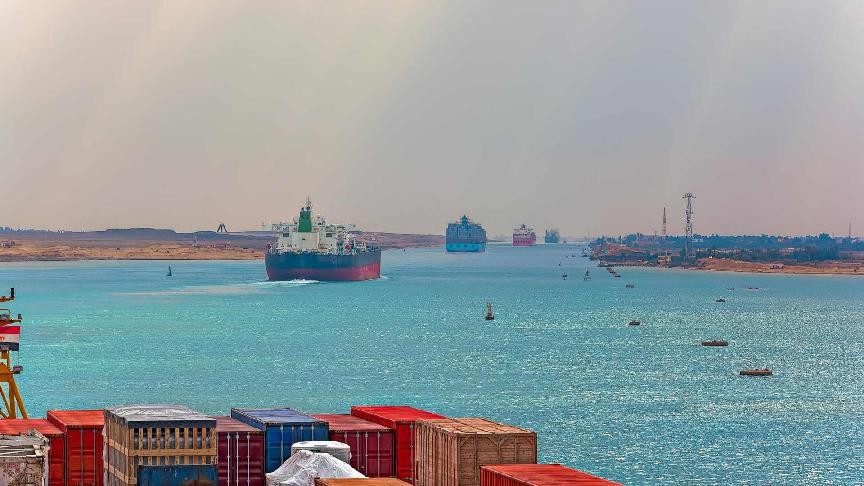
As the partnership entered 2026, attention shifted to navigating higher operating costs, emerging overcapacity and the ongoing normalisation of the Suez routing, while maintaining service stability in a volatile demand–supply environment.
Positive achievements of Gemini
Gemini’s first year produced notable improvements across service reliability and network performance.
According to statements marking its anniversary on 4 February 2026, the Cooperation delivered “industry‑leading schedule reliability averaging around 90%, with key trade lanes such as Asia–North Europe and the Transatlantic exceeding 95%.”
Executives highlighted the speed at which results materialised, supported by approximately 340 vessels, 3.7 million TEU of deployed capacity, and a coordinated hub‑and‑spoke structure utilising Hanseatic Global Terminals and partner facilities.
The new East–West network recorded more than 90% on‑time arrivals on average and generated cost savings above expectations.
Increased volumes also contributed positively to Maersk’s APM Terminals division, which reported fourth‑quarter revenue of USD 1.4 billion, a 13% year‑on‑year rise, accompanied by an 8.4% volume increase across Europe, North America and Latin America.
Challenges and negative developments
Despite operational gains, both carriers encountered financial pressures during the period.
Maersk, although maintaining a positive full‑year result, recorded its first quarterly loss in two years and announced a reduction of 1,000 jobs for 2026.
Hapag‑Lloyd reported that while partnership benefits supported its 2025 performance and helped it reach the upper end of its forecasts with revenue of USD 21.1 billion and EBIT of USD 1.1 billion, the company still experienced an expected earnings decline compared with the prior year.
Higher costs linked to rerouting via the Cape of Good Hope and initial expenses associated with the Gemini network negatively affected financial results.
Current reliability performance
Reliability under Gemini has continued to exceed the carriers’ former standalone performance.
Sea‑Intelligence data show that in December 2025, Maersk achieved 76.7% reliability and Hapag‑Lloyd reached 75.2% on their individual services, while the jointly operated Gemini services recorded 92.3% reliability across all arrivals in November/December 2025.
Kuehne+Nagel’s own carrier performance data confirm this trend: in December, Maersk achieved a schedule reliability of 81.1%, compared with 76.6% for Hapag‑Lloyd.
Xeneta noted that both carriers benefited from the optimised structure of the partnership, which outperformed their non‑alliance collaborations, and reported that Maersk and Hapag‑Lloyd recorded the lowest average delay days among 12 global carriers.
Operational measures remain aligned with the reliability objective, including the recent decision to return the IMX service, connecting India, the Middle East and the Mediterranean, to the Red Sea and Suez Canal from mid‑February under naval protection.
Future outlook and considerations
The carriers anticipate mixed conditions ahead.
Maersk forecasts global container demand growth of 2% to 4% in 2026 and intends to grow volumes in line with the market.
Although Gemini boosted Maersk’s annual volumes, delivered notable cost efficiencies and supported a record 2025 result in its terminals division, the company expects the sector to enter a downturn driven by excess capacity.
Its CEO warned that new vessel deliveries and a return to the Suez routing could generate overcapacity of between 4% and 8% in 2026.
He emphasised that a rapid shift back to Suez would place additional pressure on freight rates, whereas a slower, phased transition could mitigate the impact.
In parallel, both carriers confirmed that routing adjustments through the Red Sea and the Suez Canal would continue, with heightened security measures, prioritising the safety of crews, vessels, and customer cargo.
Furthermore, Hapag‑Lloyd’s recent acquisition of carrier ZIM is expected to strengthen the Gemini Cooperation by bringing additional vessel capacity into the partnership between Maersk and Hapag‑Lloyd.
Although the exact amount of capacity to be integrated is not yet confirmed, ShippingWatch reports that Hapag‑Lloyd plans to channel some of ZIM's vessels into Gemini, enhancing the alliance’s combined network.