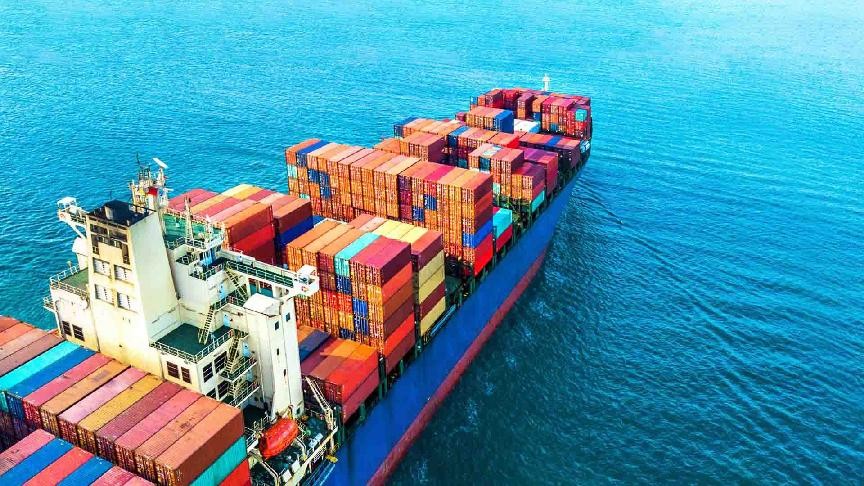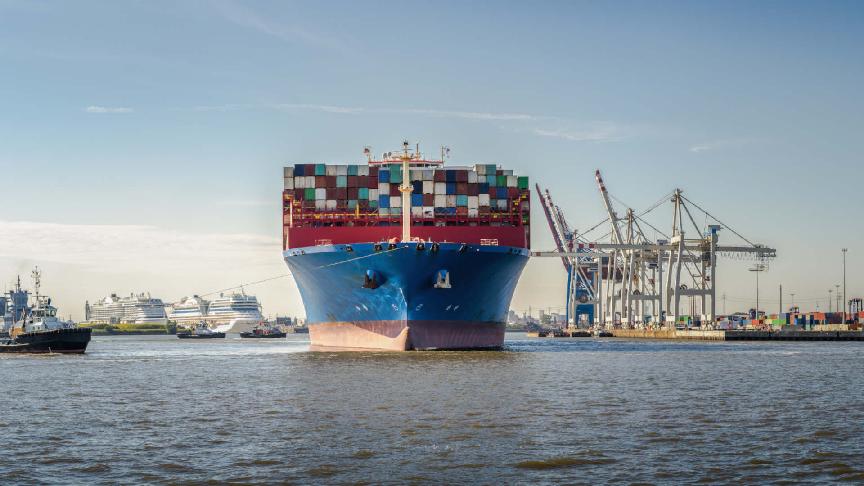

COSCO confirmed it has concluded a retrofit programme for four eight-year-old containerships to convert their conventional-fuel systems to dual-fuel methanol propulsion.
The conversion project was first announced in late-2023 and was arranged in partnership with the vessel’s main engine designer Everllence (formerly MAN Energy Solutions).
The initial conversion was undertaken on the 20,000 teu COSCO Shipping Libra (IMO: 9783538) which arrived at Cosco Shipping Heavy Industry’s shiprepair facility near Shanghai in June 2025 for works. The vessel was redelivered to its owner in September.
Sistership COSCO Shipping Gemini (IMO: 9783526) was also converted between July and October.
Both vessels operate in the Asia to Europe trade.
The third ship to be converted — the 13,300 teu COSCO Shipping Peony (IMO: 9785744) — was converted between October 2025 and January.
The final vessel, the 13,300 teu COSCO Shipping Jasmine (IMO: 9785768), entered Cosco Shipping Heavy Industry’s yard in December and was handed back to Cosco earlier this month following sea trials and testing.
Both of the 13,300 teu, neo-panamax, vessels operate between Asia and the US east coast via the Panama Canal.
The conversion project includes significant modifications to the vessel’s engine fuel-injection systems and installation of larger fuel tanks. The estimated cost of such conversions is understood to be circa $25m per vessel.
All four ships were fitted with the same, MAN-B&W S90ME-C10-series main engines, which Everllence has now converted to methanol-enabled MAN B&W S90ME-LGIM10.5 engines, according to Alphaliner.
It notes that the installation of new methanol tanks will have taken up space in the vessels’ container holds reducing the effective cargo capacity of each ship.
Alphaliner estimates the payload of the 20,000 teu vessels has been reduced by around 300 teu, while capacity of the smaller vessels is expected to have dropped by some 400 teu.
In addition to its retrofitted vessels, Cosco has 26 methanol dual-fuel containership newbuildings on order, comprising 14 18,500 teu ships and a dozen 24,000 teu vessels, which will all be constructed in China.
The first vessel is due to be delivered in the third quarter of this year, with the final ship set to be handed over in 2029. Most have been ordered for operation with Cosco subsidiary OOCL.
The first methanol dual-fuel conversion was concluded in November 2024 aboard Maersk’s 2017-buiilt Maersk Halifax (IMO: 9784271). The three-month project on the 2017-built vessel was undertaken by China’s Zhoushan Xinya Shipyard.
Maersk has plans to convert Maersk Halifax’s 10 sisterships by 2027.
Similar conversions are being undertaken by France’s CMA CGM and German container line Hapag-Lloyd.
CMA CGM confirmed an agreement with China’s Qingdao Beihai Shipbuilding two years ago to convert of up to six 9,300 teu boxships to dual-fuel methanol specification, with the first retrofit expected to be undertaken this year.
In March, the first Hapag-Lloyd-operated ship for conversion arrived at a Chinese shiprepair yard for its retrofit to methanol propulsion.
The 10,100 teu Seaspan Yangtze (IMO: 9630389) is the lead ship of five on long-term charter to Hapag-Lloyd booked to be converted, in a jointly-funded project with the vessel’s owner — tonnage provider Seaspan.
While containership methanol-fuel conversions are progressing, orders for newbuildings capable of using methanol have been relatively rare over the past year.
Most container lines appear to now favour liquefied natural gas for dual-fuel newbuildings, citing concerns about restricted supply of green methanol in the medium term.