THERE is currently no more dangerous place for a commercial vessel to operate than the Black Sea.
That is the assessment of Dimitris Maniatis, head of maritime security firm Marisks.
While the Strait of Hormuz has, understandably, dominated headlines since March 2026, the conflict in the Black Sea has intensified dramatically in recent weeks.
Russia’s war on Ukraine of course has not gone away since Moscow’s forces invaded in February 2022, but the region has undergone periods of relative calm juxtaposed with significant danger in those four-plus years.
Yet the frequency and intensity of attacks against commercial shipping over the past few weeks has surpassed anything so far.
In fact, Deniz Iscileri, a Turkish seafarers’ union, estimates that more than 35 commercial vessels were hit in July 2026. As many as 23 seafarers have lost their lives.
The opaque nature of the conflict makes such claims difficult to substantiate.
Ukraine has claimed to have hit dozens of shadow fleet* vessels over the past few weeks with its drones, which Lloyd’s List has been unable to verify.
Deniz Iscileri’s figures would make July 2026 the deadliest month of the war for seafarers by a considerable margin.
That grim momentum has carried on into August too.
On August 1, Russia-flagged, 962-teu Yanina (IMO: 9301304), owned by state-controlled Fesco, was hit by drones as it headed for Novorossiysk.
As water flooded the containership, its master ordered the crew to abandon ship in the middle of the Black Sea.
Fortunately, all 17 crew members were rescued by passing vessels. Yanina capsized and eventually sunk.
On August 3, Cameroon-flagged, 1978-built, 4,400 dwt ro-ro with container capacity Nadezhda (IMO: 7702657) was hit by drones 20 nautical miles off Novorossiysk, on its way to Samsun, Türkiye.
Damage occurred to the vessel’s living quarters and bow, the Turkish directorate of shipping said.
Nadezhda’s crew were evacuated to the Russian port, but three crew members were seriously injured.
These two recent attacks can be added to the four tankers hit while either loading or approaching the Caspian Pipeline Consortium terminal near Novorossiysk last month, or the hit on Guinea-Bissau-flagged, 1998-built, 7,334 dwt Golden Leo (IMO: 9181833), which killed 10 seafarers.
Kristian Bischoff, senior analyst Europe and Russia at Risk Intelligence, told Lloyd’s List his firm had counted a “record numbers of war-related incidents involving cargo vessels over the summer of 2026”.
He said Ukraine had expanded its operations to target Russian vessels in the Sea of Azov, as well as increasing the frequency of attacks on vessels in the Black Sea that Kyiv believes is strengthening the Russian economy, largely through energy exports.
“At the same time, Russia has responded to Ukrainian operations by increasing their strikes on Ukrainian ports and civilian vessels in Ukrainian waters, to effectively deter oceangoing traffic into the Odesa ports,” he said.
Such has been the intensity of the Russian retaliatory strikes, Ukraine’s agricultural minister said shipowners had effectively deserted his country’s ports.
That hasn’t stopped the Russian strikes.
Bischoff said Moscow had taken to hitting dormant vessels in ports like Mykolaiv and publishing videos of the attacks, “to maintain a sense of strike tempo and deterrence against new traffic”.
The territorial waters and exclusive economic zones of Ukraine and Russia, he said, were extremely risky in terms of kinetic attacks at the moment.
Marisks’ Maniatis went further in his assessment.
“The Black Sea has become the most dangerous commercial shipping environment in the world,” he told Lloyd’s List.
“Every night, Ukrainian forces conduct strikes against Russian ports, terminals and vessels in Russian territorial waters and the wider Black Sea, while Russian forces continue targeting shipping linked or perceived to be linked to Ukraine,” Maniatis continued.
“Commercial vessels and civilian mariners are increasingly operating in an active battle space where the distinction between military and civilian activity is becoming dangerously blurred.
“Dozens of seafarers have already lost their lives, demonstrating that no nationality, flag or commercial operator can assume immunity when trading in this region.”
That blurred distinction is evidenced by the strikes on those vessels loading at the CPC terminal.
Kazakhstan’s foreign ministry said the perpetrator or those attacks (most likely Ukraine), disregarded information shared about vessels entering the region to load at the terminal, which mainly exports Kazakh crude.
Tankers have begun signalling links to the likes of Chevron or Shell in their AIS broadcasts, or specifying that their cargo is Kazakh and bound for the EU, to avoid drone strikes.
That particular tactic did not help Marshall Islands-flagged, 2020-built, 157,447 dwt Nissos Sifnos (IMO: 9884045), which was struck while loading at CPC despite displaying “CPC-KAZAK OIL DST EU” on its AIS.
Control Risks analyst Arran Kennedy said the idea that these vessels were being hit under the mistaken belief they were loading Russian crude “stretches credulity”.
There’s also a belief among seafarers, many of whom have begun refusing jobs on vessels entering the Black Sea, that the drone strikes are targeting them specifically, rather than trying to sink the vessel they are on.
The fact the Turkish directorate specifically mentioned that Nadezhda’s accommodation block was damaged in Monday’s attack adds further weight to that theory.
International Chamber of Shipping secretary-general, Thomas Kazakos, said his organisation condemns the attacks on merchant shipping and seafarers in the Black Sea.
“Seafarers should never be placed in harm’s way while carrying out their vital role in keeping global trade moving. Their safety and security must remain paramount,” he said.
“We are closely monitoring developments and hope for a swift de-escalation of the situation. In the meantime, we encourage all ships operating in the area to remain vigilant, conduct thorough risk assessments, and follow the latest best management practices and guidance issued by the relevant authorities.”
De-escalation remains a distant prospect. Every strike on Novorossiysk prompts a response against Odesa. Every attack on a shadow fleet tanker is met with another on a grain-loading bulker. Meanwhile, the death toll continues to mount.
Black Sea now the ‘most dangerous commercial shipping environment in the world’
Turkish seafarers’ union puts the July death toll at 23 mariners
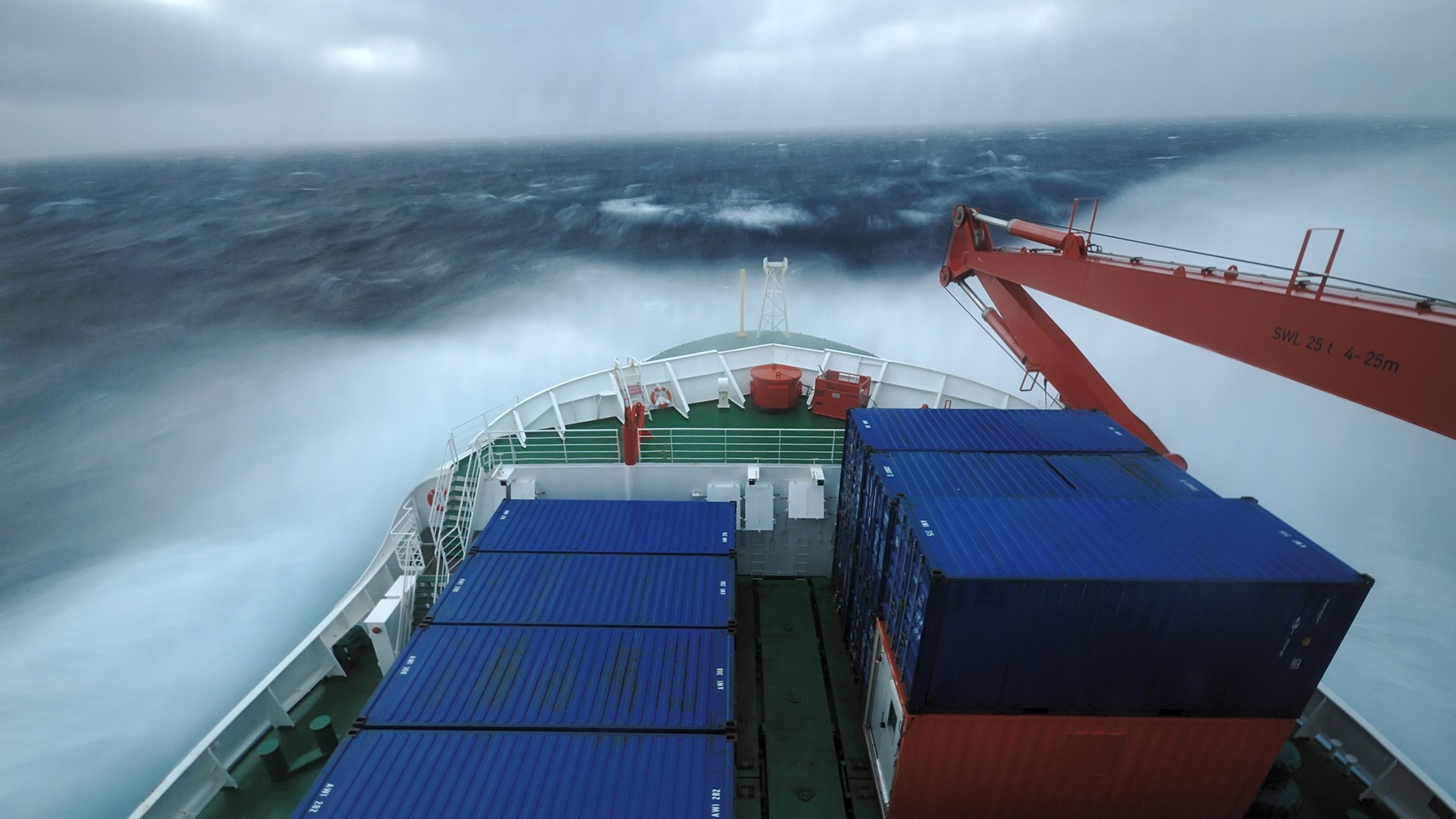

Source: Lloyd's List

Related articles
Sea newsBattery-powered fleet expands as deepsea sector awaits breakthrough
Sea news‘Now they are hitting to kill’: Seafarers pull back from Black Sea trades
Sea news‘Exceptional’ disruption reduces throughput at Antwerp-Bruges
Sea newsGreek ports still have a point to prove

Sea newsCocaine trafficking into Europe growing at ‘unprecedented levels’
Sea newsStrikes continue to cause congestion at Antwerp-Bruges