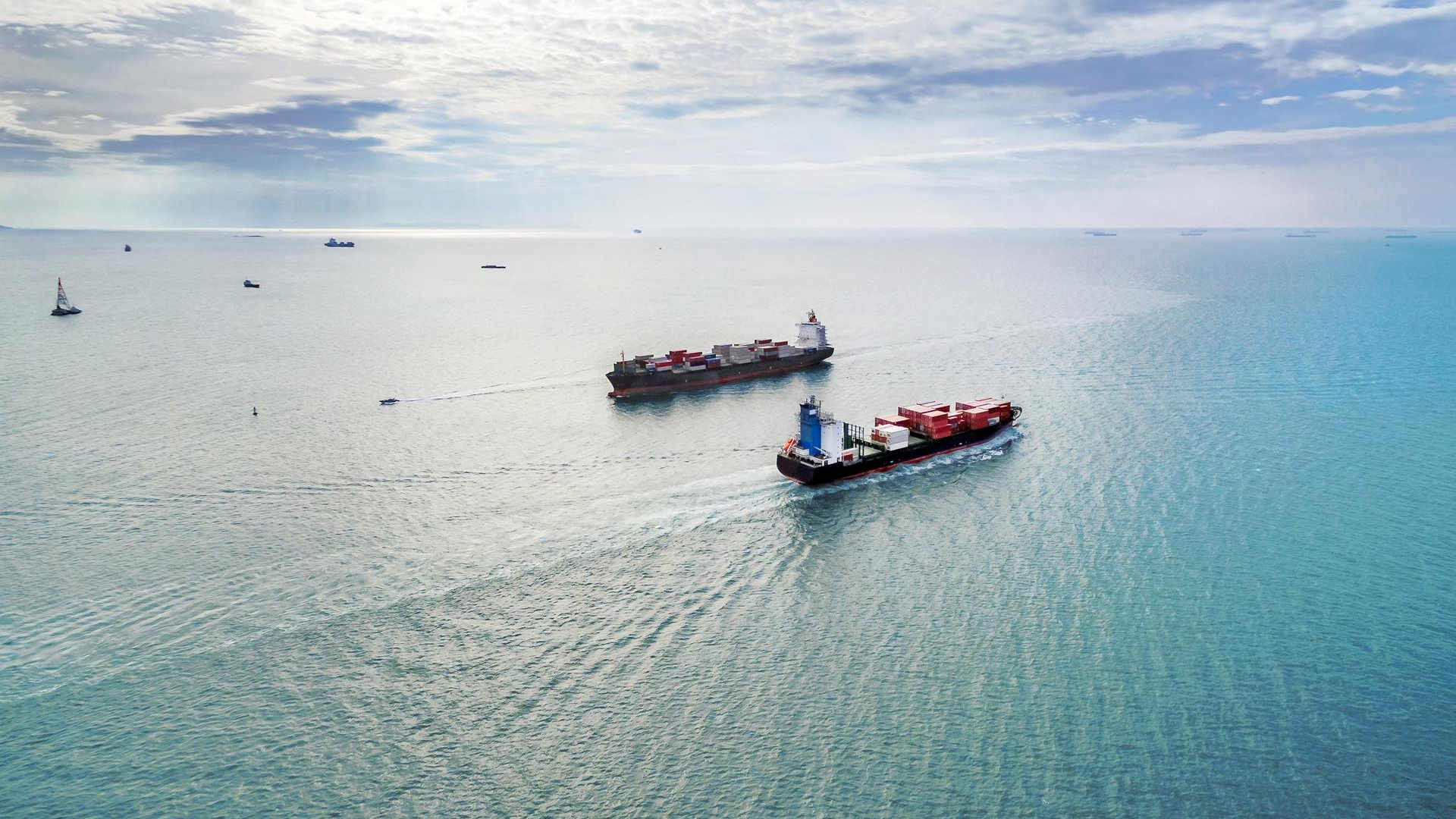
DOUBLE sailings on Asia-Europe trades have surpassed the 2021 pandemic peak due to congestion in Asian ports, upending traditional year-end capacity cuts by shipping lanes.
Container services typically have one scheduled departure each week. But when a ship is delayed into the following week, it can depart alongside the next scheduled vessel, creating a “double sailing”.
On Asia-Mediterranean routes, “double sailings” accounted for 19% of departures in October and November, compared with 17% on Asia-North Europe, according to Sea-Intelligence. Both figures exceeded the peaks recorded during the 2021 pandemic congestion crisis.
The disruption extended to the transpacific, where double sailings reached 18% on Asia-US east coast routes and 13% on US east coast routes, second only to pandemic-era highs, the consultancy said in its latest report.
“This massive influx of double sailings is a direct symptom of severe vessel bunching caused by ongoing port congestion and schedule unreliability in Asia,” Sea-Intelligence said.
The vessel bunching has reversed the usual Golden Week pattern, when carriers typically cancel sailings as Chinese factories slow production for the holiday.
Between 2012 and 2019, average weekly capacity fell 21% on Asia-Mediterranean routes and 16% on Asia-North Europe during Golden Week compared with the third quarter, according to Sea-Intelligence.
This year, the trend reversed. Capacity rose 18% on Asia-Mediterranean routes and 15% on Asia-US east coast services, while Asia-North Europe and Asia-US west coast each recorded a 4% increase.
Carriers also cancelled far fewer sailings than usual. Blank sailings accounted for just 3% of Golden Week capacity on Asia-Mediterranean routes, compared with a pre-pandemic average of 23%. On Asia-North Europe, the figure was 5%, against a historical average of 17%.
However, the figures didn’t mean carriers had given up on managing capacity for Golden Week in 2026; instead, their networks were “simply too heavily congested with bunched vessels” to cut sailings effectively, the report said.
Meanwhile, more capacity is returning to the market as carriers resume using the shorter Suez Canal route after nearly two years of diversions around the Cape of Good Hope to avoid Houthi attacks in the Red Sea.
About 60% of Asia-Europe container capacity is expected to transit Suez in November and December, according to Sea-Intelligence. The return to Suez is further advanced on Asia-Mediterranean routes, with 70%-80% of capacity using the canal westbound and 80%-90% eastbound.
Sea-Intelligence expects a full return to Suez by the first quarter of 2027, provided there are no further attacks on containerships.
More than 100 containerships of over 16,000 teu have transited the canal since September, Lloyd’s List reported last week, although overall traffic remains below pre-crisis levels.
However, the security threat remains. The Singapore-flagged 2,400 teu containership CUL Klang (IMO: 9958535), operated by Chinese carrier CU Lines, was fired upon by an armed small craft off Yemen’s western coast on October 7, although no crew members were injured.
Asia-Europe ‘double sailings’ top pandemic peak as congestion upends Golden Week cuts
Asia-Europe ‘double sailings’ surpass 2021 pandemic peaks as severe port congestion disrupts vessel schedules

Source: Lloyd's List

Related articles
Sea newsLargest containerships return to Red Sea in force
Sea newsAsia–Europe equipment imbalance intensifies as ports face rising pressure

Sea newsContainer lines ramp up intra-Asian capacity as ‘China+1’ strategy accelerates
Sea newsShipping lines start to bypass Karachi as India-Pakistan tensions rise

Sea newsCalm before the storm? European port congestion could be about to get a whole lot worse

Sea newsKeelung port oil spill contaminates multiple ships