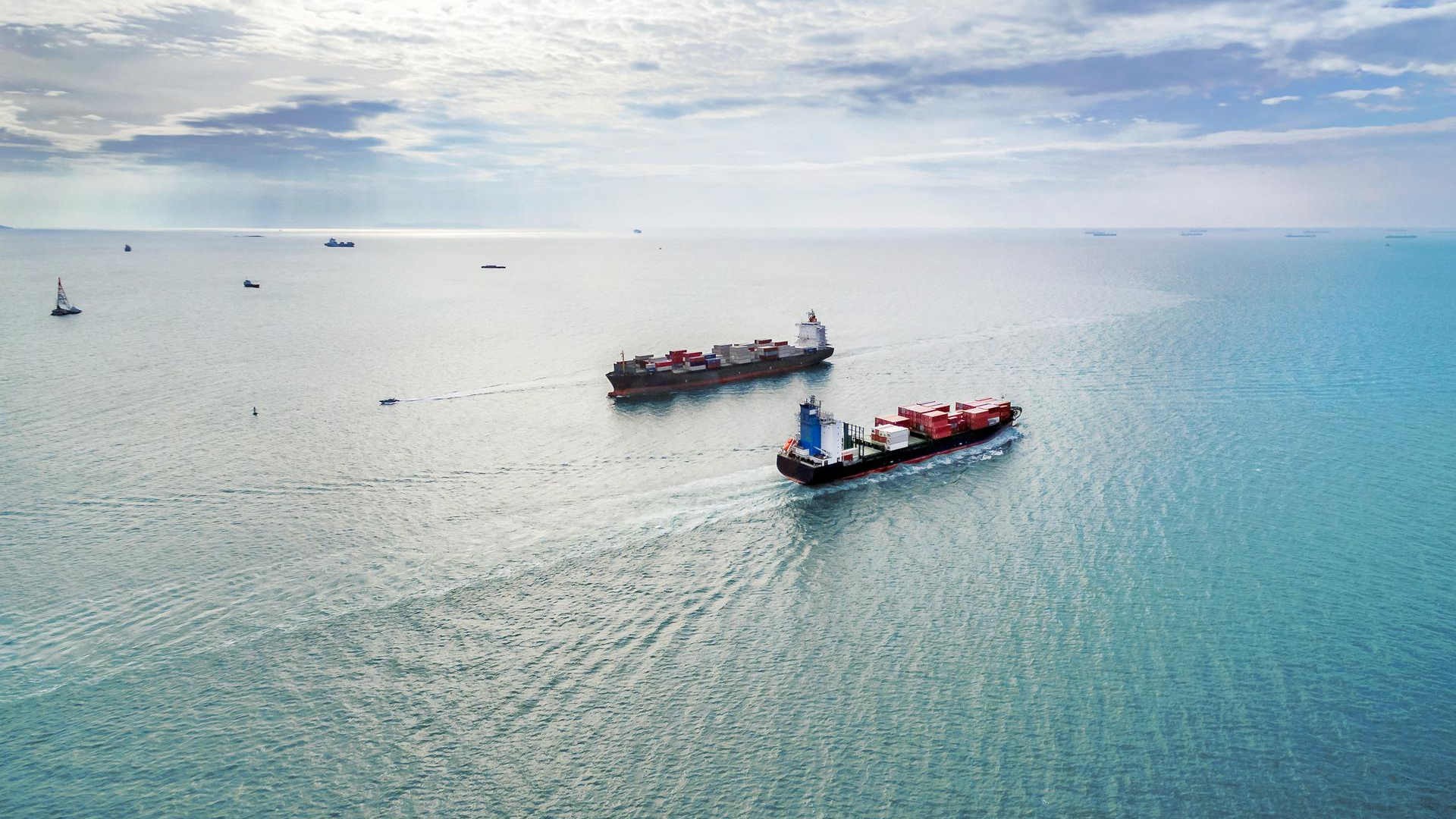

As carriers began rerouting via the longer passage around Africa, they were required to increase capacity to maintain service reliability. One approach was the deployment of larger and more vessels on key trade lanes.
This displacement did not stem solely from the Red Sea crisis, but from multiple factors, including drought restrictions on the Panama Canal and the restructuring of alliances in early 2025.
According to a recent report by Sea-Intelligence, this deployment, particularly on the Asia-Europe and Asia-Mediterranean routes, has triggered a significant shift in global shipping patterns.
Alan Murphy, CEO of Sea-Intelligence, writes, "To maintain weekly service frequency while navigating the longer sailing distances on Asia-Europe, carriers were forced to inject significant additional tonnage into Asia-North Europe."
For example, when 24,000 TEU ships were sent to North Europe, the relatively smaller ships (14,000 to 20,000 TEU) were redirected to the Asia-Mediterranean trade lane.
Similarly, other smaller vessels were pushed to corridors on the Transatlantic and in Latin America, spreading structural overcapacity across secondary lanes.
Despite these adjustments, the market continues to face a growing mismatch in vessel sizes.
While 1.7 million TEU of new capacity, mainly of capacities ranging between 15,000 and 24,000 TEU, is scheduled for delivery in 2026, ships with 5,000 TEU capacity range remain critical for smaller networks.
Compounding these shifts, Europe continues to grapple with port congestion.
Limited buffer capacity at terminals and inland networks has exposed infrastructure constraints, prompting reliance on smaller, less congested ports.
While some relief has emerged, major hubs such as Antwerp and Rotterdam continue to struggle with clearing backlogs after a surge in demand.
A report by the Journal of Commerce mentions that shippers who depend on these maritime gateways have adopted pragmatic measures such as extending lead times and diversifying port choices.
These strategies highlight the operational strain caused by cascading tonnage and persistent congestion across interconnected trade lanes.