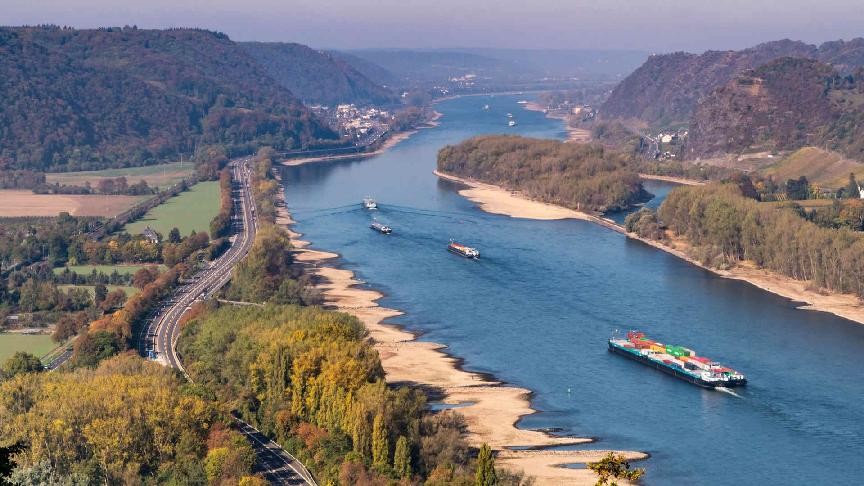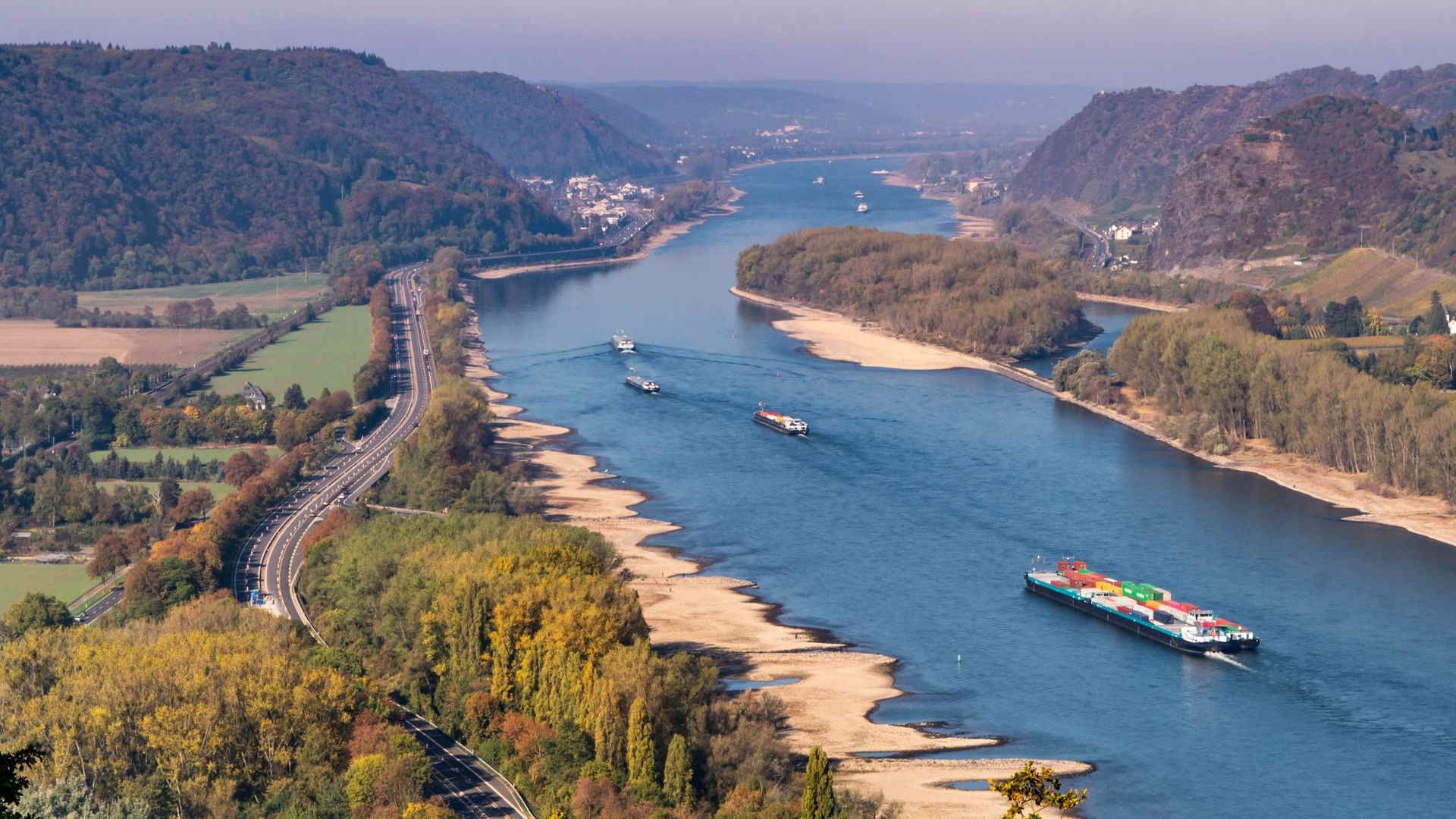

Water levels on Germany’s rivers and canals have deteriorated further since August, with little prospect of significant improvement from rainfall.
DVZ reports that Germany's Federal Ministry of Transport (BMV) is continuing measures introduced earlier this year, including additional rail freight capacity, truck driving-ban exemptions, alternative waterway routes and longer-term initiatives such as removing bottlenecks on the Middle Rhine and supporting low-water-optimised inland vessels.
Conditions on the Rhine have become particularly severe, adds the German media.
Water levels at the Kaub gauge station fell below its zero-reference point for the first time, reaching minus 3 cm last Saturday before recovering slightly to minus 1 cm on Wednesday.
The situation has effectively stopped the movement of loaded barges beyond the measuring point, as vessels typically require at least 40 cm above the reference level to carry even a quarter of their capacity.
Additionally, rail operators are reporting increased demand as shippers seek alternatives to inland waterways.
Rail operators in the country said enquiries have risen, particularly for bulk commodities including mineral oil, coal and steel, and the company is adjusting wagon fleet capacity accordingly.
Meanwhile, container hinterland logistics providers are experiencing different challenges.
In the Rhine-Main region, one company reported that between 60% and 70% of import volumes from seaports are currently missing. Its trains are fully booked for weeks. Theerfore rail cannot serve as an alternative to inland shipping due to shortages of train paths, wagons and locomotives.
This means road transport is often the only available replacement for waterborne services. Despite this, transport capacity is currently lacking for between 15% and 30% of goods.
Low water is also affecting oversized and heavy cargo.
According to special transport provider Kahl Schwerlast, goods that cannot be moved by rail or road due to their size or weight are currently unable to be transported, as there is no alternative to the Rhine for such movements.
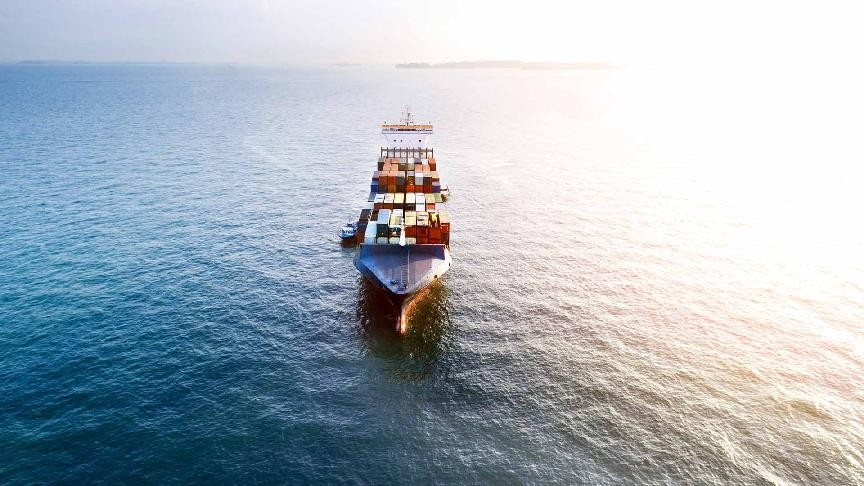
German liner Hapag-Lloyd voiced concerns that low water levels on the Rhine could deteriorate to a point where barge transport becomes operationally unviable.
In a recent advisory, the carrier said: "Conditions may worsen to the point that barge transport becomes operationally unviable. If water levels reach or fall below 30cm at Emmerich, 180cm at Duisburg-Ruhrort, 105cm at Cologne, or 80cm at Kaub, transportation cannot be guaranteed."