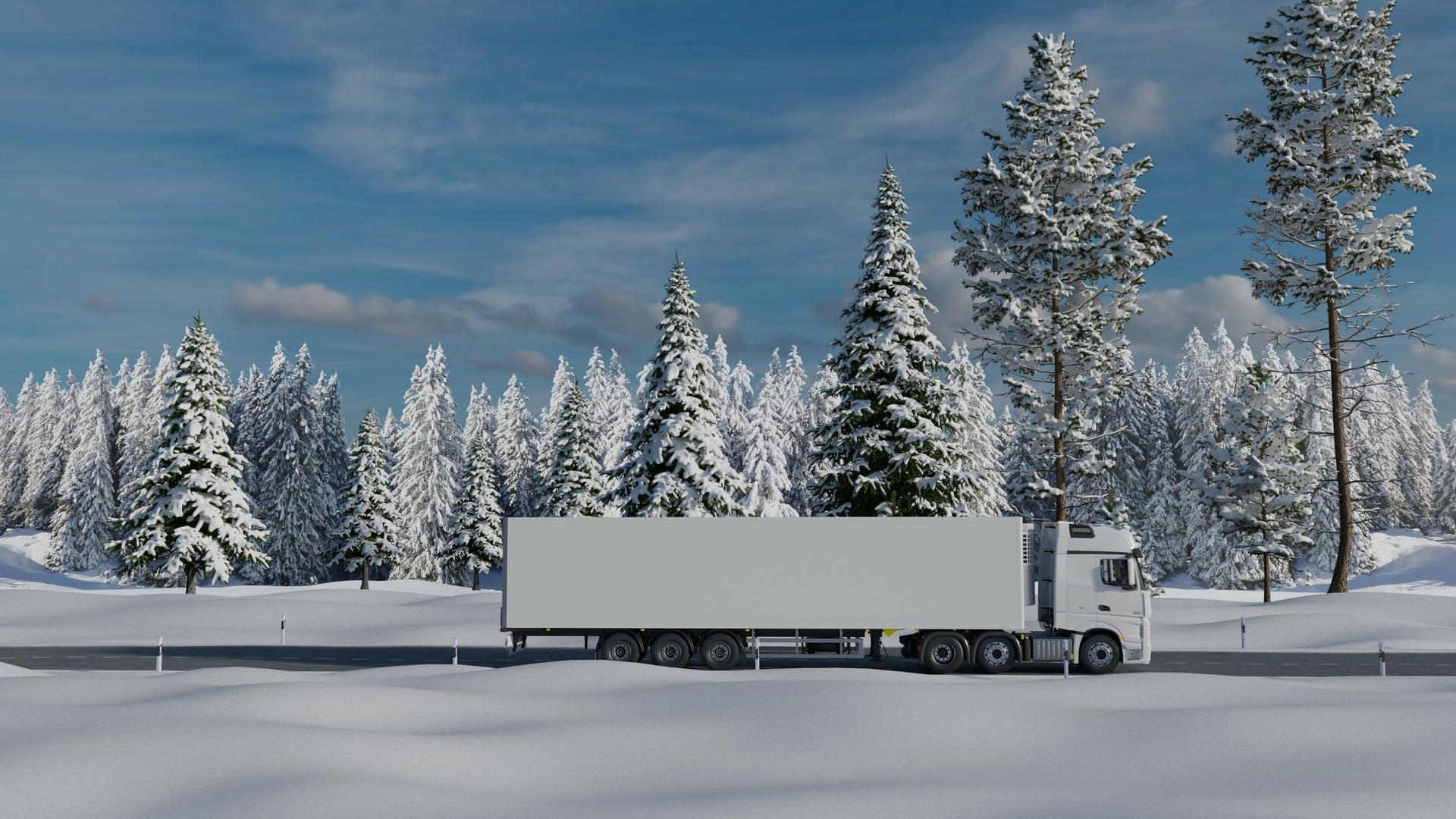

The Canadian Ministry of Transport and Sustainable Mobility sets every year a Spring Thaw period in Canada's largest province, Quebec. This period is set during the springtime interval when the road network becomes 30 to 70% more fragile after severe winter conditions.
To prevent pavement damage, temporary reductions are placed during this period, affecting heavy‑vehicle load limits. These range generally from 8% to 20%.
Québec is divided into three zones so that the start and end of restrictions are slightly staggered, reflecting geography, typical frost depth, regional thaw patterns, spring weather, and heavy‑vehicle traffic along the east-west axis.
This year, the ministry announced the dates for three Thaw Zones in Québec, during which heavy vehicles using the road network must reduce loads in line with the Vehicle Load and Size Limits Regulation.
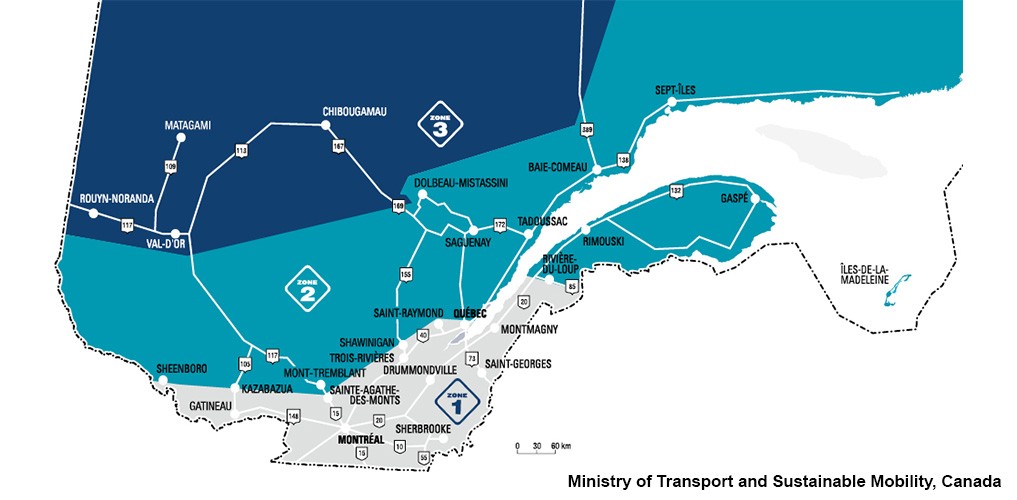
According to the ministry's announcement, the predicted dates for 2026 are:
- Zone 1 from 16 March (00:01) to 15 May (23:59);
- Zone 2 from 23 March (00:01) to 22 May (23:59); and
- Zone 3 from 30 March (00:01) to 29 May (23:59).
Depending on weather changes, the start or end may be advanced or delayed.
Similarly, cargo weight restrictions apply during the annual Spring Thaw to all pre‑carriage and on‑carriage trucking for deliveries to and from the province. These restrictions apply not only to total container cargo weight but also to how weight is distributed over the chassis axles.
Maximum allowable cargo weights:
Dry containers
- 20DV: up to 19,050 kgs
- 20DV: 19,051–24,040 kgs
- 40DV‑HC: up to 19,950 kgs
- 40DV‑HC: 19,951–24,947 kgs
Reefer containers
- 20RE: up to 18,500 kgs
- 20RE: 18,501–22,000 kgs
- 40RE: up to 19,950 kgs
- 40RE: 19,951–24,404 kgs
Kindly note that details of this tentative guidance provided by the Canadian government could change on short notice. For more information about your shipment, please contact your local Kuehne+Nagel representative.