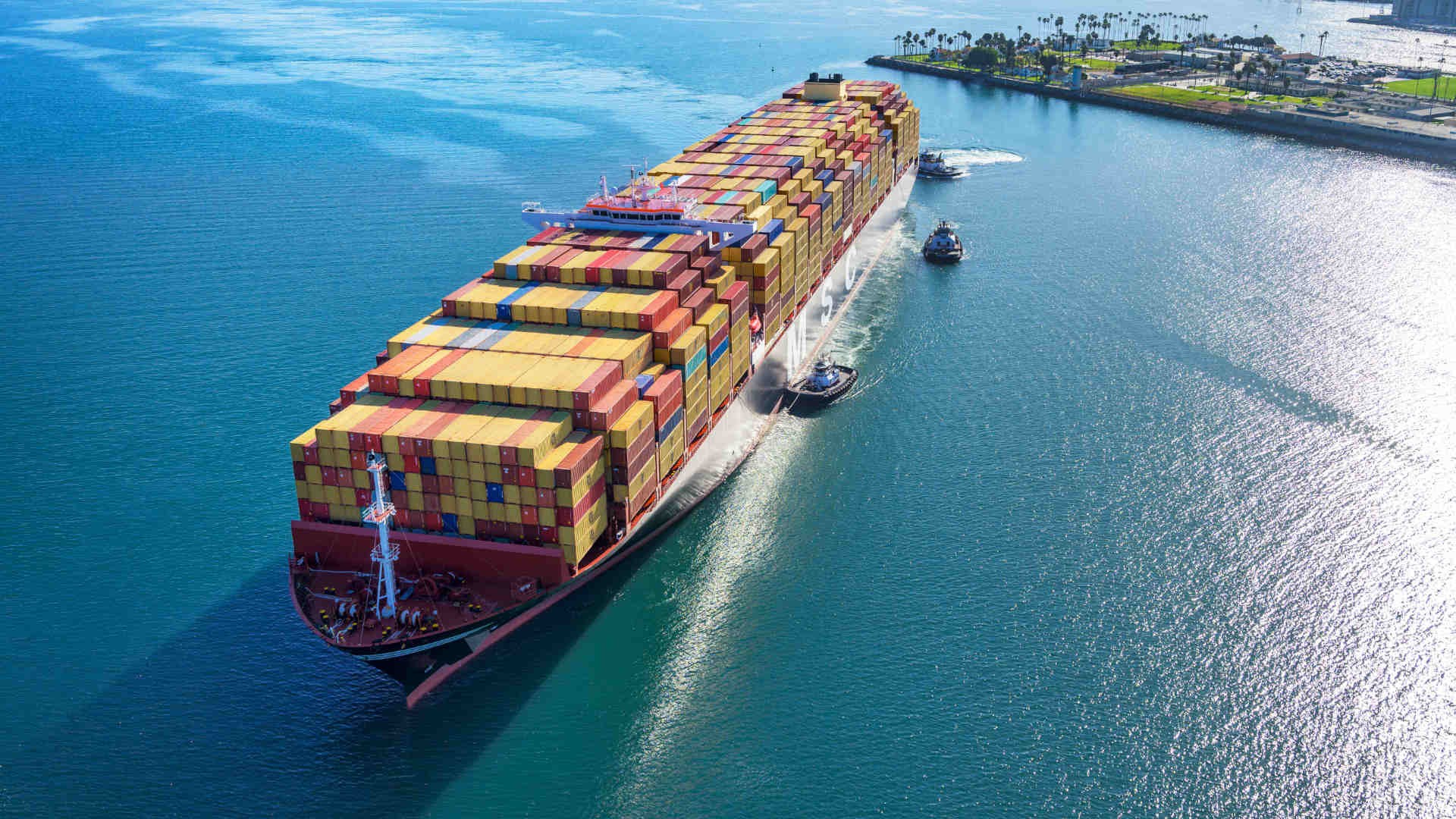
MEDITERRANEAN Shipping Co’s vast orderbook is no longer simply outpacing rivals in scale — it is forcing a rethink of vessel deployment across the container shipping industry.
The world’s largest carrier is poised to spread its growing fleet of 20,000+ teu vessels far beyond the Asia-Europe trunk route where ships of this size have traditionally been concentrated. As deliveries accelerate, MSC is driving a generational shift in network design that will see megamax vessels deployed across a far broader range of deepsea trades, forcing a generational shift in port investment and recalibrating trade lanes in its favour.
The distinction between core east-west corridors and secondary long-haul routes is beginning to blur, as larger ships move into markets historically served by smaller tonnage.
The implications extend far beyond fleet deployment. Ports hoping to remain competitive will face mounting pressure to deepen channels, extend berths and install higher-reach cranes. Terminal operators may need to accelerate capital spending, while governments and port authorities will increasingly confront the viability of facilities unable to accommodate ultra large container vessels.
MSC appears to be positioning both its fleet and terminal portfolio for that future.
Through Terminal Investment Ltd it has expanded its presence at facilities capable of handling ultra large ships, including assets in West Africa, the Red Sea and India. The strategy reflects expectations that future growth in long-haul container trades will increasingly be driven by emerging markets, particularly the Indian subcontinent.
Whether rivals follow remains unclear. What is certain is that MSC’s orderbook represents a fleet expansion unlike anything the industry has seen before. As those vessels enter service over the coming decade, they will influence not only deployment patterns but also infrastructure investment across the container shipping sector.
If MSC’s orderbook were carved out as a standalone carrier, its capacity would match the entire operating fleet of Hapag-Lloyd. Delivered tomorrow, the pipeline would form the world’s fifth-largest liner operator, sitting just behind Cosco.
Lloyd’s List revealed this week that MSC has added another 10 LNG-fuelled 20,000 teu vessels at China’s Hengli Heavy Industry, lifting its newbuild backlog to 166 ships totalling just under 3m teu. More than 2m teu of that total, spread across 99 vessels, exceeds 20,000 teu, while another 17 ships fall within the 15,000 teu-19,999 teu bracket.
Over the next five years, MSC will take delivery of ultra large tonnage on a scale the industry has never witnessed.
Rival lines including CMA CGM, Cosco, Evergreen and HMM are also adding 20,000+ teu vessels, but none approaches MSC’s scale. More than 40% of the industry’s megamax orderbook belongs to MSC alone. For rivals, these ships reinforce existing deployment patterns; for MSC, they redefine them.
The sheer volume of incoming tonnage means MSC must push megamax vessels far beyond the Asia-Europe and transpacific trades. While competitors will continue to deploy their largest ships selectively, MSC’s fleet will be too large and too concentrated in the 20,000 teu-24,000 teu segment to remain confined to a handful of trunk routes.
For MSC, the industry’s largest ships are becoming a standard feature of the global network rather than specialist assets reserved for a few corridors.
The process has already begun.
The rerouting of Asia-Europe services around the Cape of Good Hope last year unintentionally created a proving ground for ultra large ships in West Africa. MSC seized the opportunity, deploying its biggest vessels through the region. Ports demonstrated they could handle ships above 20,000 teu, while rising volumes strengthened the trade’s appeal.
Earlier this year MSC upgraded its Africa Express service, making 24,000 teu vessels a permanent feature of the Asia-West Africa trade.
With more than 100 megamax vessels still to arrive, MSC will deploy ultra large tonnage across a much broader range of routes. The question is no longer where MSC will send its megamax ships, but where it will not.
Alphaliner senior analyst Jan Tiedemann argues the industry has yet to grasp the full implications of MSC’s fleet expansion. These ships, he says, will go “everywhere except a few trades”, including the transpacific west coast, the US east coast, Asia-Suez-US east coast, Asia-Mediterranean, Asia-Europe and, increasingly, West Africa.
MSC, he adds, is not positioning itself for 2028 or 2029, but for 2040 — a world in which India, in particular, emerges as a major long-haul market for megamax deployment.
With MSC standardising its mainline fleet in the 20,000 teu-24,000 teu range, port infrastructure will have to keep pace. Deepwater access, extended berths and high-reach cranes will become prerequisites rather than advantages.
Fortunately for MSC, Terminal Investment Ltd has been investing accordingly.
In West Africa, Lomé Container Terminal in Togo already handles vessels above 20,000 teu, while the group’s Red Sea facility at King Abdullah Port is designed for next-generation ultra large container ship operations. Its latest venture — a major stake in India’s Vizhinjam port — positions MSC at the heart of what could become a major Asia-India long-haul corridor as demand accelerates.
Asia-Middle East services, by contrast, still rely largely on ships in the 8,000 teu-14,000 teu range. Ports including Jebel Ali, Khalifa port, Dammam and Hamad Port can technically accommodate larger vessels, but multi-port rotations and crane-reach constraints continue to limit sustained ULC deployment. These ships are designed for high-volume, streamlined loops rather than the multi-stop structure typical of Gulf services.
King Abdullah Port is therefore likely to play a central role in MSC’s future network, assuming normal Red Sea transits resume. Elsewhere, significant terminal upgrades may be required to accommodate the industry’s largest vessels.
Yet demand on Asia-Middle East and Indian subcontinent trades is rising rapidly, and infrastructure investment is likely to follow. Between 2023 and 2025, headhaul volumes on the route grew by almost 30%, according to Container Trades Statistics.
India’s long-term economic and demographic trajectory, in particular, makes it a natural candidate for the next generation of megamax-ready ports.
MSC’s next generation of megamax ships will also introduce design features intended to broaden their deployment options. The carrier has ordered two distinct 21,700 teu designs: one from CIMC ORIC (CIMC Ocean Engineering Design and Research Institute) measuring roughly 380 metres in length and 59 metres in beam, and another from MARIC (Maric Marine Design and Research Institute of China) measuring 366 metres in length but extending to 24 container rows across.
The vessels combine megamax beam with neo-panamax length, producing more compact ships with smaller engines, larger drafts and optimised slow-steaming profiles. Their shorter length improves manoeuvrability in ports with strict length restrictions, particularly in South America, where 400-metre vessels remain challenging.
“I think it helps that the ships are a little smaller,” said Tiedemann, arguing that the design choices further expand MSC’s deployment options and support its strategy of introducing megamax tonnage into markets previously considered unsuitable.
MSC’s megamax strategy is about more than fleet expansion. It represents a structural shift in how the industry’s largest ships are deployed.
For two decades, vessels above 20,000 teu have been largely confined to a handful of high-volume corridors, constrained by trade density, infrastructure and convention. MSC’s orderbook breaks that model. The scale of incoming capacity is transforming megamax vessels from specialist assets into standard tools of global network design.
The consequences extend far beyond MSC. Ports will face pressure to deepen channels, lengthen berths and modernise equipment. Terminal operators will need to accelerate investment, while rival carriers will be forced to reassess long-term fleet strategies.
The geography of container shipping is changing. MSC is driving that change.
MSC’s megamax fleet expansion is reshaping global container shipping
MSC’s unprecedented orderbook is pushing megamax ships far beyond traditional Asia-Europe trades

Updated
|
Source: Lloyd's List

Related articles
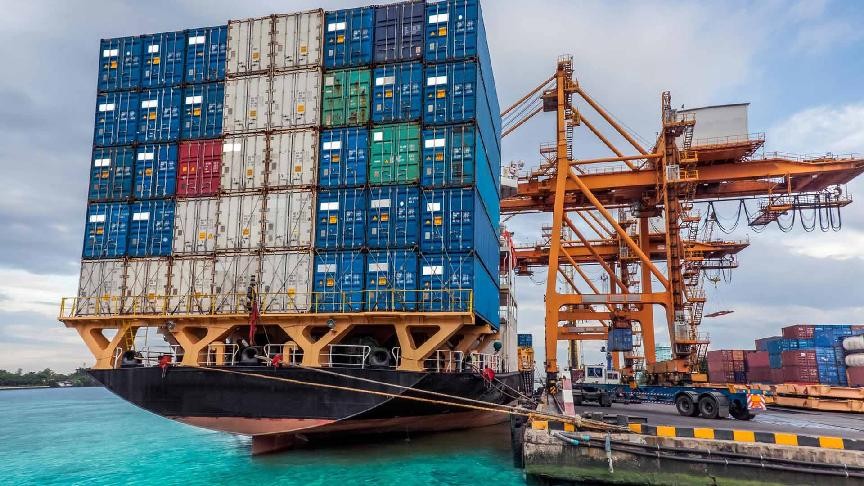
Sea newsRace to bigger boxships could resume as carriers weigh plus 27,000 teu giants
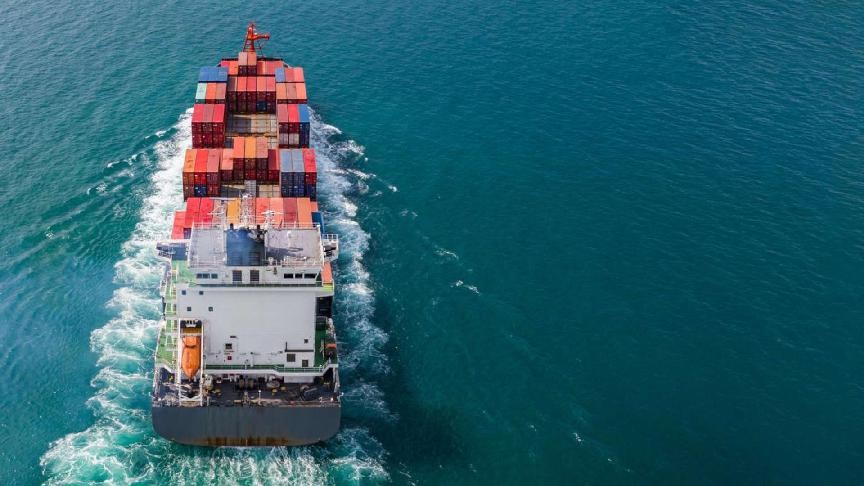
Sea newsCarrier service update (12 - 25 September 2026)

Sea newsShipping emerges as prime cyber target for China-linked hackers
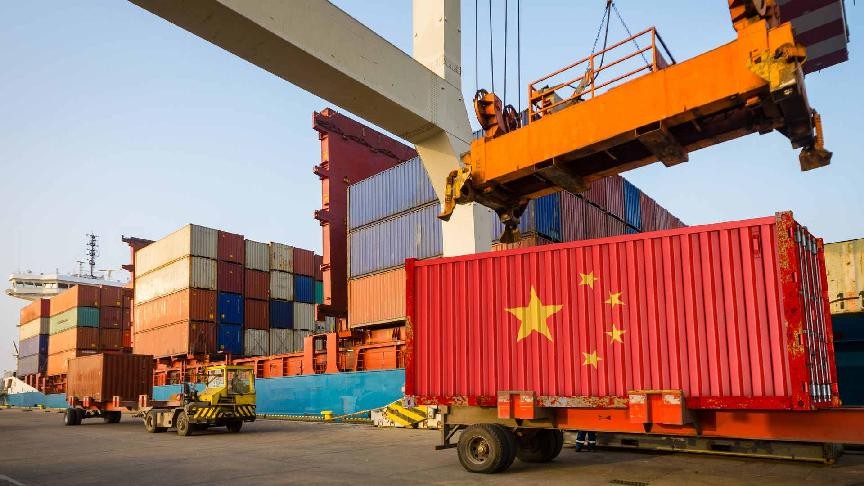
Sea newsHow Asia rewrote the container port rankings in the 21st century
Sea newsRed Sea and Hormuz crises reshape thinking on port resilience
Sea newsDisruption reshapes the rankings rather than derailing growth