
GEOPOLITICS has been at the forefront of shipping for the last few years with multiple crises across the globe reshaping vessel movements.
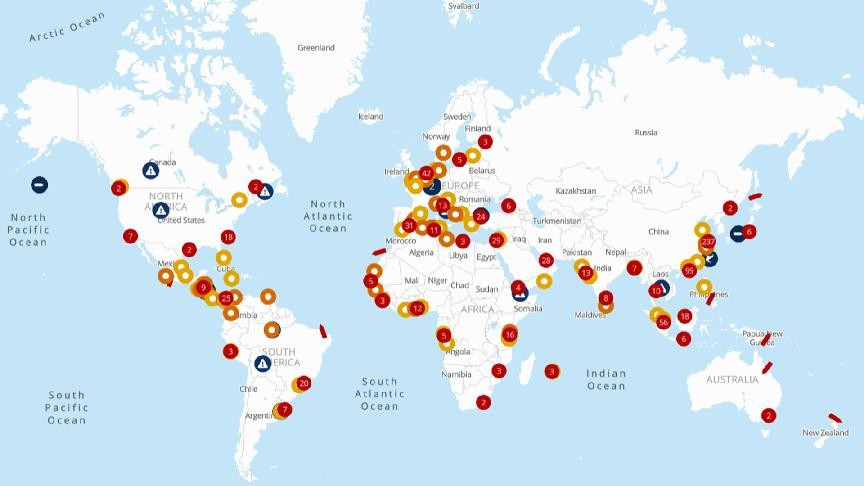
Russia’s war with Ukraine, the Red Sea crisis, the current Strait of Hormuz crisis and tensions between China and Panama have led to big obstacles to freedom of navigation. This has made shipowners grow increasingly wary of threats to vessel and crew safety.
“I think if we look at the at the map for the next couple of years, one thing we unfortunately have to factor in is a certain playfulness, almost,” said InterManager president and Bernhard Schulte Shipmanagement chief executive Sebastian von Hardenberg at the Capital Link Singapore Maritime Forum on Monday.
He added: “Leaders of the world have started to employ war and conflict as a mechanism of dispute resolution.”
The crisis in Hormuz remains a significant challenge for shipping to navigate, with snap geopolitical decisions having direct and deep implications on shipping.
On Friday, Tehran initially announced that it would start allowing vessels to transit the SOH because of the ceasefire between Israel and Lebanon. But a Truth Social post by US president Donald Trump prompted Tehran to reverse the decision on the same day.
“Maybe it’s not by chance that now suddenly, the societies, the leaders of the world, start employing war again as a mechanism. Obviously, for shipmanagement and for ship owning, [this] poses terrible, terrible safety risks and stresses on the crew safety risks on the vessels that are entrusted in our management,” von Hardenberg said.
The shipmanagement chief executive expects these implications to hold in the long term, spelling a future with heightened safety risks in addition to “a risk that the war falls into blocks again, where not everybody can go everywhere”, threatening freedom of navigation for an extended period.
Beyond Hormuz, freedom of navigation has also been challenged elsewhere. China is currently facing scrutiny for seizing Panama-flagged vessels following Panama’s Supreme Court’s recent decision to invalidate port management concessions held by CK Hutchison.
Labelling the multitude of concurrent geopolitical crises as a “nightmare”, German Shipowners’ Association president Dr Gaby Bornheim sees the current state of geopolitics possibly exacerbating, leaving a lasting impact on the future of the industry.
She sees the possibility of China learning from the US, providing grounds for “the next huge problem in the Indo Pacific”, causing the geopolitical contagion to spread to the global south.
But Bornheim holds bigger concerns for the impacts of geopolitics on seafaring with the future of seafaring being threatened.
She said: “[The global geopolitical turmoil] has an influence on all our investments, how to do shipping; and it’s also about how to attract seafarers for the future, who will come on board?”
Bornheim previously observed an increase of 30% in youths joining the seafaring industry from Germany, a trend that she labelled a “success”. But the current crisis could undo any progress.
“Look at the seafarers now on board our vessels in the Persian Gulf. If they want to go out, yes, we can make this happen with some difficulties. But to get new ones in from the Philippines, we will not have any support,” she said.
Replacing seafarers from the Philippines, a major source of seafarers globally, has been difficult as Manila has halted the deployment of Filipino seafarers to parts of the Middle East currently at risk because of the war.
A deep and extended period of concurrent geopolitical conflicts could deter interest in seafaring in the long term. This raises concerns for shipowners and shipmanagers.
To mitigate challenges brought on by geopolitics, Bornheim encouraged the shipping industry to be more adaptable. This is a challenging feat that she is optimistic shipping can accomplish.
“We are not born politicians, but we have to get into that,” Bornheim added.