
THE escalating conflict in the Middle East poses the single most consequential risk to global shipping this year, and the industry must adapt to a world where trade flows can be redrawn overnight.
That is the view of Teo Teng Seng, the newly appointed president of the Singapore Shipping Association.
Teo, who took the helm of the SSA earlier this year, told Lloyd’s List in an interview that active and emerging conflicts remain the defining challenge for the industry in 2026.
“Unlike regulatory or economic headwinds, which tend to unfold more gradually, war exerts an immediate and far-reaching impact on maritime operations,” he said.
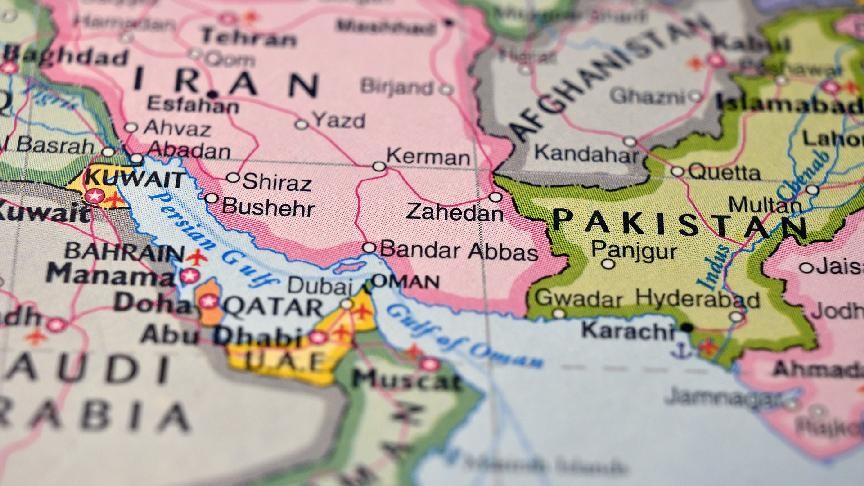
The comments come as vessel transits through the Strait of Hormuz — one of the world’s most critical maritime chokepoints — have almost come to a halt amid mounting navigational safety risks following US and Israeli strikes on Iran.
Oil prices have surged more than 50% since the conflict began on February 28, with major Gulf producers forced to suspend shipments of as much as 140m barrels of crude per day to global refiners. Some exports are expected to accelerate their shift to alternative regions such as West Africa and the Americas if the strait closure is prolonged.
Meanwhile, major container lines have suspended Middle East services, offloading cargo at contingency ports and citing force majeure to pass on the resulting extra costs to shippers.
“When key waterways are disrupted, the impact spreads rapidly through the supply chain,” Mr Teo said. “A conflict of this scale will reshape trade flows overnight. Its short-term consequences for both the industry and the wider global economy would be swift, significant, and unavoidable".
A decisive shift toward agility
Beyond the immediate crisis in the Gulf, Mr Teo said geopolitical volatility is fundamentally changing how shipping companies run their businesses — from fleet deployment to route planning to risk management.
“What we are seeing is a decisive shift toward greater agility with shorter decision cycles,” he said. “Geopolitical shifts are requiring much faster, more flexible fleet deployment decisions than before.”
Real-time risk management has become essential, he noted. “Whether it is monitoring geopolitical flashpoints, tracking activity in sensitive regions, or responding to evolving sanctions, companies depend on live intelligence and rapid risk assessments before approving routes. This real-time approach helps them navigate a world where geopolitical events can reshape freight flows overnight.”
Crew and asset safety remain paramount. Mr Teo highlighted the network of support that shipowners rely on, including flag administrations such as the Maritime and Port Authority of Singapore, security institutions like the Information Fusion Centre, security consultants, and intelligence shared by masters and crew operating in affected regions.
Meanwhile, the global trade system is also undergoing a structural transformation that will likely permanently alter shipping routes.
“Friend-shoring and trade fragmentation are structural shifts, and I believe they will redraw global shipping routes,” he said. “The global trade system is being reorganised around political alignment, tariff regimes, and supply chain resilience rather than cost alone.”
This shift is already reflected in carrier strategies, port investments, and new partnerships across regions. New trade rules are expected through 2026, adding further complexity to an already volatile environment.
Mr Teo urged shipping companies to position themselves now rather than wait for clarity.
“If shipping lines want to capture the next decade of growth, they need to position themselves now. The cargo is already moving. Production networks are already reorganising. Shipping routes will be redrawn. Companies must discern temporary disruptions from longer-term shifts to plan effectively.”
US Maritime Action Plan raises serious concerns
Mr Teo also voiced concern over the recently published US Maritime Action Plan, which includes a proposal to levy port fees on all foreign-built vessels calling at American ports.
“The US Maritime Action Plan is one of the most significant and concerning developments for global shipping stakeholders in recent years,” he said. “While we understand and respect that it is a sovereign policy priority to strengthen domestic industrial base and safeguard national security, the proposed ‘universal infrastructure or security fee’ raises serious concerns.”
The fee structure would place a substantial financial burden on the international fleet, which is overwhelmingly foreign-built.
“This cost will ultimately flow through supply chains and be borne by businesses and consumers,” Mr Teo warned.
He argued the levy could distort fair competition by penalising vessels based on their place of construction rather than safety, efficiency, or environmental performance. For Asian shipbuilders in particular, it creates friction at a time when global collaboration is essential.
According to Clarksons data, as of the end of January 2026, the world’s three largest shipbuilding nations — China, South Korea and Japan — accounted for 62%, 20% and 7% of the global orderbook respectively in cgt terms. The latter two countries are widely seen as key allies in supporting a revival of US shipbuilding, which currently accounts for just 0.3% of the market.
“Treating the output of advanced allied shipyards as a taxable liability could complicate the very partnerships the US seeks to build,” Teo said.
“We firmly believe there are more collaborative pathways to strengthen US maritime capability while preserving open, predictable, and non-discriminatory trade.”
SSA will continue engaging with global partners including the International Chamber of Shipping and the Asian Shipowners’ Association as the process evolves, he added.
Decarbonisation setbacks — another casualty of geopolitics
The Trump administration’s opposition to the IMO’s Net-Zero Framework has added another layer of uncertainty to an already fractured regulatory landscape.
Asked whether the IMO can still deliver meaningful decarbonisation rules this year, Teo was candid, describing the task as “challenging”.
“They have the difficult task of reconciling fundamentally divergent worldviews into a single technical instrument,” he said.
However, he cautioned that the delay should not prompt the industry to lower its ambitions.
“The delay of the Net-Zero Framework is a setback, but it should not signal the sector to recalibrate its ambition downwards. If anything, the industry should stay focused on preparing for a long-term transition towards reaching the 2050 net-zero goal.”
AI is the next frontier — but mindset is the barrier
As former chair of SSA’s Digitalisation Committee for five years, Teo sees artificial intelligence as the next frontier for the maritime industry — but cautioned that mindset, not technology, remains the biggest barrier to adoption.
“The industry is moving beyond Enterprise Resource Planning systems and into a phase where AI will underpin vessel management, port optimisation, and commercial decision-making,” he said.
“However, while technology is advancing rapidly, the industry’s biggest gap is mindset. Maritime has been a high-touch, human-centric sector, relying heavily on experience, intuition and long-standing relationships. That way of working has served us well for decades, but it now limits our readiness to adopt AI at scale.”
He pointed to other industries where early movers have gained disproportionate advantages. “The same pattern will be emerging in the maritime industry. In short: AI will redefine the industry. The technology is ready. The question is whether we have the foresight to adopt it boldly, systematically, and at scale.”
Teo’s predecessor, Caroline Yang, led SSA through the pandemic — an extraordinary period of operational upheaval. The challenge ahead, he believes, is fundamentally different.
“We are entering an era where decarbonisation, AI, cybersecurity, technology revolution and geopolitics are reshaping every aspect of maritime operations,” he said. “They are rewriting how global shipping will function for the next decade.”
His vision for success by 2029 is for SSA members to operate confidently in an AI‑enabled environment, for cybersecurity to be treated as a board‑level discipline, and for Singapore to maintain its position as the world’s leading maritime hub.
“This period is not just about managing risks,” Mr Teo said, “but about shaping the next chapter of maritime leadership for Singapore and the region.”
The task for all shipowners, in his view, is no longer simply to absorb disruption, but to reposition for a market in which conflict, fragmentation and technological change are becoming permanent features of the operating environment.