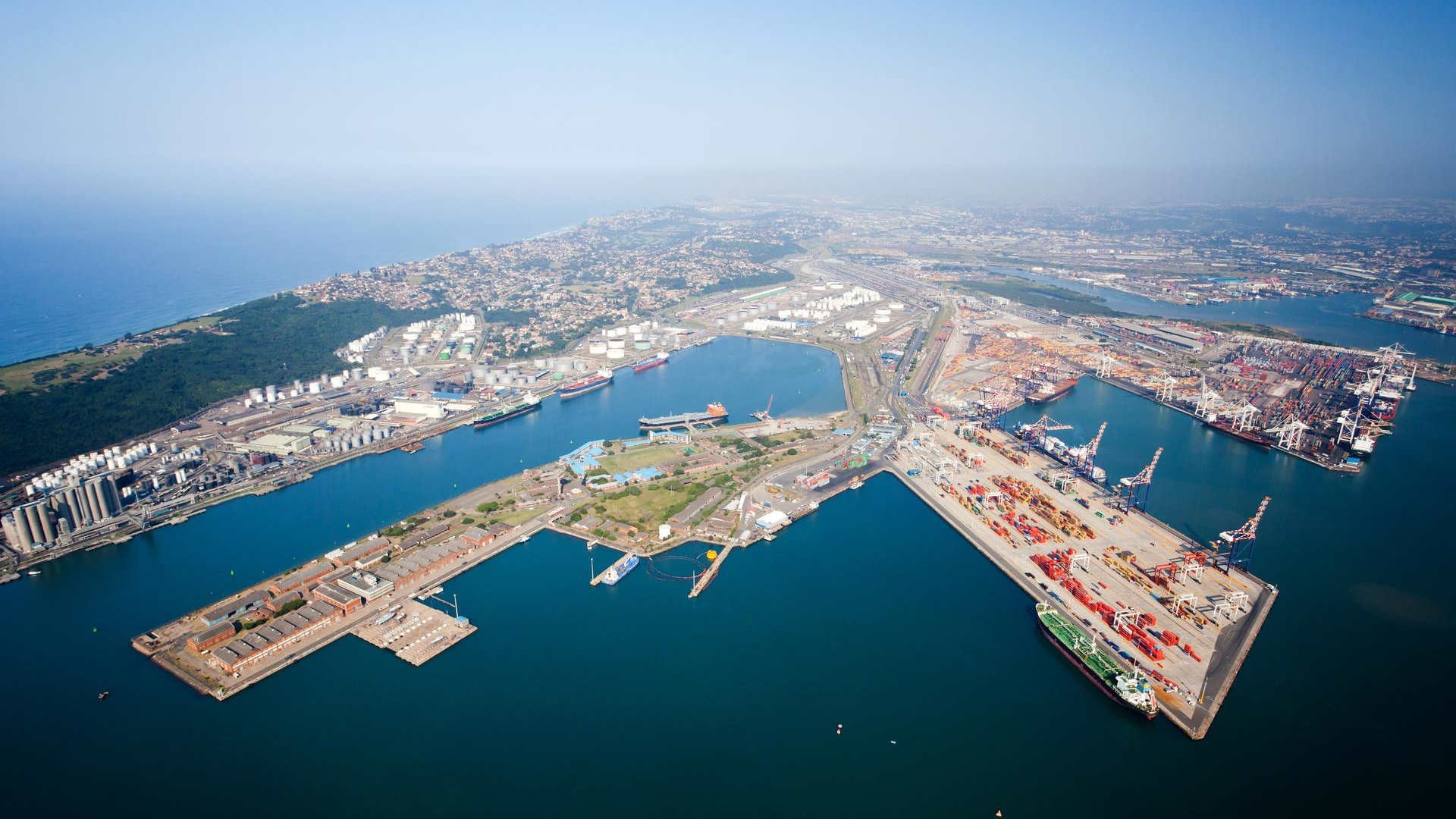

According to a report by South African media, Freight News, port operator Transnet is prioritising pharmaceutical containers at Durban as it continues measures to ease congestion at Durban Gateway Terminal (DGT).
Some of these shipments were identified as urgent medical shipments and were already cleared and delivered. The South African media further reported that country's authorities were involved in accelerating their release.
Transnet said using alternative terminals to berth vessels and discharge urgently needed pharmaceutical cargo remained an option where required.
Further measures taken to ease backlog
The measure forms part of steps announced on 18 November to address congestion at DGT and support the movement of critical consignments.
Those measures also include the immediate availability of Durban’s Berth 102 for vessels fitted with their own cranes.
Smaller geared vessels can use the berth to return Durban-bound containers discharged at Ngqura. Transnet Port Terminals (TPT) and DGT are identifying vessels that could be diverted to Ngqura Container Terminal, from where containers for Durban can be transferred by smaller vessels to Berth 102 or the Point Terminal.
Additional equipment is also returning to service.
TPT prepared the final refurbished ship-to-shore crane at Durban’s Pier 1 to be commissioned on 20 November and handed to operations the following day, bringing all six cranes at Pier 1 into service.
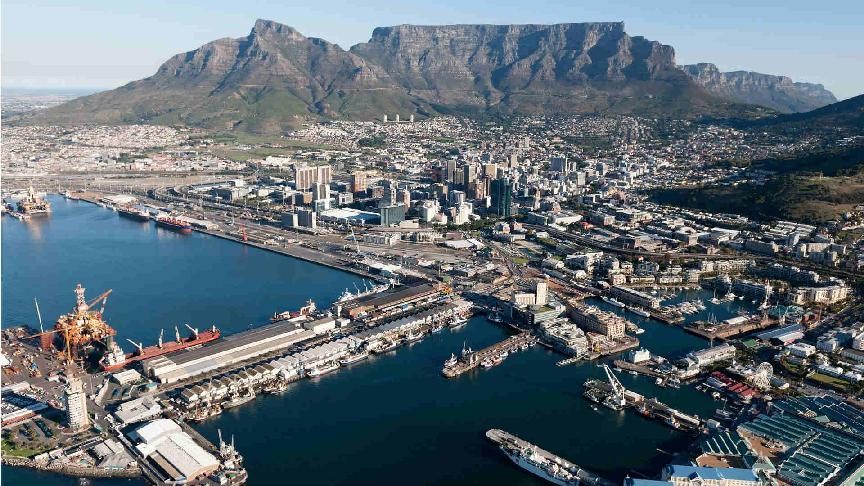
Options to transfer similar equipment from Cape Town were more limited because available machinery there was required for the peak deciduous fruit export season.
Taking the port's congestion into consideration, Transnet reports that it is giving priority to essential consignments, including automotive parts and pharmaceuticals, before vessels berth to enable their prompt removal following discharge.
Transnet Freight Rail has also made trains available for Gauteng-bound import containers and encouraged cargo owners to use them to assist with clearing the yard.
Congestion eases but remains high
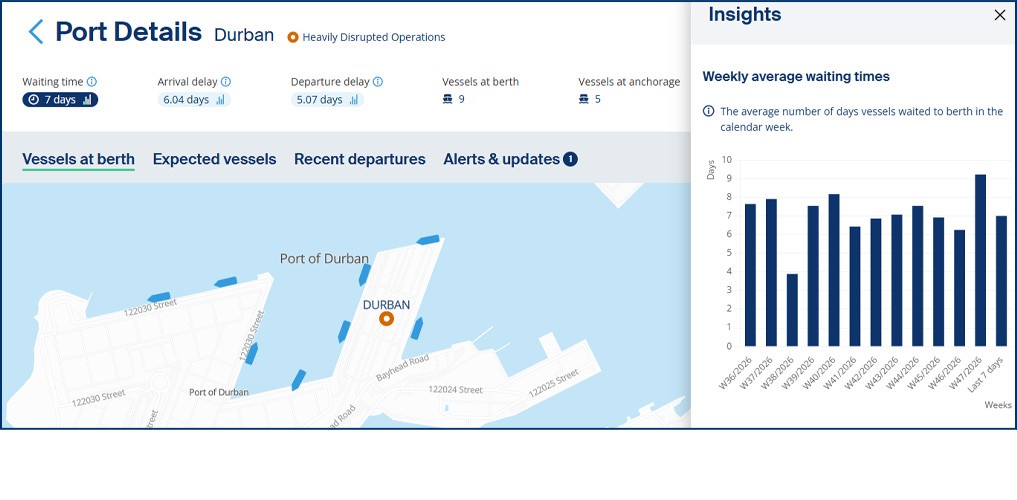
Congestion at Durban has remained elevated over recent weeks, although waiting times have fluctuated considerably.
Through weeks 41–46, seaexplorer weekly average vessel waiting times generally remained between approximately six and 7.5 days, before congestion intensified sharply in week 47, when the average exceeded nine days.
Over the latest seven-day period, the average waiting time eased back to around seven days, while the port continues to show heavily disrupted operations.