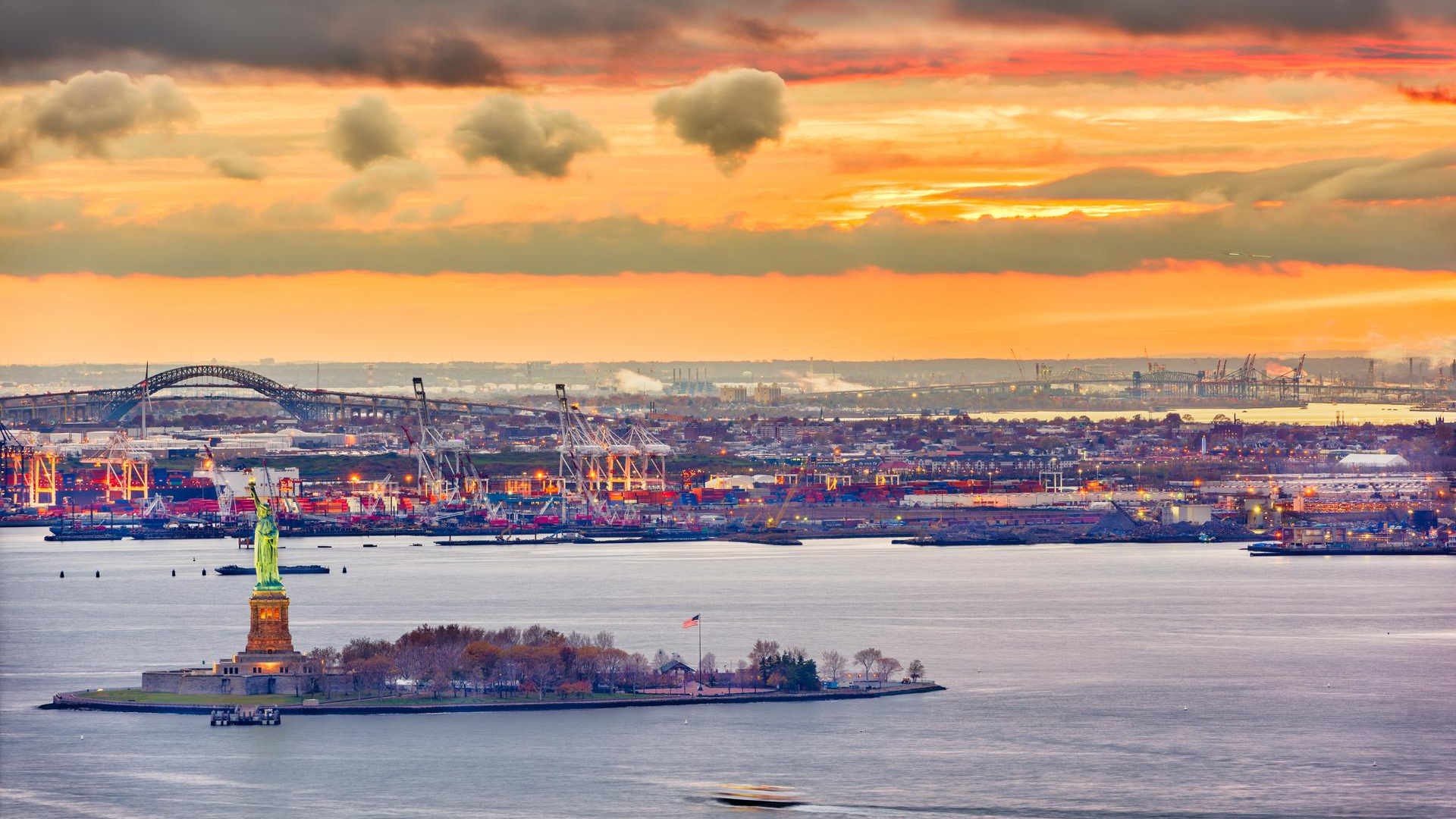

2 May (Lloyd's List) - PORT of New York and New Jersey said its first-quarter volumes softened. Throughput fell 24.9% from the record year-earlier period and 0.1% from the same period in 2019, according to a statement. The east coast gateway handled 1.79m teu during the quarter, which was 2.5% less than the port of Los Angeles and 4.1% more than the port of Long Beach.
“The main point is that the port NY and NJ is now, relatively to the west coast ports, in the strongest position it has been in for decades,” said executive director Rick Cotton, adding volumes declined from last year’s highs partly due to seasonality and to recessionary fears but that the port “continues to maintain a stronger competitive position vis-à-vis with the west coast ports than it has historically.”
“It outpaced [port of] Long Beach and came in as the second busiest port in the country in the first quarter, and its achieving cargo levels that approach [port of Los Angeles].”
New York and New Jersey's import volumes fell 26.8% year on year, 10.1% below their five-year average, and 0.8% below the first quarter of 2019.
The east coast ports of Savannah, Virginia and Charleston handled 14.3%, 9%, and 15.5% less cargo, respectively, in the first quarter, while imports declined 17.2%, 17%, and 20.2%.
The Gulf coast port of Houston saw first-quarter volumes rise 3.4% despite a 2.6% decline in imports, as loaded exports rose 26% year on year through March, which was the port’s strongest-ever month for loaded exports.
“We continue to see the softening of import demand across the US and in Houston as well, where loaded import container teus at Port Houston’s terminals were down 12% in March,” port of Houston’s executive director Roger Guenther said in a statement. “Total throughput is offset by the strong export market we have in Houston and our ability to provide both export and import customers excellent customer service, skilled labor, and an efficient gateway.”
Much of the recent gains made by east and US Gulf coast ports are attributed to cargo diversions from the west coast, where dockworkers have been working without a contract since July last year.
While the diversions were initially spurred by the logjams outside the San Pedro Bay complex that peaked early last year, concerns of potential industrial action led disruption-wary shippers to increasingly divert cargo eastwards, as negotiations between the dockworkers and their employers stalled.
Reports of labour actions emerged as the talks dragged on, but those concerns proved especially well founded in April, when labour disruptions interrupted cargo flows in the ports of Los Angeles and Long Beach and led terminals to shut down for 24 hours early in the month.
Although major progress in the talks was announced in late April after months of apparent stalemate, a ratified contract is likely still some months away.