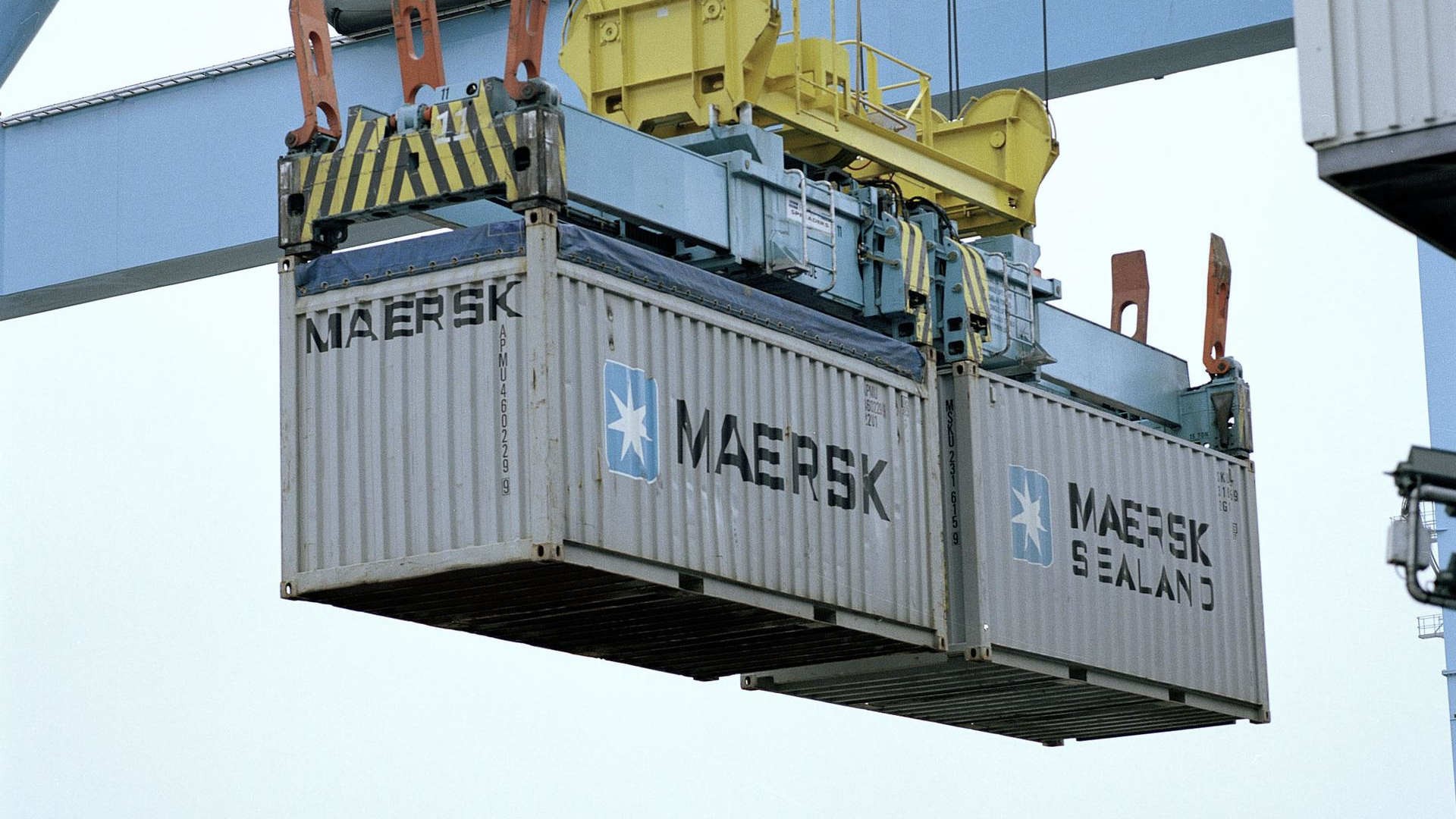

APM Terminals will take a minority stake in DP World’s Jeddah container terminal after the two groups confirmed a new strategic partnership, in a move that has the potential to lay the foundations for a regional Red Sea hub for carrier affiliate Maersk.
Maersk’s terminal operating arm will acquire a 37.5% stake in the Southern Container Terminal at Jeddah Islamic Port, with DP World retaining its 62.5% majority stake and continuing to lead operations at the terminal.
APMT already holds stakes further north in Port Said, Egypt, and in the Omani hub of Salalah, but the Jeddah deal marks its first direct terminal investment on the Red Sea itself, a move made at a time when most liner tonnage is still avoiding the region because of ongoing hostilities.
For Jeddah and other Saudi ports, most notably King Abdullah Port, the migration around the Cape of Good Hope has led to a dearth in east-west box traffic, and the transhipment cargoes these bring in tandem. The result has led to a more than 80% drop in box business at KAP and up to a third of teu totals in Jeddah, although initial figures published by the Saudi Ports Authority (Mawani) suggest that at least some traffic was clawed back in 2025 albeit still way down on pre-crisis levels.
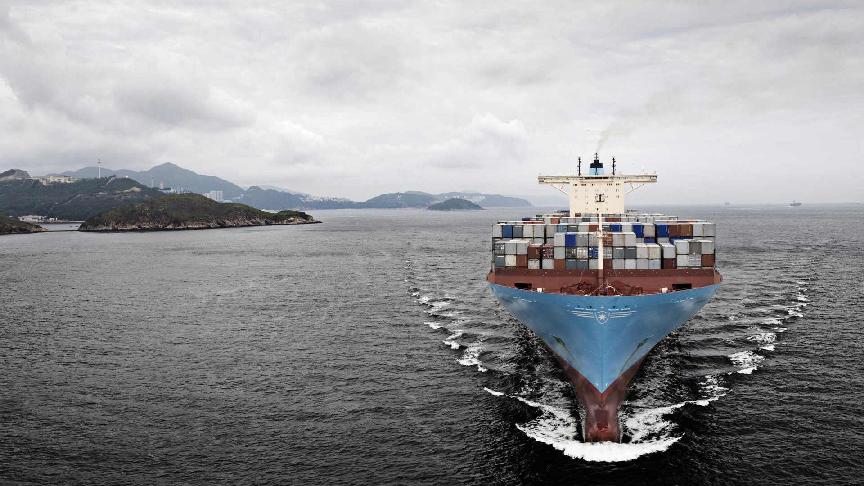
Maersk, APMT’s carrier affiliate, has been among a growing number of major lines showing renewed appetite for a return to the traditional Red Sea routing, either through ad hoc sailings or limited service reinstatements.
For Saudi ports, a full northerly migration cannot come soon enough. With APMT, and crucially Maersk, investing in Jeddah — which handles more than half of the country’s container traffic — this will only add to confidence that carriers are preparing for a broader comeback. APMT’s stake also raises expectations that Maersk will channel as much of its cargo as possible through Jeddah, with additional upside from its east-west alliance partner Hapag‑Lloyd under the Gemini Cooperation.
In the case of DP World, by partnering with APMT it effectively guarantees traffic across the docks at SCT, an increasingly important factor for non-carrier affiliated operators who are faced with growing competition from liner-aligned facilities. Such carrier tie‑ups are becoming more common as independent operators seek to safeguard throughput.
In Jeddah, Cosco has a 20% stake in the Red Sea Gateway Terminal, while 100km north in KAP the port is part owned and run by Terminal Investment alongside domestic privately owned operator Ports Development Company. TIL, of course, being the port arm of the world’s largest container shipping line Mediterranean Shipping Company, had utilised the facility as its regional hub until services were rerouted in early 2023.
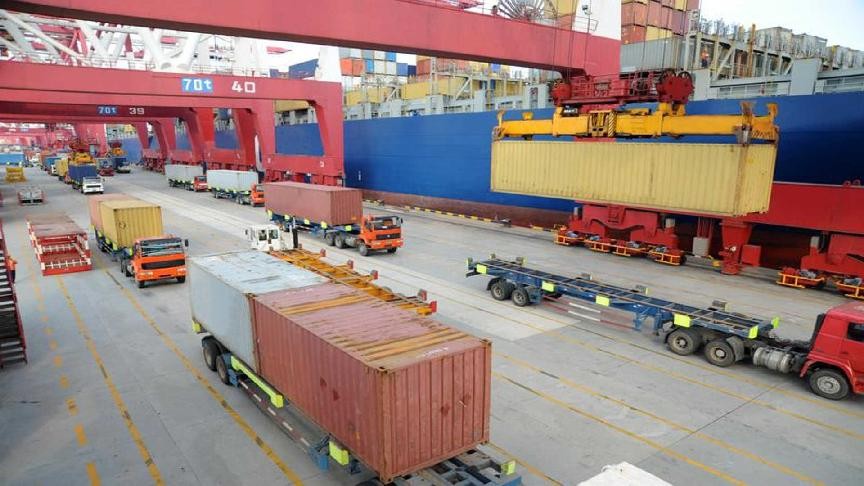
APMT’s investment also coincides with major expansion at SCT. In May 2024, DP World broke ground on the $250 million Jeddah Logistics Park, a 415,000 square metre facility offering extensive storage and distribution capacity under a 30‑year agreement with Mawani. Last year saw completion of the first phase of the terminal’s redevelopment, more than doubling capacity from 1.8m teu to 4m teu. The $800 million project includes scope to expand to 5m teu with additional ship‑to‑shore cranes as demand grows.
For APMT, and especially Maersk, the enlarged terminal provides the option of developing Jeddah into a regional hub with room to scale its presence significantly.
APMT chief executive Keith Svendsen called the port a “a vital gateway to the Kingdom of Saudi Arabia and a key hub in our customers’ supply chains”.
“We are pleased to invest in the SCT and to deepen our presence in Saudi Arabia through this strategic step,” he said.
“Jeddah is one of the region’s most important trade corridors. This investment secures long-term access to quality infrastructure and strengthens our ability to support customers with reliable, scalable capacity in the Kingdom.”
DP World group chief executive Yuvraj Narayan, who recently replaced the longstanding Sultan Ahmed bin Sulayem, said the investment from APMT “reflects the confidence global industry leaders place in DP World’s capabilities and the world-class terminal we have developed in Jeddah Islamic Port”.
“Saudi Arabia is a strategic market for DP World, and Jeddah Islamic Port has been central to our growth in the Kingdom for more than two decades.
“Since securing the concession in 2019, we have transformed the into a modern, high-capacity gateway, further strengthening Jeddah’s position as a leading Red Sea hub in support of Saudi Arabia’s Vision 2030.”
Jeddah marked DP World’s first concession outside the UAE in 1999.