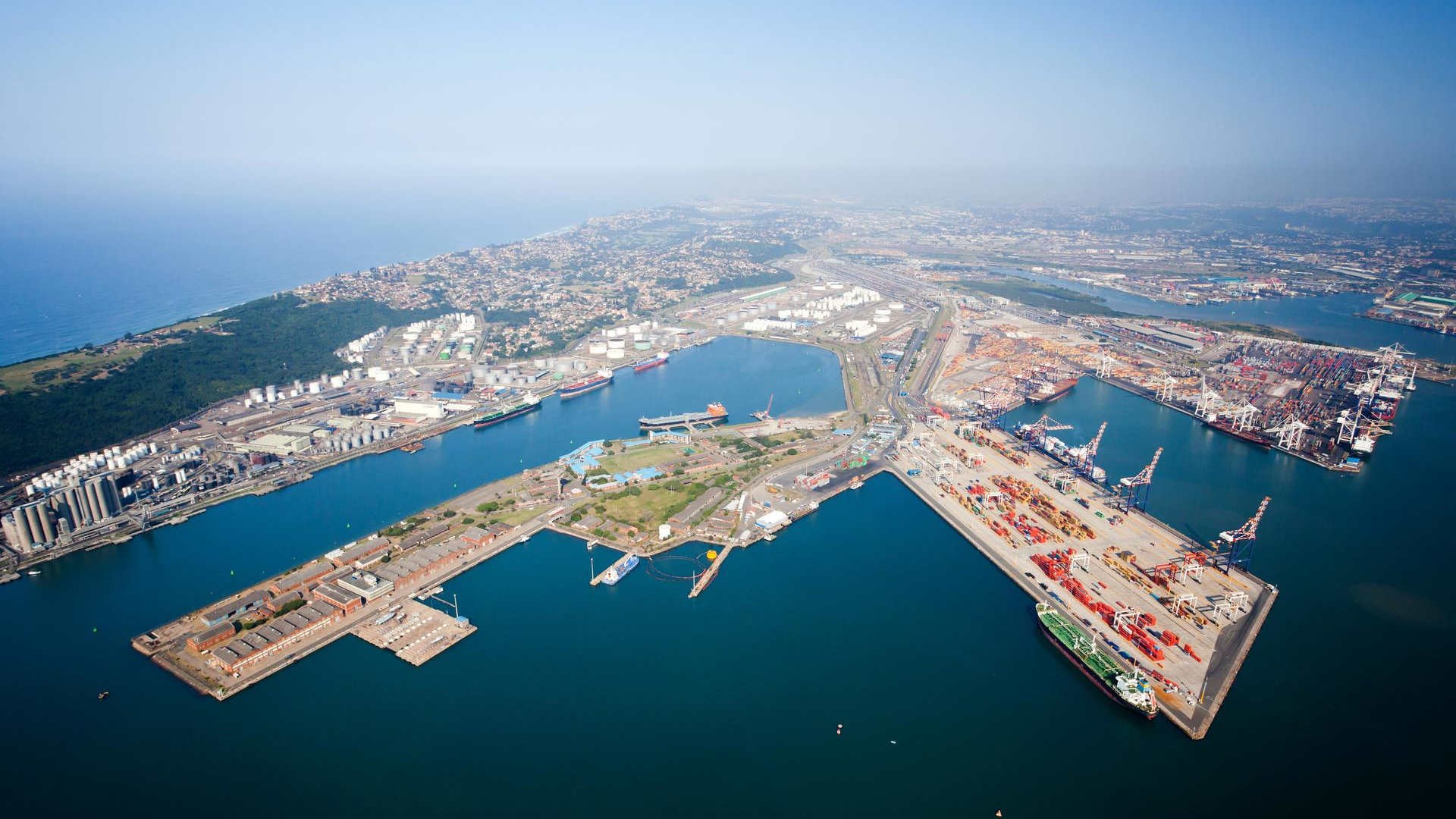

Congestion intensified at the Port of Durban towards the end of July, reports South African media Freight News.
According to the report, vessels calling at Durban Gateway Terminal (DGT) are experiencing average anchorage times of 80 hours during the month.
Southern African Association of Freight Forwarders (SAAFF) representative Nimi Ramchand said that the average berthing time at DGT reached 106 hours, while vessels at Pier 1 recorded an average berthing time of 64 hours. The report further notes that vessels calling at Pier 1 also spent an average of 65 hours at anchor.
Although conditions were favourable at the start of July, congestion became evident across the wider port by the month's end. The volume of vessels awaiting service increased pressure on marine operations, as tugs, pilots and crews were required to support different vessel and cargo types.
Ramchand said significant recovery was still needed at DGT, although the Southern African Association of Freight Forwarders hoped conditions at the terminal would improve.
Landside operations also came under strain. Bottlenecks emerged at terminal gates and on roads surrounding the port, while truck turnaround and staging performance at Pier 1 deteriorated towards the end of July.
The continuing delays at Durban Gateway Terminal have led liners Maersk and CMA CGM to remove the next two eastbound Port Louis calls from their Safari service, reports Freight News.
The carriers stated that delays in Durban meant the vessels could not reach Port Louis within their allocated windows while also arriving at Tanjung Pelepas on schedule.
Freight News mentioned that cargo destined for Port Louis and the islands that is loaded in Durban will be rerouted via Tanjung Pelepas. Meanwhile, Far East cargo loaded in Port Louis will be transferred to alternative services based on the port of discharge and available transhipment options.
As congestion persists, SAAFF urged freight stakeholders to prepare for several developments expected to affect operations in the coming weeks, including the finalisation of the National Rail Master Plan, and rail mainline maintenance shutdown from 25 August to 2 September.
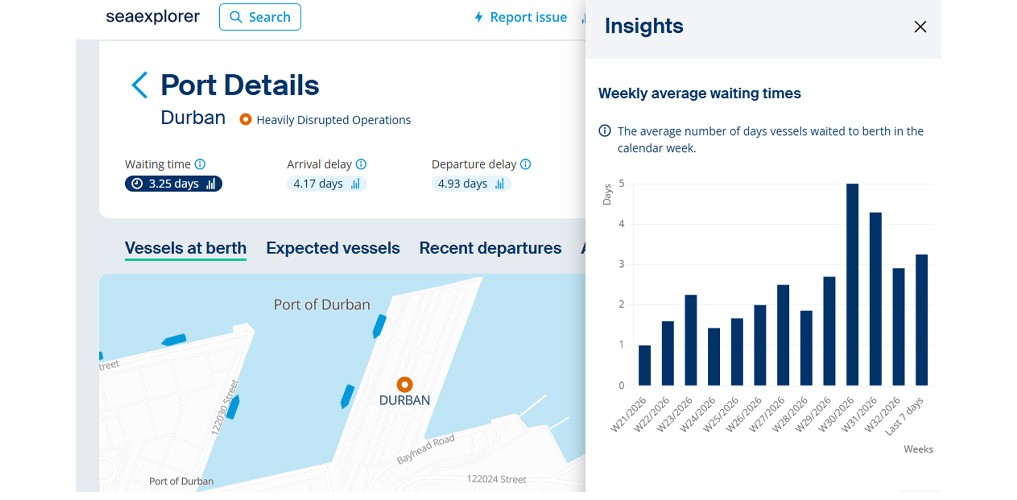
Current seaexplorer data also indicates ongoing delays at the Port of Durban. Average vessel waiting time stands at 3.25 days, while average arrival and departure delays are recorded at 4.17 days and 4.93 days, respectively, reflecting continued pressure on vessel operations at the port.